
Request Free Consultation

Please fill out the form below for your free consultation or call us at 646-480-0830.

Request Free Consultation

No Fee Unless We Win

Blog

All Personal Injury Car Accidents Construction Accidents Personal Injury FAQs Legal Terminology Testimonials Truck Accidents Bus Accidents Pedestrian Accidents Premises Liability Bicycle Accidents Slip and Fall Workers' Compensation Wrongful Death Train Accidents Brain Injury Motorcycle Accidents Spinal Injuries Catastrophic Injuries Burn Injury Automobile Accident Injuries Elevator Accidents Premises Injuries Airplane Accidents Articles Firm News Resources Brooklyn Medical Malpractice Overview New York City Car Accident Statistics News Dog Bites Featured Testimonials Mass Transit Injuries - Bus/Train Accident Lawyers Scaffold Accidents Boating Accidents Products Liability Queens Medical Malpractice Overview The Bronx Medical Malpractice Overview Hazardous Materials Ski Accidents FAQs Serious Injuries Testimonials SideBar Burn Injuries Negligent Security Scholarship Truck Injuries
nsurance Financial Crisis Affects NYC Personal Injury Claims

How Insurance Financial Crisis Affects NYC Personal Injury Claims

The Commercial Insurance Crisis Facing New York City Passengers If you ride in a yellow cab, green taxi, or rideshare in New York City, you expect safety. You also assume commercial insurance will cover your car e if a crash occurs. However, a major insurance crisis across New York City now threatens that assumption. American Transit Insurance Company covers most commercial passenger vehicles across the five boroughs. Unfortunately, the company faces severe financial distress. This growing deficit directly impacts how crash victims receive settlement compensation. Consequently, settlement checks face lengthy delays, and insurance adjusters aggressively challenge valid claims. Key Takeaways Bloomberg reports American Transit covers 60 percent of NYC commercial taxis and rideshares, making its financial distress a major concern for crash victims. A March 2026 federal court ruling found American Transit breached its duty to defend rideshare platforms in 23 bodily injury lawsuits. Injured passengers can seek alternative compensation from rideshare corporate policies, fleet owners, and third-party liability sources when primary insurers stall payouts. Navigating an injury claim against a struggling insurance company requires clear legal strategy. As experienced NYC personal injury attorneys, our firm guides crash victims through these complex coverage disputes. We help injured New Yorkers hold negligent drivers and corporate entities accountable. The Massive Financial Deficit at American Transit Insurance For decades, American Transit dominated the commercial motor vehicle market across New York City. According to Bloomberg reporting from September 2024, the insurer covers approximately 60 percent of the city’s 117,000 commercial taxis, rideshares, and for-hire vehicles. This massive market share creates a widespread financial risk for the local transportation sector. According to New York State Department of Financial Services examination reports, the insurer showed a negative policyholder surplus of $707,370,226 as of December 31, 2019. The situation degraded further over the following years. By late 2025, examination disclosures revealed the reported negative surplus widened to $794.9 million. Also, independent actuarial deficit estimates now exceed $1 billion. On September 6, 2024, the New York State Department of Financial Services issued a formal directive ordering the carrier to seek immediate capital infusions and explore a potential sale due to severely deficient financial reserves. Later, in an April 1, 2026 management discussion filing sent to state regulators, company leadership maintained that management is taking steps to resolve statutory solvency issues. The company chief executive attributed the deficit primarily to rampant no-fault fraud and surging claim expenses. How Insurance Deficits Delay Crash Victim Settlements In normal circumstances, an injured passenger files a claim with the insurance carrier for the at-fault vehicle. The insurance adjuster evaluates the medical evidence and negotiates a settlement. However, a financially distressed carrier cannot operate like a healthy insurance provider. Instead of settling claims fairly, struggling insurers often stall negotiations to protect limited cash reserves. As a result, accident victims in Brooklyn, Queens, Manhattan, the Bronx, and Staten Island face agonizing delays. You might wait months or even years just to get basic medical treatment bills reviewed. Also, adjusters frequently issue lowball settlement offers. They hope injured claimants will accept minimal sums out of financial desperation. If you suffered injuries in a taxi crash, accepting a quick lowball payout is dangerous. Medical care in New York City is expensive, and serious injuries require long term care. Working with a dedicated NYC car accident attorney ensures that an insurance company does not undermine your legal rights. Federal Court Battles Between Rideshare Platforms and Commercial Carriers The financial turmoil surrounding commercial taxi coverage has sparked high stakes court battles. On March 3, 2026, U.S. District Judge Analisa Torres ruled on a major lawsuit in the Southern District of New York titled Uber Technologies, Inc. v. American Transit Insurance Company. The court determined that the commercial insurer breached its duty to defend Uber in 23 separate bodily injury crash lawsuits. Consequently, the ruling left the rideshare platform directly exposed to legal expenses and liability claims. This federal court decision highlights a growing rift between tech platforms and commercial auto insurers. Rideshare companies previously relied on underlying commercial auto policies to absorb crash liabilities. Now, tech platforms must step in when primary insurers refuse to defend cases or pay settlements. Therefore, personal injury claims involving Uber and Lyft in New York City have grown far more complex, requiring deep legal investigation into corporate liabilities. Changes to New York No-Fault Rules and Coverage Limits State and local authorities have made policy changes to address escalating insurance losses. Specifically, the New York City Council reduced the mandatory minimum no-fault personal injury protection limit for TLC-plated vehicles to $100,000. No-fault coverage pays for immediate medical treatment, lost wage restoration, and necessary health expenses after a crash regardless of who caused the collision. However, severe injuries can exhaust this lower coverage limit very rapidly. Emergency surgeries, physical therapy, and extended hospital stays in New York City quickly exceed minimum PIP benefits. When no-fault funds run out, injured victims must pursue bodily injury claims against all negligent parties. Meanwhile, insurance adjusters scrutinize every medical bill to deny claims under revised guidelines. Therefore, crash victims must maintain thorough treatment records right from the start. Legal Strategies to Uncover Alternative Compensation Sources When a primary commercial insurer faces massive financial shortfalls, personal injury attorneys must adapt. Experienced lawyers look beyond standard taxi insurance policies to protect injured clients. If you were hurt in a Brooklyn taxi collision or a Manhattan rideshare crash, your legal team can explore multiple avenues for monetary recovery. Rideshare Corporate Policies: Major tech platforms maintain secondary liability policies that apply when a vehicle is actively transporting passengers or en route to a pickup. Fleet Management Entities: Many commercial vehicles belong to large fleet owners or corporate parent companies that hold separate commercial assets and excess umbrella coverage. Third-Party Drivers: If another private motorist contributed to the collision, their personal auto policy can provide additional liability coverage. Municipal Entities: When unsafe road design, missing signage, or unmaintained street conditions contribute to a crash, municipal claims may offer recovery options. By targeting every responsible entity, a skilled Queens rideshare accident lawyer helps secure maximum recovery even when a primary insurer is insolvent. Immediate Steps to Take After a New York City Taxi Accident If you suffer injuries in a taxi or rideshare collision, your immediate actions strongly impact your financial recovery. Taking systematic steps helps build a firm evidentiary foundation for your injury claim. Call Emergency Services: Request police officers and emergency medical technicians to the scene. Ensure the police complete an official crash report. Seek Immediate Medical Attention: Go to an emergency room or urgent care clinic right away. Prompt medical documentation links your physical injuries directly to the crash. Gather Evidence at the Scene: Photograph vehicle damage, license plates, TLC permit numbers, and driver credentials if you are physically able. Avoid Giving Recorded Statements: Do not give recorded phone statements to commercial insurance adjusters without legal guidance. Adjusters use these interviews to reduce payout amounts. Consult a Top NYC Personal Injury Lawyer: Speak with a trusted attorney before signing any legal paperwork or accepting settlement checks. Protecting Your Future After a Commercial Vehicle Crash The financial insolvency crisis affecting New York City commercial taxi insurers makes personal injury claims challenging. However, financial instability at an insurance firm does not eliminate your right to full recovery. By investigating third-party liability sources and challenging insurer delays, an experienced legal team fights for the care and compensation you deserve. If you or a loved one suffered injuries in a New York City taxi or rideshare accident, do not face insurance adjusters alone. Contact our office today for a free legal consultation. We will analyze your crash, identify all available insurance policies, and help you navigate your path to recovery with confidence. Sources Bloomberg, NYC Commercial Taxi Insurance Market Analysis New York State Department of Financial Services, American Transit Insurance Company Examination Reports and Directives United States District Court for the Southern District of New York, Uber Technologies, Inc. v. American Transit Insurance Company Ruling This article was drafted with AI assistance. Please verify all claims and information for accuracy. The content is for informational purposes only and does not constitute professional advice. Free Case Consultation Injured in an accident? Speak directly with an experienced NYC personal injury attorney at Rosenberg, Minc, Falkoff & Wolff. Your consultation is free, confidential, and risk-free. Start Your Free Case Review No obligation - No upfront fees - You don't pay unless we win Follow RMFW Law for legal insights and case results: Facebook Instagram X Pinterest Yelp YouTube Gary Silverstein Gary Silverstein has been a partner of Rosenberg, Minc, Falkoff & Wolff since 2001, and an associate of the firm since 1989. Mr. Silverstein graduated with a Bachelor of Science degree from State University of New York College at Oneonta in 1983. Mr. Silverstein holds a degree of Juris Doctor from the University of Miami School of Law, having graduated in 1988.


Top NYC Personal Injury Lawyer for Apartment Ceiling Collapse Injuries

Top NYC Personal Injury Lawyer for Apartment Ceiling Collapse Injuries

When a ceiling collapse s in a New York City apartment, the shock and pain can feel overwhelming. You might be resting in bed or cooking in your kitchen when heavy drywall and wet plaster suddenly come crash ing down. These dangerous events rarely happen out of nowhere. Most ceiling collapses occur after weeks or months of unaddressed water leaks from upper floors or damage d roof membranes. Key Takeaways Under NYC Administrative Code Section 27-2005 and Real Property Law Section 235-b, landlords must repair chronic water leaks to maintain habitability. Official 311 service request logs and HPD violation notices serve as vital evidence to establish constructive notice in ceiling collapse personal injury claims. Under NYC Local Law 71, open Class B and Class C HPD violations carry daily civil penalties. As a top NYC personal injury lawyer, our firm helps injured tenants hold negligent property owners accountable. New York law places a clear legal duty on building owners to maintain structural safety and fix leaks promptly. Therefore, if your landlord ignored repeated warnings about water damage, you can take action. You can build a strong personal injury claim using 311 complaint histories, municipal inspection logs, and official violations. Understanding Landlord Legal Duties Under New York Law New York landlords must keep their residential properties safe and structural. Under the New York City Housing Maintenance Code, found in NYC Administrative Code Section 27-2005, property owners must maintain their premises in good repair. Similarly, New York Real Property Law Section 235-b establishes the warranty of habitability for every residential lease. This law guarantees that your apartment remains safe, clean, and fit for human living. Consequently, when a landlord permits water to leak through ceiling plaster continuously, they violate state statutes and city regulations. Moisture degrades drywall, weakens lath fasteners, and ultimately triggers a catastrophic ceiling collapse. When property owners neglect these fundamental duties, injured tenants have the right to seek financial compensation. How HPD Classifies Water Leaks and Structural Hazards The NYC Department of Housing Preservation and Development enforces safety regulations across all five boroughs. When tenants call 311 to report ceiling damage or active plumbing leaks, HPD sends inspectors to evaluate the property. The agency classifies ceiling hazards and water leaks into specific categories of severity. Active water leaks fall under Class B hazardous violations. However, when structural damage creates an imminent threat of collapse, HPD issues Class C immediately hazardous violations for certain conditions. Class C violations have varying correction periods (0, 14, 21, or 24 hours) depending on the specific type of violation to protect building residents. Civil Penalties for Ignoring NYC Building Violations City leaders established strict monetary penalties to force negligent landlords to complete timely repairs. Under NYC Local Law 71, open HPD violations served after December 8, 2023, carry significant daily financial penalties. Civil fines range from $75 to $500, plus an extra $25 to $125 per day for uncorrected Class B violations. Additionally, unaddressed Class C violations trigger severe penalties that accumulate daily until the owner certifies complete repairs. Also, if a landlord ignores urgent notices, HPD can execute repairs through its Emergency Repair Program and bill the building owner directly. These recorded penalties create a clear official paper trail showing that management knew about the danger. Establishing Notice in Ceiling Collapse Claims To win a personal injury case after a ceiling collapse, you must establish that the landlord had notice of the defect. In legal terms, notice means the property owner knew or should have known about the dangerous condition before the collapse occurred. You can prove actual notice if you sent written emails or text messages to management. However, attorneys frequently establish constructive notice by examining public municipal records. Constructive notice means the condition existed long enough that a reasonable landlord should have discovered and fixed it. Experienced lawyers subpoena historical NYC 311 service request logs and official HPD inspection reports. These public documents prove that management neglected chronic moisture issues over an extended timeframe. Key Legal Precedents Supporting Injured Tenants New York courts consistently hold landlords accountable when maintenance records show neglected water intrusion. For instance, in Torres v. 716-720 West 180th St. Heights Assocs. LLC, decided in the New York County Supreme Court on March 10, 2025, the court granted summary judgment on liability to an injured tenant. Maintenance records established that management had clear notice of recurring upstairs leaks before the kitchen ceiling collapsed. Similarly, in a case decided in the Kings County Civil Court, an important evidentiary standard was affirmed. The court ruled that official printed HPD violation records serve as sufficient prima facie evidence of open hazardous conditions. Consequently, injured tenants can prove existing building violations without requiring live inspector testimony at trial. Real Settlement Values in Ceiling Collapse Lawsuits When an apartment ceiling collapses, falling debris can cause concussion, spinal trauma, shoulder tears, or traumatic brain injury. Settlement amounts reflect the severity of your physical injuries, medical bills, lost wages, and landlord culpability. Historic case results highlight how thorough record gathering directly impacts monetary recovery. For example, trial attorneys at Wingate, Russotti, Shapiro, Moses & Halperin, LLP secured a significant personal injury mediated settlement for a tenant struck by a collapsed kitchen ceiling. The attorneys won this substantial recovery after uncovering 112 building code violations and past Housing Court records. Likewise, trial lawyers at Block O'Toole & Murphy negotiated a substantial settlement for an injured tenant after proving the landlord systematically ignored 311 complaints, management calls, and leak notices. Steps to Take Immediately After a Ceiling Collapse If you or a family member suffers an injury in a Brooklyn construction accident or an apartment ceiling collapse, you must act quickly. Your immediate health and your future legal rights depend on the actions you take right after the event. Following these essential steps will protect your well-being and strengthen your legal claim. Seek immediate medical treatment for your injuries and document every medical consultation carefully. Take clear photos and videos of the collapsed ceiling, fallen debris, water stains, and physical injuries. Report the ceiling collapse to 311 right away so HPD can send an inspector to document the scene. Gather copies of past written communications, text messages, and repair requests sent to your landlord. Avoid signing any settlement releases or giving recorded statements to the landlord's insurance adjuster. Consult an experienced NYC personal injury lawyer to evaluate your rights and preserve critical evidence. How Attorneys Use 311 Data to Prove Negligence Filing a complaint through 311 creates a permanent, time-stamped government record that building owners cannot erase or alter. When you contact 311, city operators log your specific complaint regarding water leaks, sagging plaster, or dangerous ceilings. HPD inspectors then visit the property to record formal code violations against the landlord. Your attorney will obtain these official records through formal discovery and Freedom of Information Law requests. Consequently, your legal team can show insurance adjusters or jury members that management knew about the water leak for weeks. This objective documentation disproves common landlord claims that the collapse happened suddenly without warning. Frequently Asked Questions About NYC Ceiling Collapses Navigating a personal injury claim while recovering from painful injuries can feel daunting. Below, our legal team answers common questions that injured New York tenants ask after an apartment ceiling collapse. Can I sue my landlord if I never filed a 311 report before the collapse? Yes, you can still file a personal injury lawsuit against your landlord even without prior 311 calls. You can establish notice through text messages, emails, written letters, or tenant complaints from neighboring apartments. Additionally, past work orders or physical evidence of longstanding mold and water rot can prove constructive notice. What if the leak came from an upstairs tenant's overflowing bathtub? Your attorney will investigate whether the upstairs tenant or the building owner bears primary legal responsibility. If the building owner failed to fix known plumbing defects or delayed emergency repairs, the landlord remains liable for structural failures. In many cases, multiple parties share responsibility for the resulting damage. If you suffered injuries due to a neglected ceiling leak, our experienced legal team stands ready to fight for your recovery. Contact our office today for a free consultation to discuss your rights and pursue the full compensation you deserve. Sources New York State Senate, New York Real Property Law Section 235-b NYC Department of Housing Preservation and Development, HPD Notice of Violation Classes and Local Law 71 Penalties This article was drafted with AI assistance. Please verify all claims and information for accuracy. The content is for informational purposes only and does not constitute professional advice. Free Case Consultation Injured in an accident? Speak directly with an experienced NYC personal injury attorney at Rosenberg, Minc, Falkoff & Wolff. Your consultation is free, confidential, and risk-free. Start Your Free Case Review No obligation - No upfront fees - You don't pay unless we win Follow RMFW Law for legal insights and case results: Facebook Instagram X Pinterest Yelp YouTube Gary Silverstein Gary Silverstein has been a partner of Rosenberg, Minc, Falkoff & Wolff since 2001, and an associate of the firm since 1989. Mr. Silverstein graduated with a Bachelor of Science degree from State University of New York College at Oneonta in 1983. Mr. Silverstein holds a degree of Juris Doctor from the University of Miami School of Law, having graduated in 1988.
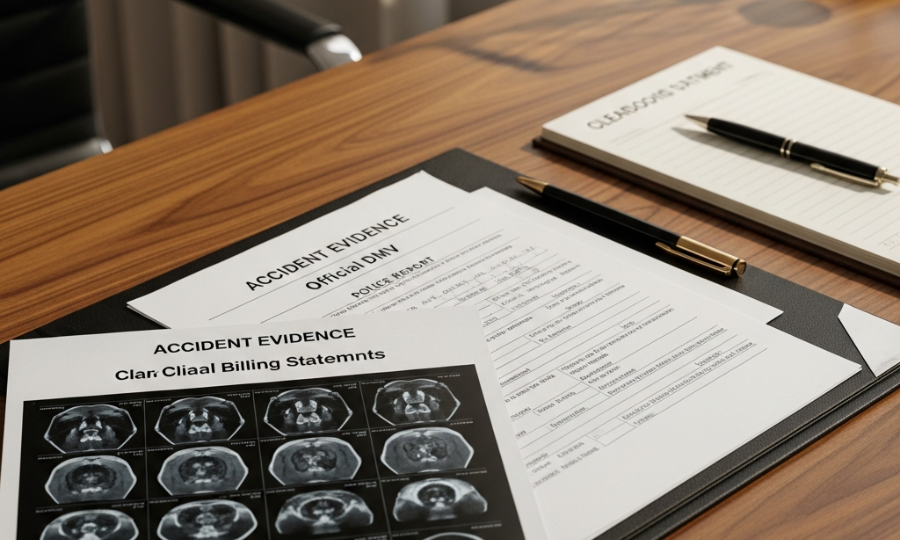
Preparing for Consultations with Top New York Injury Lawyers

Preparing for Consultations with Top New York Injury Lawyers

A sudden personal injury accident in New York City can derail your life in seconds. Whether you were s truck by a reckless driver in Brooklyn, injured on a Manhattan construction site, or involved in a multi-vehicle crash in Queens, the days following an incident feel chaotic. Gathering the right documentation before sitting down for your initial legal consultation is one of the most effective ways to protect your rights and keep your claim moving forward smoothly. Key Takeaways Under NY CPLR Section 214(5), standard injury suits must be filed within three years, but General Municipal Law Section 50-e requires a sworn Notice of Claim within 90 days for city entities. NY Insurance Law Section 5102(a) provides up to $50,000 in No-Fault PIP benefits, capping lost earnings reimbursement at $2,000 per month for up to three years. Bringing official DMV MV-104AN police reports, medical bills, wage statements, and scene photos to your initial legal review drastically speeds up your case evaluation. When you meet with a legal team, clear documentary evidence allows your attorney to evaluate liability, assess total damages, and build a persuasive strategy immediately. Coming prepared transforms your initial consultation into a direct, focused strategy session. Official Police Reports and Scene Documentation Official law enforcement documentation forms the foundation of almost every personal injury action. Following a traffic collision in any of the five boroughs, responding officers document the incident on Form MV-104AN, as outlined in official New York DMV crash report manuals. This standardized record records vital facts, including officer observations, weather conditions, driver statements, and preliminary fault determinations. Under New York Vehicle and Traffic Law Section 600, all motorists involved in a crash are legally required to stop and exchange names, addresses, driver’s license details, and insurance information. Bringing this exchanged information to your consultation helps your lawyer identify all potentially liable parties and insurance coverage limits right away. In addition to official reports, photos and videos taken at the scene provide invaluable visual evidence. Try to compile the following items: Clear photos showing vehicle damage, road conditions, traffic signals, and weather factors Images of visible physical injuries, including cuts, bruising, or surgical dressings Photographs of damaged personal property, such as crushed smartphones or torn clothing Contact details for neutral eyewitnesses who saw the incident occur Medical Records, Bills, and Treatment Logs Establishing the full extent of your physical injuries requires thorough, organized medical records. Under New York Insurance Law Section 5102(a), basic economic loss coverage through No-Fault Personal Injury Protection (PIP) provides up to $50,000 per person for necessary medical care and related economic costs. Providing your attorney with complete medical documentation ensures every expense is properly calculated and submitted. To establish the required legal threshold for non-economic damages, plaintiffs must demonstrate a serious injury under New York Insurance Law Section 5102(d), such as a fracture or significant disfigurement. On May 26, 2026, New York State enacted auto liability reforms that eliminated the traditional 90/180-day non-permanent impairment category from the statutory serious injury threshold. Consequently, presenting immediate objective medical evidence, such as diagnostic imaging and emergency room records, is more critical than ever. Bring these health-related documents to your initial legal review: Emergency department discharge summaries and ambulance transport logs Diagnostic test results, including X-rays, MRI scans, and CT imaging reports Itemized hospital bills, physical therapy statements, and prescription receipts Written treatment plans from primary doctors and orthopedic specialists A daily personal pain journal tracking your pain levels, physical limitations, and missed daily activities Employment Evidence and Proof of Lost Income Severe injuries frequently keep accident victims away from work, leading to immediate financial strain. Proper documentation allows your attorney to pursue comprehensive reimbursement for lost earnings and reduced future earning capacity. Under New York Insurance Law Section 5102(a), No-Fault PIP benefits cap monthly lost earnings reimbursement at $2,000 per month for up to three years. If your actual loss exceeds this statutory cap, your attorney can seek the remaining balance through a third-party personal injury lawsuit against the at-fault party. To substantiate your lost wage claim, collect the following financial documents: Recent W-2 forms, 1099 tax returns, or federal income tax filings Pay stubs showing pre-accident wage earnings and lost work hours A formal letter from your employer's human resources department confirming missed shifts and salary rates Doctor's notes explicitly authorizing your time off work for medical recovery Critical Legal Deadlines for New York Injury Claims Acting quickly to collect your documents is essential because New York law enforces strict statutory deadlines on personal injury actions. Missing a filing window can permanently extinguish your right to seek financial recovery. Under New York Civil Practice Law and Rules Section 214(5), standard personal injury lawsuits based on general negligence must be filed within three years of the accident date. However, medical malpractice actions operate under a shorter timeline; under Civil Practice Law and Rules Section 214-a, medical malpractice claims must be filed within two years and six months of the negligent act or the end of continuous treatment. The timeline is even shorter if your injury involves a municipal entity, such as a New York City Transit Authority bus or a roadway maintained by the City of New York. Under New York General Municipal Law Section 50-e, a formal sworn Notice of Claim must be served on the municipality within 90 days of the incident. Bringing your documents to a lawyer immediately ensures these strict municipal filing limits are met. How Organized Evidence Accelerates Your Case Arriving at your legal consultation with organized documents allows your legal team to start investigating right away. Instead of spending weeks requesting old medical records or searching for police reports, your attorney can immediately file administrative notices, preserve witness testimony, and negotiate directly with insurance adjusters. Gathering your paperwork ahead of time protects your legal rights, helps reduce personal stress, and ensures your legal team can fight effectively for every dollar of compensation you deserve. Sources New York State Senate, Civil Practice Law & Rules Section 214 - Actions to be commenced within three years New York State Department of Motor Vehicles, Police Crash Report Submission Instructions Manual (MV-104A) This article was drafted with AI assistance. Please verify all claims and information for accuracy. The content is for informational purposes only and does not constitute professional advice. Free Case Consultation Injured in an accident? Speak directly with an experienced NYC personal injury attorney at Rosenberg, Minc, Falkoff & Wolff. Your consultation is free, confidential, and risk-free. Start Your Free Case Review No obligation - No upfront fees - You don't pay unless we win Follow RMFW Law for legal insights and case results: Facebook Instagram X Pinterest Yelp YouTube Gary Silverstein Gary Silverstein has been a partner of Rosenberg, Minc, Falkoff & Wolff since 2001, and an associate of the firm since 1989. Mr. Silverstein graduated with a Bachelor of Science degree from State University of New York College at Oneonta in 1983. Mr. Silverstein holds a degree of Juris Doctor from the University of Miami School of Law, having graduated in 1988.

NYC Commercial Vehicle Employer Liability and Crash Claims

NYC Commercial Vehicle Employer Liability and Crash Claims

Understanding Employer Liability After a New York City Crash Accidents involving commercial vans, corporate cars, and delivery trucks on busy New York City streets create legal challenges that differ significantly from typical passenger car crashes. When a corporate vehicle strikes your car in Queens, Manhattan, or Brooklyn, determining who bears financial responsibility requires navigating complex corporate hierarchies and statutory rules. Working with a dedicated company vehicle accident attorney gives injured victims the guidance necessary to hold corporate entities accountable and pursue full compensation. Key Takeaways According to JTNY research from April 2026, 49 CFR Part 391 requires 3-year driver history checks but does not itself create independent liability for negligent hiring - such liability arises under state tort law using federal violations as evidence. Per Wilson Elser's June 2026 legal analysis, The May 26, 2026 tort reform added CPLR § 1411(b) creating a modified comparative negligence rule only for motor vehicle personal injury actions subject to Insurance Law Article 51, not for all claims. Federal motor carrier minimums vary by vehicle type and cargo, with some categories at $300,000 and passenger-carrying minimums at $1,500,000 or $5,000,000, offering significantly greater recovery potential than standard $25,000 personal auto minimums in New York. Corporate crash claims involve multiple corporate entities, corporate insurance layers, and specific legal doctrines. Identifying every responsible party immediately after a collision ensures that valuable evidence, such as fleet maintenance records and vehicle telematics, is properly preserved. How Respondeat Superior Holds Employers Responsible In New York personal injury litigation, corporate liability frequently hinges on the established legal doctrine of respondeat superior. According to legal analysis published by JTNY in April 2026, employers maintain vicarious liability for the negligent driving of an employee whenever the incident occurs within the scope of employment, during foreseeable business operations, or within a minor route detour. However, commercial insurers often argue that a driver acted outside their work duties during a crash. Consequently, establishing that an employee was executing work tasks requires securing delivery logs, electronic logging device records, and cell phone records. Therefore, a company vehicle accident attorney acts quickly to issue spoliation letters that protect this vital evidence from being destroyed. Navigating Statutory Vicarious Liability and the Graves Amendment New York state law historically holds vehicle owners strictly responsible for how their vehicles are operated. As highlighted in the 2026 New York State Law Summary by Rawle & Henderson, LLP, New York Vehicle and Traffic Law § 388 establishes broad statutory vicarious liability for vehicle owners regarding permissive driver actions. However, federal law creates a critical exception for commercial leasing and rental fleets. Specifically, the federal Graves Amendment under 49 U.S.C. § 30106 preempts state owner vicarious liability for commercial vehicle rental and leasing companies unless an injured party establishes independent owner negligence or criminal wrongdoing. In addition, an analysis by The Orlow Firm in July 2026 noted that the New York Court of Appeals held that the Graves Amendment partially preempts VTL § 370 regarding primary coverage obligations but does not preempt the minimum insurance requirements. Independent Employer Negligence in Commercial Fleet Operations Beyond vicarious liability for driver errors, corporate vehicle owners face direct negligence claims for failing to maintain safe operations. According to JTNY insights published in April 2026, 49 CFR Part 391 mandates screening and record-keeping requirements, but independent employer liability arises from state tort law using federal violations as evidence, not directly from Part 391 for negligent hiring, supervision, and retention if they fail to complete mandatory three-year employment history reviews, motor vehicle record checks, or medical certifications. For example, if a commercial fleet operator allows an unqualified driver with repeated traffic violations onto NYC roads, the business entity faces direct legal liability. Also, corporate failure to perform scheduled brake inspections or engine repairs creates direct liability for fleet maintenance negligence. Understanding Commercial Insurance Minimums in New York Commercial vehicle collisions often cause severe injuries, making adequate insurance coverage essential for crash victims. As documented by JTNY in April 2026, federal motor carrier minimums vary by vehicle type and cargo, with some categories at $300,000 and passenger-carrying minimums at $1,500,000 or $5,000,000. In contrast, standard personal auto policies in New York require statutory liability minimums of only $25,000 per person. As a result, identifying commercial insurance policies provides vital financial resources for accident victims facing long-term medical care. Partnering with a skilled company vehicle accident attorney helps injured individuals uncover excess liability coverage, commercial umbrella policies, and corporate self-insurance reserves. Recent New York Tort Reform and Comparative Negligence Changes Recent legislative updates have significantly altered the procedural landscape for New York personal injury lawsuits. According to legal research by Wilson Elser published in June 2026, New York State budget tort reform enacted on May 26, 2026, amended C.P.L.R. § 1411 to shift motor vehicle litigation from pure comparative negligence to a modified comparative negligence standard. Consequently, New York's general comparative-negligence statute provides that culpable conduct does not bar recovery but only reduces damages in proportion to fault. Because insurance defense teams work aggressively to assign fault to injured drivers, establishing clear corporate liability is more vital than ever. Therefore, prompt accident reconstruction and immediate witness interviews are essential to safeguard a victim's right to compensation under this stricter legal standard. Meeting the Serious Injury Threshold Under Updated Laws To pursue non-economic damages for pain and suffering following a New York vehicle crash, injured parties must satisfy the state statutory threshold. As reported by Wilson Elser in June 2026, the May 26, 2026 tort reform legislation also amended Insurance Law § 5102(d) to eliminate the 90/180-day non-permanent disability category, narrowing the legal pathways for crash victims to establish a serious injury threshold. Because the statutory standard is more restrictive, injured individuals must secure comprehensive diagnostic evaluations, objective medical imaging, and expert medical testimony. Plus, clear documentation connecting physical injuries directly to the commercial vehicle collision remains essential for successful personal injury recovery. Managing Corporate Defense Tactics and Litigation Funding Rules Corporate defendants and commercial insurance carriers possess substantial resources to defend against personal injury claims. A recent decision may permit commercial vehicle crash defendants to compel discovery of a plaintiff's third-party litigation funding agreements to evaluate financial motives. As a result, commercial defense counsel frequently uses intrusive discovery tactics to delay claims and pressure injured victims into early settlements. Working with an experienced company vehicle accident attorney ensures that victim privacy is protected while pushing the case aggressively toward a fair resolution. Essential Steps to Protect Your Legal Rights After a NYC Crash Taking prompt action following a commercial vehicle collision in New York City significantly strengthens your legal claim. First, report the crash immediately to the police and seek urgent medical evaluation at a local emergency room. Next, gather contact details from witnesses and take photographs of vehicle positioning, road conditions, and commercial logos printed on the vehicle. Finally, avoid discussing the crash or giving recorded statements to commercial insurance adjusters before consulting an attorney. Consulting an experienced legal advocate allows you to focus on physical recovery while your legal team gathers evidence and fights for full financial compensation. This article was drafted with AI assistance. Please verify all claims and information for accuracy. The content is for informational purposes only and does not constitute professional advice. Free Case Consultation Injured in an accident? Speak directly with an experienced NYC personal injury attorney at Rosenberg, Minc, Falkoff & Wolff. Your consultation is free, confidential, and risk-free. Start Your Free Case Review No obligation - No upfront fees - You don't pay unless we win Follow RMFW Law for legal insights and case results: Facebook Instagram X Pinterest Yelp YouTube Gary Silverstein Gary Silverstein has been a partner of Rosenberg, Minc, Falkoff & Wolff since 2001, and an associate of the firm since 1989. Mr. Silverstein graduated with a Bachelor of Science degree from State University of New York College at Oneonta in 1983. Mr. Silverstein holds a degree of Juris Doctor from the University of Miami School of Law, having graduated in 1988.

NYC Back Injury Attorney for Aggravated Pre-Existing Conditions

NYC Back Injury Attorney for Aggravated Pre-Existing Conditions

Understanding the Pre-Existing Degenerative Disc Disease Defense Insurance companies love to blame your pain on age rather than their policyholder's negligence. If you suffered severe spinal trauma in a crash or fall, you may need a dedicated back injury lawyer to protect your rights. Adjusters often review past medical records to find any mention of prior back discomfort or normal wear and tear. Key Takeaways Under the legal eggshell skull doctrine, negligent parties remain fully responsible for worsening, accelerating, or activating pre-existing spinal conditions. Over 90% of adults over age 60 have degenerative disc disease on MRIs, often without prior pain or physical limitations. Comparing pre-accident functional ability with post-accident medical imaging and doctor testimony effectively overcomes insurance defense claims. Aggravated spinal degeneration claims requiring surgical intervention yield significantly higher compensation than minor disc bulging claims. However, an existing spinal condition does not disqualify you from financial compensation under New York law. In fact, many New Yorkers live active lives with underlying spinal wear without ever feeling a single symptom. When an unexpected collision changes everything, insurance adjusters quickly point to past degenerative changes to avoid paying fair claims. Fortunately, proven legal principles exist to protect injured victims in these exact situations. A skilled back injury lawyer knows how to defeat these defense tactics and secure full compensation. Understanding how attorney teams defeat these arguments will help you take confident legal action today. What Is Degenerative Disc Disease and Why Is It So Common? Spinal discs act as shock-absorbing cushions between the bones of your spine. As people age, these discs naturally lose hydration, flexibility, and height. Medical professionals call this natural aging process degenerative disc disease. In many cases, this condition develops quietly without causing any physical discomfort or limitations. Studies indicate that roughly 30% of adults in their 20s and more than 90% of adults over age 60 exhibit MRI evidence of disc degeneration despite suffering no prior pain or physical limitations. Therefore, having disc degeneration on an imaging scan does not mean you were in pain before your accident. A dormant condition can sit quietly in your spine for decades without affecting your daily routine. However, a violent violent impact from a car crash or a heavy fall can instantly transform that quiet condition into a painful and disabling injury. How Insurance Companies Use Pre-Existing Conditions Against You Insurance adjusters regularly use pre-existing conditions as an excuse to deny claims or make lowball settlement offers. First, defense teams pull your full medical history searching for old chiropractor visits, past physical therapy sessions, or routine complaints. Next, they argue that your current back pain stems entirely from natural aging rather than the recent trauma. In addition, defense attorneys frequently retain hired medical experts to evaluate your records. These defense doctors routinely review diagnostic scans to claim that all post-accident spinal pain is solely attributable to natural wear and tear rather than collision forces. Consequently, adjusters try to convince injured victims that their cases carry very little financial value. They hope you will accept a quick settlement before consulting an experienced attorney. Meanwhile, your medical bills mount while your ability to work remains severely compromised. The Eggshell Skull Doctrine Protects Accident Victims The law explicitly accounts for victims who have pre-existing physical vulnerabilities. Under the established legal eggshell skull doctrine, a negligent party must take an injured victim as they find them. This doctrine makes negligent parties fully liable for worsening, accelerating, or activating a pre-existing asymptomatic spinal condition. This critical doctrine applies across many states and legal jurisdictions. For example, under the eggshell plaintiff rule, a defendant is liable for the full extent of a victim's post-collision impairment when trauma causes a pre-existing physical condition to deteriorate. As a result, a negligent driver or property owner cannot escape responsibility simply because your spine was vulnerable. If their negligence turned a manageable or pain-free condition into a severe disability, the law holds them fully accountable for the damages. Your attorney uses this exact rule to establish complete legal liability. Key Evidence a Back Injury Lawyer Uses to Prove Your Case Overcoming the pre-existing condition defense requires clear, objective evidence and compelling testimony. Plaintiff attorneys overcome defense arguments by presenting pre-accident versus post-accident medical records, clear timelines, and treating physician testimony to establish that trauma transformed a dormant condition into a symptomatic injury. An experienced back injury lawyer gathers specific categories of evidence to build an unassailable claim for damages. Comparing Pre-Accident and Post-Accident Medical Records First, your legal team conducts a thorough audit of your complete medical history. We collect employment attendance logs, primary care doctor charts, and gym records from before the crash. These documents demonstrate that you worked full days, enjoyed physical hobbies, and functioned without severe back limitations. Next, we contrast those historical records with post-accident MRI scans, emergency room reports, and specialist evaluations. The sudden appearance of acute nerve impingement, severe disc herniations, or new muscle spasms clearly marks the crash as the trigger point. Leveraging Treating Physician Testimony In addition, your treating doctors play a vital role in establishing legal causation. Your orthopedic surgeon or neurosurgeon understands your spine far better than a defense doctor who only spent fifteen minutes reviewing your paperwork. Also, your treating physician can explain to a jury how traumatic forces destabilized your spinal discs. They can testify directly about your need for ongoing physical therapy, epidural steroid injections, or corrective spinal fusion surgery. Real-World Case Results and Recovery Potential The financial value of a back injury case depends heavily on the severity of the trauma and the required medical interventions. For example, some research indicates that while minor or uninjured bulging disc claims may result in certain compensation ranges, cases where trauma exacerbates underlying degenerative disc disease to the point of requiring spinal surgery command substantially higher recoveries. Real court outcomes show how powerful these claims can be when backed by proper medical documentation. In Bronx County Supreme Court, a notable result involved a 48-year-old building porter with pre-existing L5-S1 degenerative disc disease. After suffering a motor vehicle collision that aggravated his spinal condition and required back surgery, he secured a significant settlement. Therefore, you should never assume a pre-existing condition destroys your case's value. When trauma turns a quiet degenerative condition into a life-altering disability requiring surgery, your financial recovery can be significant. Steps to Take Immediately After an NYC Accident Taking specific steps after a motor vehicle crash or construction fall protects both your health and your legal rights. Follow these critical steps to safeguard your claim: Seek emergency medical evaluation immediately after the incident. Disclose your complete physical history honestly to your treating physicians. Avoid giving recorded statements to insurance adjusters without a lawyer present. Follow every treatment recommendation, including physical therapy and specialist visits. Keep detailed personal notes tracking your daily pain levels and mobility limits. Consult a qualified back injury lawyer as soon as possible. Being completely honest with your doctors about past discomfort is essential. If you try to hide past back issues, the insurance company will discover old records and use them to challenge your credibility. However, when you openly explain that your past mild aches became sharp, agonizing pain after the crash, your doctor can accurately document the aggravation in your official chart. Why You Need an Experienced NYC Back Injury Lawyer Navigating complex spinal injury claims in New York City requires deep legal knowledge and dedicated client advocacy. Whether you were hurt in a Manhattan traffic collision, a Brooklyn construction incident, or a Queens slip and fall, insurance companies will fight to minimize your payout. Our team understands how to dismantle defense strategies, cross-examine insurance experts, and fight for full financial compensation. We handle every aspect of your legal case so you can focus entirely on your physical recovery. If an accident worsened your underlying disc degeneration or caused new spinal trauma, contact a skilled back injury lawyer today for a free case evaluation. Sources Block O'Toole & Murphy, $2.5 Million Settlement Report in Bronx County Supreme Court This article was drafted with AI assistance. Please verify all claims and information for accuracy. The content is for informational purposes only and does not constitute professional advice. Free Case Consultation Injured in an accident? Speak directly with an experienced NYC personal injury attorney at Rosenberg, Minc, Falkoff & Wolff. Your consultation is free, confidential, and risk-free. Start Your Free Case Review No obligation - No upfront fees - You don't pay unless we win Follow RMFW Law for legal insights and case results: Facebook Instagram X Pinterest Yelp YouTube Gary Silverstein Gary Silverstein has been a partner of Rosenberg, Minc, Falkoff & Wolff since 2001, and an associate of the firm since 1989. Mr. Silverstein graduated with a Bachelor of Science degree from State University of New York College at Oneonta in 1983. Mr. Silverstein holds a degree of Juris Doctor from the University of Miami School of Law, having graduated in 1988.

TBSA Burn Injury Settlement Valuation Guide for Victims

TBSA Burn Injury Settlement Valuation Guide for Victims

Understanding TBSA and Burn Injury Settlement Valuations Severe burn injuries rank among the most physically painful and financially overwhelming traumatic events a person can survive. Recovering from a catastrophic burn requires months or y ear s of intensive medical treatments, complex skin graft operations, and grueling rehabilitation. As a top NYC personal injury lawyer, our firm understands how a devastating injury disrupts every single area of your personal and professional life. Key Takeaways Medical providers and attorneys use the clinical Rule of Nines to measure Total Body Surface Area (TBSA), assigning specific percentage values to anatomical regions. Per the Burns Journal, hospital stays are approximately one day per 1% TBSA as a rough planning guideline, not a precise average, with initial skin graft operations costing a significant amount per procedure. Steven M. Sweat Personal Injury Lawyers APC notes lifetime medical costs for catastrophic burns can reach or exceed seven figures, but no validated $1-5 million range exists, factoring in custom pressure garments worn 23 hours daily for up to two years. Valuing a burn injury lawsuit demands a meticulous evaluation of both immediate emergency medical expenses and lifelong rehabilitation needs. Insurance companies routinely try to settle catastrophic injury cases quickly before the full medical costs become obvious. Consequently, experienced attorneys rely on specific medical metrics to calculate severe burn damages accurately and demand full financial recovery. One fundamental metric used by trauma specialists and legal experts alike is Total Body Surface Area, often abbreviated as TBSA. TBSA measures the exact percentage of the body affected by second-degree or third-degree burns. By combining precise clinical TBSA calculations with projected reconstructive surgical costs, personal injury attorneys establish the true value of an accident claim. Understanding how medical providers and legal teams calculate these figures empowers injured victims during settlement negotiations. The Rule of Nines and Measuring TBSA Medical providers use standardized clinical frameworks to determine the exact percentage of body surface damaged by thermal, chemical, or electrical burns. Accurate measurement helps doctors guide emergency fluid resuscitation and plan necessary surgical procedures. Also, these clinical calculations provide objective evidence for personal injury claims. According to data published by SetCalc in their burn injury settlement evaluation guides, damage calculations rely heavily on the clinical Rule of Nines to establish TBSA. This standardized system assigns specific percentage values to distinct anatomical regions of the human body. For example, the Rule of Nines assigns nine percent TBSA to the head and neck combined. Also, each arm represents nine percent TBSA. The measurement guidelines assign eighteen percent TBSA to each leg. In addition, the back and the front of the torso each account for eighteen percent TBSA. By totaling these specific anatomical sections, medical providers establish an accurate overall TBSA score. For instance, if an individual suffers severe burns across both legs and the lower back, doctors calculate a substantial TBSA score that immediately signals a critical medical emergency. Hospital Length of Stay and Initial Treatment Costs The severity of a burn injury directly dictates the length of an initial hospital stay. Catastrophic burns require immediate transfer to specialized burn care centers equipped with intensive care units and specialized isolation beds. These specialized facilities prevent life-threatening systemic infections and support vital organ function. Healthcare utilization data published by the Burns Journal and cited by Hauptman O'Brien Wolf and Lathrop indicates that hospital stays average approximately one day per 1% TBSA as a heuristic, but vary substantially with complications. Therefore, an accident victim with a thirty percent TBSA burn typically spends a full month in continuous hospital care. Specialized intensive burn care units carry immense daily costs due to round-the-clock nursing care and sterile environment requirements. In addition, initial burn stabilization frequently requires emergent surgical intervention. Data from Hauptman O'Brien Wolf and Lathrop indicates skin graft procedures are required in a notable percentage of burn injury cases. The firm highlights that inpatient skin graft operations cost upwards of a significant amount per surgical procedure. Consequently, initial hospitalization costs rapidly accumulate into hundreds of thousands of dollars before a patient even leaves the hospital. Long Term Skin Grafting and Reconstructive Surgeries Initial wound closure rarely completes the surgical journey for severe burn survivors. As skin grafts heal, thick scar tissue forms and tightly contracts over time. This painful scarring restricts joint movement, distorts physical appearance, and causes persistent physical discomfort. Therefore, burn victims frequently require extensive reconstructive surgeries over several years. According to clinical settlement analyses from SetCalc, individual reconstructive and scar revision procedures following initial skin grafting can be substantial. These operations include contracture releases, scar revisions, tissue expansion, and laser resurfacing procedures. Consequently, SetCalc notes that multi-year surgical care projections can be significant for complex reconstructive cases. If you have been injured in a Brooklyn construction accident or a serious industrial explosion, long term surgical planning is vital. Insurance adjusters often push early settlement offers that only cover initial hospital bills. However, accepting an early offer forfeits your right to recover money for these necessary future reconstructive operations. Therefore, your legal team must work closely with plastic surgeons to account for every future procedure. Post Operative Management and Rehabilitation Requirements Surgical procedures represent only one portion of long term burn recovery. Following skin graft surgery, patients must adhere to rigorous post-operative rehabilitation routines to preserve physical functionality and reduce permanent scarring. These daily therapies require immense dedication and continuous financial resources. According to research published by Steven M. Sweat Personal Injury Lawyers APC, post-operative graft management regularly requires custom-fitted pressure garments. Pressure garments are commonly recommended for 23 hours daily for up to 2 years, but this reflects practice patterns rather than required clinical standards to mitigate hypertrophic scarring. These specialized medical garments require constant replacement as they lose elasticity or as physical healing progresses. In addition, severe burn survivors require intensive physical and occupational therapy. Therapists work tirelessly with patients to stretch healing skin, prevent contractures, and restore basic range of motion in affected joints. As a result, therapy expenses, specialized compression gear, and pain management medications significantly increase total economic damage calculations. Calculating Lifetime Medical Costs for Catastrophic Burns When an accident causes severe, widespread burn injuries, life care planners step in to calculate comprehensive future economic damages. Certified life care planners evaluate medical records, consult treating physicians, and calculate the lifetime costs of all necessary care. Their detailed reports provide vital foundation evidence during settlement negotiations and trial proceedings. Research from Steven M. Sweat Personal Injury Lawyers APC indicates that life care planners calculating long-term economic damages estimate lifetime medical costs for catastrophic burns can reach or exceed seven figures, but no validated $1-5 million range exists. These comprehensive financial projections account for prospective surgeries, continuous physical therapy, psychological counseling, adaptive equipment, and home modifications. In addition, severe burn cases carry elevated risks of systemic complications such as kidney failure, severe sepsis, and chronic pain syndromes. Personal injury valuation models analyzed by the Law Offices of Eric Richman demonstrate that third-degree burn cases exceeding 20 percent TBSA consistently generate substantial settlements due to intensive care unit admissions and systemic complication risks. These quantitative metrics ensure that insurance claims accurately reflect the monumental financial burden placed on burn survivors. Addressing Non Economic Damages and Severe Trauma While quantitative medical costs form the foundation of an economic claim, non-economic damages often represent the largest portion of a personal injury settlement. Severe burns cause immense physical pain, emotional trauma, disfigurement, and permanent loss of enjoyment of life. Consequently, jury awards and settlement values reflect this profound human suffering. Our Queens car accident attorneys explain how insurance laws and personal injury statutes apply to devastating multi-vehicle crashes and fire incidents. New York law allows burn victims to seek compensation for these damages, but recovery is subject to proof, causation, and legal limitations, not 'full compensation'. Juries regularly recognize that physical disfigurement creates lifelong psychological burdens that demand substantial financial compensation. In severe cases involving gross negligence or catastrophic explosions, jury verdicts reflect the true extent of horrific burn injuries. For example, a landmark severe burn case highlighted by Walkup, Melodia, Kelly and Schoenberger involving a catastrophic propane explosion and extensive burn injuries resulted in a jury verdict of $52,473,000. This high-profile verdict demonstrates how juries hold negligent parties accountable for life-altering burn trauma. Steps to Take After Suffering a Burn Injury in NYC If you or a family member suffered severe burns in an accident, taking prompt legal action is crucial for protecting your rights. First, focus entirely on receiving specialized medical treatment at an accredited burn center. Following your doctor's exact treatment plan creates detailed clinical documentation that proves the severity of your injuries. Second, preserve all evidence related to the incident. Take photos of the accident scene, defective equipment, or hazardous conditions if possible. Next, gather all medical bills, surgical discharge papers, and records of missed work days. Finally, contact an experienced personal injury attorney before speaking with insurance adjusters. Insurance companies frequently attempt to minimize burn claims or offer quick settlements that ignore long-term grafting needs. Working with a dedicated lawyer ensures that certified life care planners and medical experts properly calculate your total TBSA, future surgical needs, and lifetime financial damages so you secure the full justice you deserve. Sources Burns Journal, Hospital Length of Stay for Acute Burn Patients This article was drafted with AI assistance. Please verify all claims and information for accuracy. The content is for informational purposes only and does not constitute professional advice. Free Case Consultation Injured in an accident? Speak directly with an experienced NYC personal injury attorney at Rosenberg, Minc, Falkoff & Wolff. Your consultation is free, confidential, and risk-free. Start Your Free Case Review No obligation - No upfront fees - You don't pay unless we win Follow RMFW Law for legal insights and case results: Facebook Instagram X Pinterest Yelp YouTube Gary Silverstein Gary Silverstein Gary Silverstein has been a partner of Rosenberg, Minc, Falkoff & Wolff since 2001, and an associate of the firm since 1989. Mr. Silverstein graduated with a Bachelor of Science degree from State University of New York College at Oneonta in 1983. Mr. Silverstein holds a degree of Juris Doctor from the University of Miami School of Law, having graduated in 1988.

a Slip and Fall Lawsuit

How Long Does a Slip and Fall Lawsuit Take in NYC?

When you suffer a serious injury from a slip and fall accident in New York City, your life can change in an instant. Suddenly, you face growing medical bills, missed paychecks, and physical pain. Naturally, your first question is likely: how long do slip and fall settlements take? You want to know when you can expect financial relief so you can plan your recovery and move forward with confidence. Key Takeaways The timeline for a slip and fall settlement can vary significantly, from a few months for clear-cut cases to a longer duration if formal litigation is required. Reaching Maximum Medical Improvement is an important milestone that often informs settlement decisions, but it is not legally mandatory before settling and does not guarantee all future medical costs will be covered. Proving the property owner had actual or constructive notice of the hazard OR created the hazard is essential under New York premises liability law. According to the 2023 Annual Claims Report from the Office of the New York City Comptroller, the city routinely handles thousands of personal injury and premises liability claims, with average settlement payouts varying widely based on severity and the specific agency involved. For example, the same report notes that the median settlement for Department of Transportation claims was a certain amount in fiscal year 2023. While some straightforward cases resolve in a matter of months, others involving severe injuries or disputed liability can take years. This guide breaks down the process step-by-step to show you exactly what to expect and how to navigate your timeline. Step 1: Seek Immediate Medical Care and Establish Treatment First, you must prioritize your health by seeking immediate medical attention. Whether you visit an emergency room in Brooklyn or an urgent care clinic in Manhattan, getting a professional diagnosis is critical. This step establishes an official, dated medical link between your fall and your injuries. Also, you must continue all recommended follow-up treatments, such as physical therapy or specialist consultations. Reaching Maximum Medical Improvement is an important consideration for settlement timing, but settlement can be safe before MMI in many circumstances. This term means your condition has stabilized and is not expected to improve further. Watch out: If you stop treating early or skip appointments, the insurance company will argue that your injuries are not serious. Consequently, they may delay your claim or offer a much lower payout. Step 2: Collect and Preserve Crucial Scene Evidence Next, you or your legal representative must gather evidence from the scene of the accident as quickly as possible. In New York City, conditions change rapidly. Ice melts, spills get mopped up, and broken staircases are repaired overnight. Therefore, you should secure photos of the hazard, obtain written witness statements, and request any available security camera footage. Under New York common law and Labor Law § 200, proving the property owner had actual or constructive notice of the hazard OR created the hazard is essential to establishing liability. Your legal team will focus heavily on building this proof during the initial weeks. Pro tip: Always write down the names and contact numbers of anyone who saw you fall. Their independent accounts can save months of disputes over how the accident happened. Step 3: File the Initial Insurance Claim and Build the Case Once you have gathered initial evidence, your attorney will officially notify the property owner and their insurance provider about the claim. In New York, the statute of limitations generally gives you three years to file a lawsuit for personal injury. However, you should never wait that long to start the insurance claim process. Meanwhile, your legal team will obtain your complete medical records, billing statements, and proof of lost wages. Gathering these documents from busy NYC hospitals can take several weeks or even months. However, a complete file is necessary to show the full extent of your financial and physical damages. Watch out: Insurance adjusters often call injured victims early in the process to ask for recorded statements. Do not give a recorded statement without your lawyer present, as the insurer can use your words to shift blame onto you. Step 4: Draft and Send a Formal Demand Package After you reach medical stability, your attorney will draft a comprehensive demand letter. This document outlines the facts of the accident, explains why the property owner is legally liable, and details your total damages. It includes your medical bills, lost income, and pain and suffering. Consequently, the demand package serves as the official opening of settlement negotiations. New York insurance regulations require acknowledgment within 15 business days and a decision within 15 business days after receiving all information, which may approximate 30 days in simple cases but is not a fixed 30-day rule. Pro tip: A well-organized demand package that includes clear medical documentation and proof of liability can dramatically speed up the insurer's response time. Step 5: Navigate Settlement Negotiations or File a Lawsuit Finally, your attorney will negotiate with the insurance adjuster to reach a fair settlement. If the insurer acts in good faith, you may resolve your claim within a few months of sending the demand. However, if they deny liability or offer a lowball figure, your attorney will file a formal lawsuit in the appropriate New York court. Filing a lawsuit starts the formal litigation process, which includes the discovery phase where both sides exchange evidence and conduct depositions. According to the New York State Unified Court System's civil practice guidelines, litigation can extend the timeline considerably. Even so, most cases still settle before reaching an actual trial. Watch out: Do not rush to accept the very first offer just to get quick cash. Early offers rarely cover the long-term costs of chronic pain or future medical treatments. Sources Office of the New York City Comptroller, Annual Claims Report Fiscal Year 2023 This article was drafted with AI assistance. Please verify all claims and information for accuracy. The content is for informational purposes only and does not constitute professional advice. Free Case Consultation Injured in an accident? Speak directly with an experienced NYC personal injury attorney at Rosenberg, Minc, Falkoff & Wolff. Your consultation is free, confidential, and risk-free. Start Your Free Case Review No obligation - No upfront fees - You don't pay unless we win Follow RMFW Law for legal insights and case results: Facebook Instagram X Pinterest Yelp YouTube Gary Silverstein Gary Silverstein has been a partner of Rosenberg, Minc, Falkoff & Wolff since 2001, and an associate of the firm since 1989. Mr. Silverstein graduated with a Bachelor of Science degree from State University of New York College at Oneonta in 1983. Mr. Silverstein holds a degree of Juris Doctor from the University of Miami School of Law, having graduated in 1988.
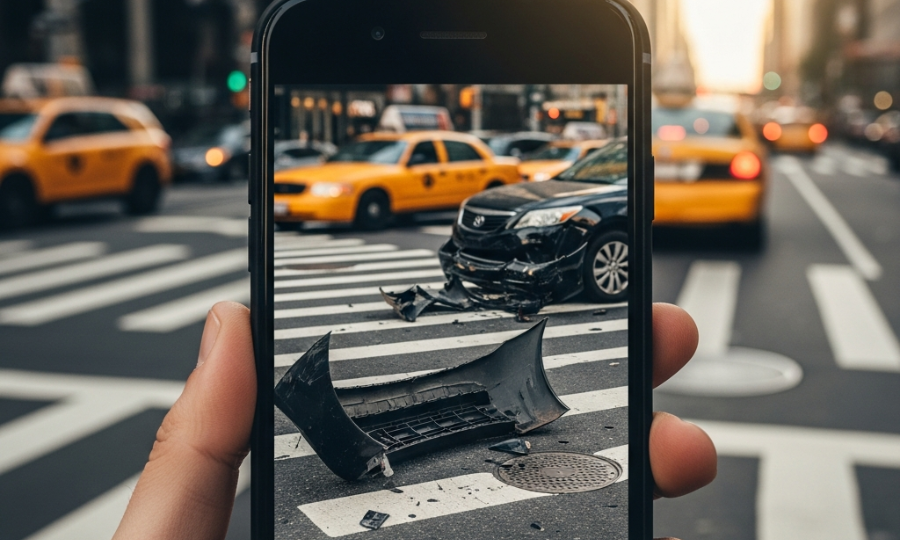
Proving Fault in an NYC Car Accident Without a Police Report

Proving Fault in an NYC Car Accident Without a Police Report

You are driving through a busy intersection in Brooklyn or Queens when another vehicle suddenly cuts you off, causing a sharp collision. Your car is damaged, and your neck and shoulder immediately begin to stiffen. You do what any responsible driver would do: you call 911 to report the crash and wait for the police. However, when you speak to the operator or when officers finally arrive, you receive frustrating news. Because your injuries do not appear to be life-threatening and the vehicles do not require an immediate emergency tow, the NYPD will not write an official police accident report. Key Takeaways Under New York Vehicle and Traffic Law Section 605, motorists must file a written report with the Commissioner within 10 days if an accident causes injury or over $1,000 in property damage. The DMV implements this requirement through Form MV-104, which can be filed online or by mail. Failing to file the required MV-104 motorist report within the 10-day state deadline can result in the suspension of your driver's license. When the NYPD does not write a report, you must proactively gather scene photos, witness contacts, and local surveillance footage to establish liability and protect your insurance claim. This scenario is a reality for thousands of drivers across the five boroughs. Under citywide policies, the NYPD has shifted its response protocols to focus primarily on collisions involving critical injuries, fatalities, or vehicles that are completely disabled and blocking traffic. For minor to moderate collisions, officers frequently instruct drivers to simply exchange insurance information and go on their way. This leaves honest, injured New Yorkers caught in a difficult "no-report" trap, where they must prove fault in a classic "my word versus yours" dispute. As a top NYC personal injury lawyer, our firm has helped countless accident victims navigate these exact situations. While an official police report is a valuable piece of evidence, its absence does not mean your legal case is over. Consequently, you can still secure the full compensation you deserve by taking proactive steps to document the scene and establish liability. Below are six essential tips to protect your rights and build a winning claim when the police refuse to write a report. 1. Understand Your Legal Duty Under Vehicle and Traffic Law Section 605 First, you must understand that even if the NYPD refuses to write a report, you still have a strict legal obligation to report the crash yourself. According to New York Vehicle and Traffic Law Section 605, every motorist involved in an accident within the state must file a written report if the crash results in personal injury, death, or property damage exceeding $1,000 to any one person's property. This self-report is completed using the New York State Department of Motor Vehicles Form MV-104. Also, New York Vehicle and Traffic Law Section 605 requires a written report to the Commissioner within 10 days of the collision. The DMV directs motorists to file Form MV-104 online or mail it to the Crash Records Center in Albany. Failing to meet this strict 10-day deadline can have serious consequences under state law. Additionally, the DMV has the authority to suspend your driver's license until the completed report is officially on file. Therefore, you should never wait for the other driver to take action. You must protect your own driving privileges and create an official paper trail by filing your own Form MV-104 immediately. This form requires detailed information about the time, location, weather conditions, vehicle damage, and any physical injuries sustained during the crash. 2. Gather Comprehensive Evidence Directly at the Scene Because you cannot rely on a responding officer to document the physical evidence, you must act as your own investigator at the accident scene. If you are physically able to do so safely, use your smartphone to capture as much visual evidence as possible before any vehicles are moved. This photographic record will serve as the foundation of your insurance claim. For example, you should take close-up photos of the damage to both vehicles, as well as wide-angle shots showing the positions of the cars relative to the lanes, traffic signals, and street signs. Be sure to photograph any skid marks, debris on the roadway, and the prevailing weather or road conditions. These visual details make it much harder for the at-fault driver's insurance company to fabricate a different version of how the crash occurred. In addition, you must exchange essential details with the other motorist. Under New York law, drivers must exchange driver's license information, insurance, and vehicle registration details. Take clear photos of their physical driver's license and insurance card to prevent transcription errors or false information. 3. Identify and Secure Independent Witness Statements Meanwhile, in a "my word versus yours" dispute, an unbiased third-party witness can completely transform the strength of your claim. Responding officers often fail to interview bystanders, but you can secure this vital testimony yourself. Look around the scene immediately after the impact for pedestrians, shopkeepers, or other motorists who stopped to help. Approach these individuals politely and ask if they saw what happened. If they agree to help, ask for their full names, phone numbers, and email addresses. If they are willing, you can even use your phone to record a brief video of them describing exactly what they saw, such as the other driver running a red light or failing to yield. For instance, if you are injured in a Brooklyn construction accident or a busy Manhattan intersection, bystanders are almost always present. Their immediate, unedited recollections of the event carry immense weight with insurance adjusters and judges alike, providing the objective proof needed to establish the other driver's negligence. 4. Search for Local Surveillance and Dashcam Footage Fortunately, New York City is one of the most heavily monitored urban areas in the world. Even if no police officer is there to write a report, local technology may have captured the entire collision on video. You must act quickly to locate and preserve this footage before it is permanently overwritten. First, look at the surrounding buildings for commercial security cameras, residential doorbell cameras, or municipal traffic monitoring systems. Many local business owners are willing to share their security footage if you ask them politely and explain that you were injured in a crash. However, because many private systems overwrite their data within a few days, you or your attorney must make these inquiries immediately. Second, check if your own vehicle or the other driver's car is equipped with a dashcam. Similarly, look around for rideshare drivers or delivery vehicles that were nearby at the time of the crash, as they frequently run continuous recording systems. This video evidence provides an indisputable, real-time record of the collision that overrides any false claims made by the opposing driver. 5. Seek Immediate Medical Evaluation to Document Your Injuries Another critical mistake accident victims make is delaying medical treatment, especially when no police officer is present to document their injuries at the scene. If you do not go to an emergency room or urgent care clinic on the day of the crash, the insurance company will argue that you were not actually hurt, or that your injuries were caused by an unrelated event. Under New York's No-Fault insurance system, your own insurance carrier or the carrier of the vehicle involved will cover your medical bills and lost wages up to statutory limits regardless of who caused the accident. However, New York State Department of Financial Services regulations require written notice of claim within 30 days of the crash. Form NF-2 is one acceptable way to provide this notice, but other forms of written notice may suffice. Seeking immediate medical care ensures that your injuries are officially diagnosed and tied directly to the collision from day one. Therefore, even if you feel only minor stiffness or soreness, visit a doctor right away. Medical records from a hospital or clinic serve as objective, scientific proof of your physical damages. These records are essential for demonstrating that your injuries meet the necessary legal thresholds for a personal injury lawsuit. 6. Consult an Experienced NYC Personal Injury Lawyer Immediately Finally, you should never try to negotiate with an insurance company on your own, especially when there is no official police report. Insurance adjusters are trained to minimize payouts, and they will eagerly exploit the lack of an NYPD report to deny your claim or shift the blame onto you. They may pressure you into giving a recorded statement or accepting a lowball settlement before you fully understand the extent of your injuries. By hiring a dedicated NYC personal injury lawyer, you level the playing field. An experienced legal team will immediately launch an independent investigation, subpoena local business surveillance footage, obtain traffic camera records, and draft a legally compliant Form MV-104. We understand how to compile medical records, witness statements, and digital evidence to build an airtight case that forces the insurance company to take your claim seriously. Our Queens car accident attorneys explain how insurance laws apply to multi-vehicle crashes, and we are prepared to fight for your rights across all five boroughs. We handle all communication with the insurance adjusters so that you can focus entirely on your physical recovery and peace of mind. The Bottom Line Ultimately, the NYPD's refusal to write a police report does not destroy your chance of obtaining justice. By understanding your legal reporting duties, gathering strong evidence at the scene, securing witness statements, and seeking immediate medical care, you can successfully overcome the "no-report" trap. If you or a loved one has been injured in a collision, contact our experienced NYC personal injury legal team today for a free, no-obligation consultation, and let us help you take the confident next steps toward recovery. Sources New York State Senate, Vehicle and Traffic Law Section 605 New York State Department of Motor Vehicles, Form MV-104: Report of Motor Vehicle Crash New York State Department of Financial Services, Regulation 68: No-Fault Written Notice Requirements This article was drafted with AI assistance. Please verify all claims and information for accuracy. The content is for informational purposes only and does not constitute professional advice. Free Case Consultation Injured in an accident? Speak directly with an experienced NYC personal injury attorney at Rosenberg, Minc, Falkoff & Wolff. Your consultation is free, confidential, and risk-free. Start Your Free Case Review No obligation - No upfront fees - You don't pay unless we win Follow RMFW Law for legal insights and case results: Facebook Instagram X Pinterest Yelp YouTube Gary Silverstein Gary Silverstein has been a partner of Rosenberg, Minc, Falkoff & Wolff since 2001, and an associate of the firm since 1989. Mr. Silverstein graduated with a Bachelor of Science degree from State University of New York College at Oneonta in 1983. Mr. Silverstein holds a degree of Juris Doctor from the University of Miami School of Law, having graduated in 1988.

The Complete Guide to MTA, Bus and Train Accident Claims in New York

The Complete Guide to MTA, Bus and Train Accident Claims in New York

Navigating the streets of New York City is a daily exercise in trust. Every morning, millions of commuters step onto Metropolitan Transportation Authority (MTA) buses, board subway car s, or cross busy intersections. However, when that trust is broken by a sudden collision, a violent stop, or a slip on a wet station platform, your life can change in an instant. If you have suffered injuries in a public transit mishap, securing guidance from a dedicated bus accident lawyer is the first step toward reclaiming your peace of mind and securing the financial recovery you deserve. Key Takeaways You must file a formal Notice of Claim within 90 days of a public transit accident in New York, or you will lose your right to sue. Lawsuits against public entities like the MTA have a shortened statute of limitations of one year and 90 days from the accident date. Under New York no-fault rules, a bus passenger's primary source of medical coverage is their own household auto insurance policy. As an experienced NYC personal injury law firm, we understand that recovering from an accident is stressful enough without the burden of complex legal procedures. Public transit claims in New York do not follow the same rules as ordinary car crashes. The legal landscape involves strict governmental immunities, unique insurance structures, and tight filing deadlines that can catch victims off guard. This comprehensive guide explains how the claims process works, what steps you must take immediately, and how we fight to protect your rights. Understanding the New York Public Transit System and Liability The first step in any injury claim is identifying who is responsible. In New York City, public transit is a massive web of municipal entities, public authorities, and private operators. The MTA operates the vast majority of these services, including New York City Transit buses and subways, the Long Island Rail Road, and Metro-North Railroad. However, private charter companies, sightseeing buses, and school districts also share the road. The Difference Between Public and Private Operators If you are injured on a private charter bus, a tour bus, or a private commuter shuttle, your case will proceed much like a standard personal injury lawsuit. These private companies are subject to the standard New York statute of limitations. Under New York Civil Practice Law and Rules Section 214, victims generally have three years from the date of the accident to file a lawsuit. However, if your injury involves an MTA bus, a city subway train, or another municipal vehicle, the rules change completely. Public authorities enjoy special legal protections under state law. Consequently, you must navigate a highly specialized administrative process before you are even allowed to file a lawsuit in court. Common Causes of Public Transit Accidents in NYC Distracted driving or operator fatigue behind the wheel. Sudden, violent braking that throws passengers from their seats or off balance. Improper maintenance of vehicle braking systems, doors, or subway platforms. Failure to yield to pedestrians in marked crosswalks. Inadequate security or poor lighting in subway stations, leading to slips, trips, and falls. The Critical 90-Day Notice of Claim Deadline The single most important rule in New York public transit cases is the strict timeline for notifying the government of your injury. If you fail to act quickly, you will lose your right to seek compensation forever, regardless of how severe your injuries are or how clearly the operator was at fault. What is a Notice of Claim? A Notice of Claim is a formal legal document that alerts the municipal agency of your intent to sue. According to New York General Municipal Law Section 50-e, you must properly serve this notice to the appropriate public authority within 90 days of the date of the accident. This document must detail the exact date, time, and location of the incident, how the accident occurred, and the nature of your physical injuries. For example, if you are injured on an MTA bus, the notice must be served directly to the MTA or the New York City Transit Authority. If your injury occurred due to a defective condition on a city sidewalk near a bus stop, you might also need to file a claim with the New York City Comptroller's Office. The One Year and 90 Days Statute of Limitations Filing the Notice of Claim is only the first step. Once the 90-day window passes, you must still adhere to a shortened statute of limitations to file a formal lawsuit. General Municipal Law Section 50-i applies to cities, counties, towns, villages, fire districts, and school districts, not generally to public authorities like the MTA. Any lawsuit against a public authority like the MTA must be commenced within one year and 90 days from the date of the accident. This is significantly shorter than the standard three-year window for private personal injury claims in New York. No-Fault Insurance Rules and Bus Accidents New York is a no-fault insurance state, which means that after a motor vehicle accident, your own auto insurance policy typically pays for your medical treatments and lost wages, regardless of who caused the crash. However, the application of no-fault rules to bus passengers is unique and often confusing for victims. How No-Fault Applies to Bus Passengers If you are a passenger on an MTA bus and you are injured in a collision, you do not look to the MTA's insurance first for medical coverage. Instead, under New York insurance regulations, your primary source of no-fault coverage is your own household auto insurance policy. This rule applies even though your personal vehicle was not involved in the crash. If you do not own a car and no one in your household has an auto insurance policy, the bus company's no-fault coverage will then step in to pay your medical bills and lost wages. Navigating these overlapping insurance priorities requires careful legal analysis to ensure your medical bills are paid on time without interruptions. The Serious Injury Threshold To sue the negligent driver or public authority for pain and suffering damages, your injuries must meet the serious injury threshold defined by New York Insurance Law Section 5102(d). Qualifying injuries include fractures, significant disfigurement, permanent limitation of use of a body organ or member, or any non-permanent injury that prevents you from performing your usual daily activities for at least 90 of the 180 days immediately following the accident. A skilled lawyer will gather the necessary medical documentation to prove your injuries meet this legal standard. Steps to Take Immediately After an NYC Transit Accident What you do in the minutes and days following a public transit accident can make or break your legal claim. Because the MTA and other large transit entities employ teams of investigators and defense attorneys immediately after a crash, you must take swift action to protect yourself. Seek Immediate Medical Attention Your health is your top priority. Even if you believe your injuries are minor, seek a medical evaluation at an emergency room or urgent care clinic. Adrenaline can mask pain, and serious conditions like internal bleeding, concussions, or soft-tissue damage may not show symptoms until hours or days later. Also, medical records created immediately after the crash provide vital, objective proof linking your injuries to the accident. Document the Scene and Gather Evidence Take photographs of the vehicles involved, the interior of the bus or train, any visible hazards, and your physical injuries. Write down the bus or train car number, the route name, and the driver's name or badge number. Collect contact information from fellow passengers and eyewitnesses who saw what happened. Request a copy of the police report or the MTA supervisor's incident report. Consult an Experienced Personal Injury Attorney Do not speak to insurance adjusters or transit authority investigators before consulting a lawyer. They may try to record your statement or offer a quick, lowball settlement that does not fully cover your future medical needs. A dedicated attorney will handle all communication, investigate the crash, and ensure all municipal filing deadlines are met. Frequently Asked Questions Can I sue the MTA if I was injured because a bus stopped too suddenly? Yes, but these cases are legally challenging. Under New York law, transit operators are expected to make routine stops, and passengers must expect a certain amount of movement. To win a sudden stop case, we must prove that the stop was unusually violent, unnecessary, and went beyond the ordinary jerks and jolts of daily transit travel. Gathering witness statements and onboard camera footage is crucial in these scenarios. What happens if I miss the 90-day deadline to file a Notice of Claim? If you miss the 90-day deadline, the court will almost certainly dismiss your case, and you will lose your right to seek compensation. In very rare circumstances, you can petition the court for permission to file a late Notice of Claim. However, you must show a compelling reason for the delay, such as physical incapacitation, and prove that the transit authority suffered no legal prejudice from the delay. Who pays my medical bills if I am hurt as a pedestrian hit by a bus? If you are a pedestrian struck by a bus in New York, the bus company's no-fault insurance policy may be a source for paying your medical bills and lost wages. You may need to file a no-fault application with the bus company's insurer to secure these benefits. How long does a public transit injury lawsuit take to resolve in New York? The timeline for resolving an MTA or public transit lawsuit varies greatly depending on the complexity of the accident and the severity of your injuries. Some cases resolve through negotiations within several months, while others involving catastrophic injuries may require formal litigation and take a few years to reach a trial or settlement. Getting Started with Your Claim If you or a loved one has been injured in a New York City transit accident, time is not on your side. The 90-day clock is already ticking, and the transit authority is already building its defense. You do not have to face this complex legal battle alone. Our experienced legal team is ready to stand by your side, handle the paperwork, and fight for the maximum compensation you deserve for your medical bills, lost wages, and pain and suffering. Contact our office today for a free, confidential consultation to discuss your case and learn how we can help you move forward with confidence. Sources New York State Senate, New York State General Municipal Law Section 50-e This article was drafted with AI assistance. Please verify all claims and information for accuracy. The content is for informational purposes only and does not constitute professional advice. Free Case Consultation Injured in an accident? Speak directly with an experienced NYC personal injury attorney at Rosenberg, Minc, Falkoff & Wolff. Your consultation is free, confidential, and risk-free. Start Your Free Case Review No obligation - No upfront fees - You don't pay unless we win Follow RMFW Law for legal insights and case results: Facebook Instagram X Pinterest Yelp YouTube

The $82M Verdict

The $82M Verdict: Subway Track Accidents and MTA Liability

When a Brooklyn federal jury awarded n ear ly $82 million to Brazilian tourist Luisa Janssen Harger Da Silva, it sent a powerful shockwave through the entire Metropolitan Transportation Authority. According to court records from the United States District Court for the Eastern District of New York, the jury found the transit agency negligent after Da Silva fainted and fell onto the subway tracks at the Atlantic Avenue-Barclays Center station in 2016. An oncoming B train s truck her, resulting in the amputation of her left arm and left leg. For decades, the transit authority operated under the assumption that they were largely shielded from law suits involving track falls. However, this historic verdict completely redefines how we prove transit agency negligence in New York City. Key Takeaways A Brooklyn federal jury awarded Luisa Janssen Da Silva $81.7 million, including $70 million for pain and suffering, after she fell onto the tracks and was struck by a train. The landmark verdict established transit authority liability for failing to install platform safety barriers despite possessing internal safety data. The court denied the transit agency qualified immunity because they failed to conduct reasonable safety studies prior to the 2016 accident. Commuters injured in NYC transit accidents must file a formal Notice of Claim within 90 days of the incident to protect their right to seek compensation. If you or someone you love has suffered injuries on a subway platform, this case changes the legal landscape. As a top NYC personal injury lawyer, our firm understands how to hold massive public entities accountable when they fail to protect the public. Consequently, we are closely analyzing this landmark decision to help other accident victims seek the justice they deserve. The Groundbreaking Details of the Luisa Janssen Verdict To understand the impact of this case, we must look at the specific compensation the jury awarded. According to court records published by the Brooklyn Eagle, the jury awarded Da Silva a total of $81.7 million. This total included various allocations for pain and suffering, medical costs, and lost earnings. The size of this award reflects the extreme physical and emotional trauma the young woman endured, which included 24 days of intensive treatment at Bellevue Hospital and multiple reconstructive surgeries. Also, this case represents the first successful claim in the United States where a train-strike victim held a transit system accountable for failing to install platform safety barriers. For years, the transit authority blamed passengers for track falls, attributing incidents to intoxication, medical emergencies, or personal recklessness. However, this trial shifted the focus from passenger behavior to systemic agency neglect. How the Plaintiff Overcame Government Immunity Suing a public entity like the Metropolitan Transportation Authority is notoriously difficult. Typically, government agencies claim qualified immunity, which protects them from lawsuits regarding their planning and discretionary decisions. In Harger Da Silva v. New York City Transit Authority, the defendants argued that their decisions regarding station design and safety installations were protected under this immunity doctrine. However, the plaintiff's legal team successfully defeated this defense. According to court documents from the Eastern District of New York, the lawyers exposed a critical vulnerability in the defense. They revealed that the transit authority had possessed internal safety data indicating that people regularly fell onto the tracks, yet the agency had failed to conduct a single reasonable study on how to prevent these falls prior to the 2016 accident. Plus, the plaintiff proved that the transit authority had previously rejected a no-cost industry proposal to install platform screen doors system-wide. Because the agency failed to conduct adequate safety studies, the court ruled they could not claim qualified immunity. Proving Negligence in New York Subway Track Accidents If you are injured in a Brooklyn construction accident, a slip and fall, or a transit collision, proving negligence is the foundation of your case. In subway track accidents, establishing negligence requires showing that the transit authority knew about a hazard and failed to take reasonable steps to correct it. The Luisa Janssen case provides a clear blueprint for how a skilled nyc personal injury lawyer can prove this negligence. First, we must establish that a hazard was foreseeable. According to historical transit records presented during the trial, train strikes have occurred regularly, indicating a foreseeable danger. Second, we must show that feasible safety solutions existed. The plaintiff’s team demonstrated that platform edge barriers and track intrusion detection systems were widely available and highly effective. Finally, we must prove that the agency's failure to implement these solutions directly caused the victim's injuries. The Role of Train Operator Negligence While the lack of platform barriers was a central issue, the Luisa Janssen case also focused on the actions of the train operator. Federal regulations assign vigilance and warning duties to designated watchmen/lookouts and roadway workers, not train operators generally. Last clear chance doctrine can apply to railroad cases but there is no distinct 'train operator vigilance' concept that is often evaluated under this doctrine. This legal concept holds a defendant liable if they had a clear opportunity to avoid an accident but failed to do so. During the trial, the jury evaluated whether the train operator could have seen Da Silva on the tracks in time to stop the train. Although the defense argued that the situation was an unavoidable emergency, the jury ultimately found that the combined negligence of the transit authority and the subway operator caused the catastrophic accident. Therefore, if you are injured on the tracks, your attorney will carefully analyze train speed, operator reaction times, and station lighting to determine if the operator could have prevented the collision. What This Verdict Means for NYC Subway Riders This landmark verdict is already forcing tangible changes across the city. In direct response to the mounting legal pressure and public safety concerns highlighted by this lawsuit, the transit authority began installing fixed-rail platform barriers at select stations. However, hundreds of busy stations across Manhattan, Brooklyn, Queens, and the Bronx still lack these vital safety features. Meanwhile, riders continue to face daily risks on crowded, narrow, and poorly maintained platforms. If you suffer an injury due to a platform hazard, a push, or a medical emergency that sends you onto the tracks, you should know that you have legal options. The law demands that transit agencies provide a reasonably safe environment for the millions of commuters who rely on their services every day. Taking the Next Steps After a Transit Accident If you or a loved one has been injured in a subway accident, taking swift action is absolutely critical. Unlike claims against private individuals, lawsuits against public entities in New York are subject to incredibly strict deadlines. For example, the 90-day Notice of Claim requirement applies only to claims against municipal/public entities, not all accidents in NYC. First, seek immediate medical attention and ensure your injuries are fully documented. Next, avoid speaking with transit investigators or insurance adjusters without legal representation. Finally, contact an experienced Brooklyn subway accident attorney who can immediately secure vital evidence, such as station surveillance footage, train black box data, and operator records. Our dedicated legal team is here to guide you through every step of this complex process, ensuring your rights are protected and you receive the maximum compensation possible. Sources U.S. District Court for the Eastern District of New York, Luisa Janssen Harger Da Silva v. New York City Transit Authority et al., No. 1:17-cv-04550 This article was drafted with AI assistance. Please verify all claims and information for accuracy. The content is for informational purposes only and does not constitute professional advice. Free Case Consultation Injured in an accident? Speak directly with an experienced NYC personal injury attorney at Rosenberg, Minc, Falkoff & Wolff. Your consultation is free, confidential, and risk-free. Start Your Free Case Review No obligation - No upfront fees - You don't pay unless we win Follow RMFW Law for legal insights and case results: Facebook Instagram X Pinterest Yelp YouTube Gary Silverstein Gary Silverstein has been a partner of Rosenberg, Minc, Falkoff & Wolff since 2001, and an associate of the firm since 1989. Mr. Silverstein graduated with a Bachelor of Science degree from State University of New York College at Oneonta in 1983. Mr. Silverstein holds a degree of Juris Doctor from the University of Miami School of Law, having graduated in 1988.

Do After an NYC Public Park Slip and Fall

What to Do After an NYC Public Park Slip and Fall

New York City public parks offer beautiful spaces for families to enjoy. However, a fun afternoon at a local playground can change in an instant if a child suffers an injury on defective equipment. In the stressful aftermath of an accident, parents naturally focus on medical car e and recovery. Unfortunately, many families do not realize that pursuing compensation from a public entity involves a strict, fast-moving legal timeline. If your child suffers an injury on city property, you face a critical deadline that arrives much faster than the standard statute of limitations. Key Takeaways Under New York State General Municipal Law Section 50-e, you must file a Notice of Claim within 90 days of a public park injury. The 90-day municipal filing deadline is a condition precedent that works alongside a separate one year and 90 days statute of limitations for municipal claims, rather than overriding the three-year statute. Filing a Notice of Claim allows the New York City Comptroller's Office to investigate the incident and potentially offer a settlement before a lawsuit is filed. Under New York State General Municipal Law Section 50-e, you must file a formal Notice of Claim within 90 days of the incident to pursue a case against a municipality like the City of New York. This 90-day clock is absolute. Missing this brief window usually means losing your right to seek compensation forever. As a dedicated NYC personal injury lawyer, our firm has helped countless accident victims navigate these complex municipal rules. We protect your rights so you can focus entirely on helping your family heal. Understanding the Notice of Claim Requirement A Notice of Claim is a formal legal document that alerts the municipal entity of your intent to file a lawsuit. This document must contain specific details about the accident. It must outline the time, location, and precise manner of the incident. It also must detail the nature of the injuries and the damages you are claiming. Filing a notice of claim is a mandatory prerequisite for tort claims against city agencies, but not for all types of lawsuits, including the Department of Parks and Recreation. The law establishes this requirement to give the city an early opportunity to investigate the conditions of the accident. Meanwhile, the city uses this time to preserve evidence and assess its potential liability. If you fail to file within the 90-day window, the court will likely dismiss your case, but late filing can be permitted in limited circumstances. This rule applies even if the city was clearly negligent in maintaining the playground equipment. According to the Office of the New York City Comptroller, the city resolves thousands of claims and lawsuits each fiscal year, resulting in substantial municipal payouts. The Comptroller's reporting on city claims and settlements highlights the massive scale of municipal liability in New York. However, the Comptroller's office can only investigate and settle claims that are filed properly and on time. If you miss the 90-day deadline, you cannot access this resolution process. Why Playground Injuries Require Urgent Action Playground accidents often involve complex premises liability rules. Public parks and school playgrounds must meet strict safety standards. When the city fails to maintain these spaces, children face serious risks. Common causes of playground injuries include defective swings, rusted slides, broken safety matting, and protruding hardware. If you have been injured in a Brooklyn construction accident or a public park slip and fall, proving municipal negligence requires immediate investigation. Our Queens car accident attorneys explain how insurance laws apply to multi-vehicle crashes, but municipal park claims follow entirely different procedural rules. In a standard personal injury case against a private property owner, New York law generally grants you three years to file a lawsuit. However, when the defendant is a government entity, the 90-day Notice of Claim rule works alongside a separate one year and 90 days statute of limitations, effectively replacing the three-year timeline. The clock starts ticking the very day the injury occurs. Also, evidence at public playgrounds can disappear quickly. The city may repair a broken swing or replace damaged safety tiles shortly after an accident. While repairs make the playground safer for other children, they can make it harder to prove that a hazard existed when your child was hurt. Therefore, our legal team works quickly to document the scene, take precise measurements, and secure witness statements before the environment changes. The Steps to Take Immediately After a Park Accident First, seek professional medical attention for your child immediately. Your child's health is the absolute priority. In addition, prompt medical care establishes an official, unbiased record of the injuries. This documentation is vital for any future legal action. Be sure to keep copies of all medical records, diagnostic reports, and treatment plans. Next, document the scene of the accident as thoroughly as possible. If you can do so safely, take clear photographs and videos of the defective equipment or hazardous condition. Capture close-up shots of the specific hazard, such as a cracked slide or a missing guardrail. Also, take wider photos to show the overall layout of the playground and any nearby park signs. Finally, gather contact information from anyone who witnessed the accident. Eyewitness accounts can provide critical support for your claim. Once you have secured your child's safety and documented the scene, contact an experienced NYC personal injury lawyer. An attorney can handle the complex paperwork and ensure your Notice of Claim is drafted and served correctly. How the Municipal Claim Process Works Once we file the Notice of Claim with the New York City Comptroller's Office, the city has the right to conduct an investigation. This process typically includes a hearing under General Municipal Law Section 50-h. During this hearing, the city's attorneys will ask you questions under oath about how the accident happened and the extent of your child's injuries. We prepare you thoroughly for this hearing so you can speak with confidence. After the city completes its investigation, it may offer a settlement. If the city denies the claim or fails to offer a fair settlement, we can proceed with a formal lawsuit. However, the timeline for filing a lawsuit against the city is also highly restricted. Under New York law, you must file the lawsuit within three years from the date of the accident for claims against private defendants, or within one year and 90 days for claims against governmental entities. Consequently, there is no time to waste. Navigating these overlapping deadlines requires careful coordination and deep legal knowledge. Working with a skilled legal team ensures that you do not make procedural errors that could jeopardize your child's right to compensation. We manage every deadline, handle the city's investigators, and advocate fiercely for your family's best interests. How We Protect Your Family's Rights As a top NYC personal injury lawyer, our firm has helped countless accident victims secure the compensation they need to recover. We understand the emotional toll a childhood injury takes on a family. Therefore, we handle all the legal heavy lifting so you can focus on your child's recovery. We investigate the park's maintenance records, obtain safety reports, and build a compelling case on your behalf. We believe that negligent parties must be held accountable, especially when their failure to maintain public spaces puts children at risk. If your child was injured due to unsafe playground equipment, we are ready to stand by your side. Contact our office today for a free consultation, and let us help you take the first step toward securing the justice your child deserves. Sources New York State Senate, Section 50-e Notice of claim - NYS Open Legislation Office of the New York City Comptroller, File a Claim - Office of the New York City Comptroller This article was drafted with AI assistance. Please verify all claims and information for accuracy. The content is for informational purposes only and does not constitute professional advice. Free Case Consultation Injured in an accident? Speak directly with an experienced NYC personal injury attorney at Rosenberg, Minc, Falkoff & Wolff. Your consultation is free, confidential, and risk-free. Start Your Free Case Review No obligation - No upfront fees - You don't pay unless we win Follow RMFW Law for legal insights and case results: Facebook Instagram X Pinterest Yelp YouTube Gary Silverstein Gary Silverstein has been a partner of Rosenberg, Minc, Falkoff & Wolff since 2001, and an associate of the firm since 1989. Mr. Silverstein graduated with a Bachelor of Science degree from State University of New York College at Oneonta in 1983. Mr. Silverstein holds a degree of Juris Doctor from the University of Miami School of Law, having graduated in 1988.

NYC Rideshare Crashes

Understanding No-Fault and Serious Injury in NYC Rideshare Crashes

Rideshare services like Uber and Lyft have transformed how New York ers travel, offering convenience at the touch of a button. However, when an accident occurs involving one of these vehicles, the situation can quickly become complex. Unlike a typical car crash, a rideshare accident in New York City involves multiple layers of insurance policies and specific legal considerations. This guide unpacks New York's no-fault insurance laws and how they apply to Uber and Lyft collisions, providing clarity for passengers, drivers, and other parties involved. Key Takeaways New York's no-fault insurance system provides initial coverage for medical expenses and lost wages, and while the statutory minimum is $50,000, NYC TLC-regulated for-hire vehicles commonly carry higher PIP limits (e.g., $200,000) under local requirements, regardless of fault, in rideshare accidents. Rideshare company insurance coverage varies significantly based on the driver's app status at the time of the accident, ranging from personal insurance when offline to high-limit commercial liability during an active trip. For a trip picked up in the five boroughs, the governing rules are the Taxi and Limousine Commission's for-hire vehicle requirements rather than the statewide TNC limits. To sue for pain and suffering in New York, an injured party must meet the state's "serious injury threshold," which defines specific types of severe injuries, and applies specifically to motor vehicle accidents under no-fault law, not all personal injury cases. Strict deadlines, including a general three-year statute of limitations for personal injury claims and shorter periods for government or MVAIC claims, are critical to protect your right to compensation. Three years applies to most personal injury claims, but medical malpractice (2.5 years) and wrongful death (2 years) have shorter periods. As a trusted NYC personal injury lawyer, our firm understands the challenges accident victims face. We aim to explain these intricate legal concepts in plain English, empowering you to understand your rights and confidently navigate the path toward fair compensation. Understanding New York's No Fault Insurance System New York operates under a no-fault auto insurance system. This means that after a car accident, your own insurance policy or the policy of the vehicle you were in generally provides the first layer of coverage for medical expenses and lost wages, regardless of who caused the crash. What is No-Fault Insurance? No-fault insurance, also known as Personal Injury Protection (PIP), covers essential economic losses up to a certain limit. These benefits include medical expenses, a portion of lost wages, and other necessary out-of-pocket expenses, such as transportation to medical appointments. The primary goal is to ensure prompt medical treatment and financial support without needing to prove fault immediately. How No-Fault Applies to Rideshare Accidents In a rideshare accident in New York, no-fault coverage still applies. If you are a passenger in an Uber or Lyft, the no-fault benefits typically come from the rideshare vehicle's insurance policy. Pedestrians or occupants of other vehicles struck by a rideshare car may initially turn to their own auto insurance's PIP coverage. If they do not have their own policy, or if no other coverage is available, the rideshare vehicle's no-fault insurance may apply. Basic Economic Loss and Its Limits New York's no-fault system generally provides up to $50,000 in benefits for medical costs and lost income. This amount covers what is termed "basic economic loss." If your injuries and associated economic losses exceed this $50,000 threshold, or if your injuries meet New York's "serious injury" definition, you may then be able to pursue a personal injury lawsuit against the at-fault party for additional damages, including pain and suffering. The Layered Insurance Landscape of Uber and Lyft Rideshare companies like Uber and Lyft utilize a tiered insurance system. The amount of coverage available after an accident depends entirely on the driver's status in the app at the precise moment of the collision. Understanding these distinct phases is crucial for any accident victim in New York City. Driver Offline: Personal Insurance Only When an Uber or Lyft driver is not logged into the rideshare app, their personal auto insurance policy applies. In this scenario, neither Uber nor Lyft provides any commercial coverage. New York requires private vehicles to carry minimum liability coverage of $25,000 for bodily injury and $50,000 for death for one person in a crash, and $50,000 for bodily injury and $100,000 for death for two or more people in a crash, plus $10,000 for property damage. If an accident occurs during this "off-duty" phase, you would generally pursue a claim against the driver's personal insurance, much like a standard car accident. Driver Online, Awaiting a Ride Request (Period 1) Once a driver logs into the rideshare app and is available to accept a ride request but has not yet accepted one, a limited form of rideshare insurance becomes active. During this phase, New York law requires rideshare companies to provide specific contingent liability coverage. This typically includes $75,000/$150,000/$25,000 under NY VTL Article 44-B (upstate); $100,000/$300,000 under NYC TLC rules. This coverage applies if the driver's personal insurance does not cover the claim. Driver En Route to Pick Up or During an Active Trip (Period 2/3) This phase offers the most comprehensive coverage. It begins when a rideshare driver accepts a ride request and continues until the trip officially ends. During this period, both Uber and Lyft provide substantial commercial insurance policies. NYC TLC rules set lower minimums ($100,000/$300,000); $1.25M applies under Article 44-B outside NYC. This also includes $1.25 million in uninsured/underinsured motorist (UM/UIM) coverage. This high level of coverage is a critical protection for passengers and other accident victims. Distinctions for New York City Drivers Rideshare regulations in New York City are distinct from the rest of the state. Uber and Lyft drivers operating within the five boroughs must adhere to the New York City Taxi and Limousine Commission's (TLC) insurance requirements. This means New York City rideshare vehicles need minimum commercial auto insurance coverage of $100,000 per person and $300,000 per accident in bodily injury liability coverage, plus $10,000 in property damage coverage and $100,000 in personal injury protection. This is a higher minimum than for private vehicles. Who Pays When You Are Injured in a Rideshare Accident? Determining liability and the responsible insurance policy in a rideshare accident can be complex. The specific circumstances of your accident, particularly the rideshare driver's app status, dictate which insurance policy applies. Our firm helps to navigate these complexities. Passengers If you were a passenger in an Uber or Lyft, you are generally in a strong legal position. Your initial medical expenses and lost wages will be covered by no-fault insurance, typically from the rideshare vehicle's policy. If your injuries are serious or your economic losses exceed $50,000, you may be able to pursue a claim against the commercial liability policy covering the vehicle during an active trip. For a trip picked up in the five boroughs that is the TLC-required for-hire vehicle policy described above; for a trip picked up outside New York City, VTL Article 44-B requires at least $1.25 million during a prearranged trip. Other Drivers or Pedestrians If you were driving another vehicle, a pedestrian, or a cyclist hit by an Uber or Lyft driver, your ability to claim compensation depends on the rideshare driver's status. If the driver was off-duty, their personal insurance applies. If the driver was logged into the app, the rideshare company's tiered commercial insurance policies may apply, with coverage ranging from limited contingent liability while the driver is awaiting a request to a high-limit policy during an active trip. Which policy applies also turns on where the trip was picked up, because five-borough pickups are insured under TLC for-hire vehicle rules rather than the statewide TNC limits. Rideshare Drivers Rideshare drivers injured while working often face unique challenges. They are typically classified as independent contractors, meaning they are not covered by workers' compensation. Their personal auto insurance may not cover accidents that occur during commercial rideshare activity. However, the rideshare company's insurance policies may provide coverage depending on their app status, including no-fault benefits and liability coverage. Navigating New York's Serious Injury Threshold New York's no-fault system limits the ability to sue for non-economic damages, such as pain and suffering, unless an injured person meets the state's "serious injury threshold." This is a critical legal concept in New York personal injury law, and applies specifically to motor vehicle accidents under no-fault law, not all personal injury cases. What Qualifies as a "Serious Injury"? New York Insurance Law Section 5102(d) defines what constitutes a serious injury. Categories include death, dismemberment, significant disfigurement, a fractured bone, loss of a fetus, permanent loss of use of a body organ, function, member, or system, permanent consequential limitation of a body organ or member, or significant limitation of the use of a body function or system. Historically, a "90/180-day rule" also qualified, where a medically determined injury prevented daily activities for at least 90 out of the first 180 days after an accident. However, this rule has been subject to changes, meaning serious injury claims now require objective medical evidence of permanent injury or significant functional limitation. Why the Threshold Matters for Your Claim If your injuries do not meet the serious injury threshold, you generally cannot file a lawsuit against the at-fault driver for pain and suffering. Your compensation would be limited to the no-fault benefits, which cap economic losses at $50,000. Meeting the threshold allows you to pursue a lawsuit for all your injuries, including non-economic damages like emotional distress and loss of enjoyment of life. Crucial Deadlines: New York's Statute of Limitations Strict deadlines apply to personal injury claims in New York. Missing these deadlines can result in losing your right to seek compensation. It is vital to act promptly after an accident. General Personal Injury Claims For most personal injury cases in New York, including rideshare accidents, the statute of limitations is generally three years from the date of the accident. Three years for standard negligence claims, but shorter periods apply to government claims, medical malpractice, and wrongful death. Claims Against Government Entities If your rideshare accident involves a government entity, such as a city or municipal agency, the deadlines are significantly shorter. You must file a Notice of Claim within 90 days of the accident. Subsequently, one year and 90 days applies specifically to NYC/NY municipal tort claims, not all government entity claims. MVAIC Claims If your accident involves an uninsured or hit-and-run driver, and you need to file a claim with the Motor Vehicle Accident Indemnification Corporation (MVAIC), specific deadlines apply. New York requires written accident reports within 10 days, not 24-hour police reports for hit-and-run. A Notice of Intention to file with MVAIC must be submitted within 90 days for hit-and-run accidents, or within 180 days for uninsured vehicle claims where the driver is identified. Additionally, you must file a No-Fault application within 30 days of the accident to be eligible for benefits. When Uninsured or Hit and Run Drivers Are Involved: MVAIC Even in a state with comprehensive insurance requirements, accidents involving uninsured drivers or hit-and-runs can occur. New York provides a safety net through the Motor Vehicle Accident Indemnification Corporation (MVAIC). What is MVAIC? The Motor Vehicle Accident Indemnification Corporation (MVAIC) was established by Article 52 of New York State Insurance Law. It serves as a non-profit organization that provides financial assistance to New Yorkers injured in car crashes involving uninsured or unknown drivers when no other insurance coverage is available. MVAIC offers basic coverage, including no-fault benefits and liability coverage, up to New York State's minimum policy limits. Eligibility for MVAIC Benefits To qualify for MVAIC benefits, you must meet specific requirements. The accident must have occurred in New York State, and you must have been a New York resident at the time of the accident, with limited exceptions. Critically, no other automobile insurance coverage must be available to you, meaning you or a household member do not own an insured vehicle. If you are a rideshare passenger, your first option is typically the Uber or Lyft insurance policy. MVAIC may apply if that coverage does not apply or if the driver was logged off. Frequently Asked Questions What is New York's no-fault law, and how does it affect my Uber or Lyft accident claim? New York's no-fault law ensures that your initial medical expenses and lost wages are covered by insurance, regardless of who caused the accident. While the statutory minimum is $50,000, NYC TLC-regulated for-hire vehicles commonly carry higher PIP limits (e.g., $200,000) under local requirements. If you are a rideshare passenger, this coverage typically comes from the rideshare vehicle's policy. This system allows you to receive prompt medical care without waiting to determine fault. How do Uber and Lyft's insurance policies work in New York? Uber and Lyft have a tiered insurance system based on the driver's app status. If the driver is offline, only their personal insurance applies. When logged in and awaiting a request, limited liability coverage (e.g., $75,000/$150,000/$25,000 under NY VTL Article 44-B (upstate); $100,000/$300,000 under NYC TLC rules) is active. During an active trip (en route to pickup or with a passenger), high-limit commercial coverage applies for bodily injury and property damage: at least $1.25 million under NY VTL Article 44-B for a trip picked up outside New York City, and the TLC-required for-hire vehicle limits for a trip picked up in the five boroughs. What is the "serious injury threshold" in New York, and do I need to meet it? The serious injury threshold is a legal standard in New York that you must meet to sue for non-economic damages like pain and suffering after a car accident. It defines specific injury categories, such as fractures, significant disfigurement, or permanent limitations. This threshold applies specifically to motor vehicle accidents under no-fault law, not all personal injury cases. If your injury does not meet this threshold, your compensation is generally limited to no-fault benefits. What are the deadlines for filing a rideshare accident claim in New York? You generally have three years from the accident date to file a personal injury lawsuit in New York. Three years applies to most personal injury claims, but medical malpractice (2.5 years) and wrongful death (2 years) have shorter periods. However, if a government entity is involved, you must file a Notice of Claim within 90 days and one year and 90 days applies specifically to NYC/NY municipal tort claims, not all government entity claims. For MVAIC claims (uninsured/hit-and-run), New York requires written accident reports within 10 days, not 24-hour police reports for hit-and-run, and 90 days for a Notice of Intention to MVAIC. Next Steps: Protecting Your Rights After a Rideshare Accident If you have been involved in an Uber or Lyft accident in New York, understanding your rights and the complex insurance landscape is the first crucial step. Do not delay seeking medical attention, even if your injuries seem minor. Document everything at the scene, including taking photographs, gathering witness contact information, and saving your rideshare app trip details and receipts. Prompt action preserves vital evidence and protects your ability to pursue a claim. Consulting with an experienced New York City personal injury attorney who understands rideshare accident law can make a significant difference in securing the compensation you deserve. Our team stands ready to guide you through this challenging process with expertise and compassion, ensuring your rights are protected every step of the way. This article was drafted with AI assistance. Please verify all claims and information for accuracy. The content is for informational purposes only and does not constitute professional advice. Free Case Consultation Injured in an accident? Speak directly with an experienced NYC personal injury attorney at Rosenberg, Minc, Falkoff & Wolff. Your consultation is free, confidential, and risk-free. Start Your Free Case Review No obligation - No upfront fees - You don't pay unless we win Follow RMFW Law for legal insights and case results: Facebook Instagram X Pinterest Yelp YouTube Gary Silverstein Gary Silverstein has been a partner of Rosenberg, Minc, Falkoff & Wolff since 2001, and an associate of the firm since 1989. Mr. Silverstein graduated with a Bachelor of Science degree from State University of New York College at Oneonta in 1983. Mr. Silverstein holds a degree of Juris Doctor from the University of Miami School of Law, having graduated in 1988.
Contact Us

Fill out this form below and we'll contact you shortly
*Required Fields