
Slip and Fall Injuries
Slip and Fall Injury Claims in New York City: What Property Owners Owe You
A slip and fall accident can happen in seconds, but the consequences often last far longer: a fractured hip that never fully heals, weeks of missed work, or medical bills that keep arriving after the injury is supposedly "resolved." If your fall was caused by a property owner's failure to maintain a safe environment, you may have a legal claim. Rosenberg, Minc, Falkoff & Wolff, LLP has represented injured New Yorkers in premises liability cases for decades, helping clients pursue the compensation needed to cover treatment, lost income, and recovery.
Call 646-480-0830 for a Free Consultation.
No Fee Unless We Win.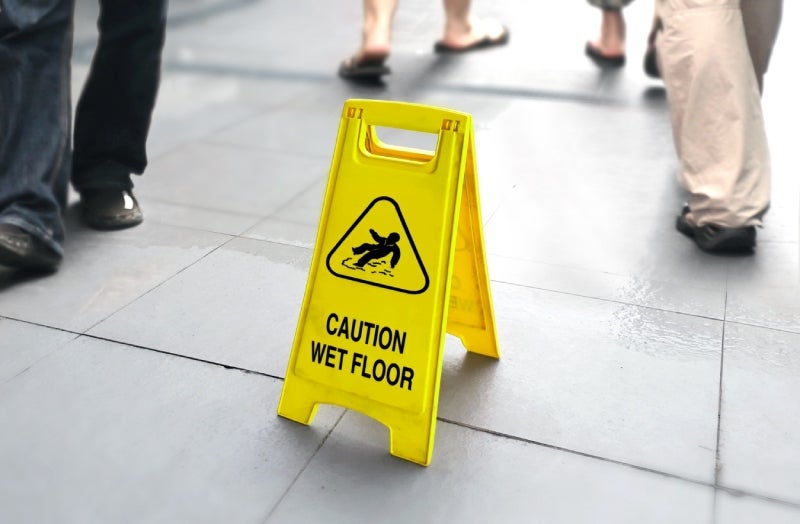
Slip and fall injuries remain one of the leading causes of emergency room visits nationwide, and New York State data confirms the trend is worsening here at home. According to the New York State Department of Health, fall-related injuries are the leading cause of injury hospitalizations for children ages 0 to 14 and adults 25 and older, costing the state roughly $1.3 billion annually in hospitalization expenses. Between 2018 and 2023, fall-related hospitalizations among New Yorkers 60 and older rose 13 percent, while fall-related emergency department visits rose 15 percent. These numbers reflect what our firm sees regularly: falls are not minor incidents, and they deserve serious legal attention.
Premises Liability: The Property Owner's Duty
Property owners and businesses operating in New York have a legal duty to maintain reasonably safe conditions for people lawfully on their premises. This duty extends to landlords, retail stores, restaurants, office buildings, and municipal properties alike. When an owner breaches that duty, whether through neglect, poor maintenance, or ignoring a known hazard, and that breach causes an injury, the injured party may be entitled to compensation.
To succeed on a premises liability claim, you generally need to establish four elements:
- The property owner owed a duty of care to people on the premises
- The owner breached that duty by failing to maintain safe conditions or warn of hazards
- The breach directly caused the accident
- The victim suffered damages as a result
What Causes Most Slip and Fall Accidents in New York City
Slip and fall accidents in New York City typically stem from conditions a property owner failed to address: wet or recently mopped floors without warning signs, uneven flooring, torn carpeting, poor lighting in stairwells, cluttered walkways, or snow and ice left untreated. Whether the fall happened in a Manhattan office lobby, a Brooklyn apartment building, a Queens grocery store, a retail space in The Bronx, or a Staten Island parking lot, the underlying legal question is the same: did the property owner know about the hazard, and did they fail to fix it?
Actual and Constructive Notice: Why This Legal Concept Matters
Even when a hazard clearly caused your fall, New York law requires proof that the property owner had notice of the dangerous condition. Courts recognize two types of notice:
Constructive Notice
applies when a hazardous condition existed long enough that the owner should have discovered and corrected it through reasonable inspection. If ice had accumulated outside a store for hours before you fell, that may support a constructive notice argument.
Actual Notice
applies when the owner was directly informed of the hazard, through a complaint, an inspection report, or a prior incident, and failed to act. Proving actual notice often relies on maintenance logs, inspection records, or prior complaint histories.
Without evidence of notice, even a clearly dangerous condition may not support a successful claim. This is one of the most heavily litigated issues in premises liability cases throughout Manhattan, Brooklyn, Queens, The Bronx, and Staten Island.
Evidence That Strengthens a Slip and Fall Claim
Building a strong claim depends on gathering evidence quickly, since surveillance footage is often overwritten and hazards get repaired or cleaned within days. Useful evidence typically includes:
- Photographs of the hazard, taken as close to the time of the fall as possible
- Surveillance footage from the property
- Maintenance and cleaning logs
- Witness statements
- Prior complaints or violation records related to the same condition
- An engineer's or investigator's assessment, when the cause of the fall isn't obvious
In more complex cases, such as a collapsed staircase or a structural defect, expert evidence may be necessary to establish exactly what failed and how long the condition had existed.
Call 646-480-0830 for a Free Consultation.
No Fee Unless We Win.
Medical Treatment and Documenting Your Injury
Seeking prompt medical evaluation after a fall serves two purposes: it protects your health, and it creates a documented record connecting your injuries to the accident. Injuries are sometimes underestimated in the immediate aftermath, particularly when someone feels pressured to finish a shift, complete an incident report, or "walk it off" before seeking care. Delayed treatment can complicate both recovery and the strength of a legal claim, so consistent follow-up care and clear medical documentation matter throughout your case.
Comparative Negligence: How Shared Fault Affects Your Case
Property owners and their insurers frequently argue that the injured person shares some responsibility for the fall, whether due to distraction, footwear, or being in a restricted area. New York follows a comparative negligence rule, meaning a victim can still recover compensation even if partially at fault, though the award is reduced by their percentage of responsibility. For example, a jury award reduced by 10 percent for shared fault means the final recovery reflects that adjustment. Minimizing assigned fault is often a central part of building a strong claim.
Who Is Responsible: Property Owners, Businesses, and Sidewalks
Responsibility depends on who controls the property where the fall occurred. In most of New York City, the owner of a building is responsible for maintaining the adjoining sidewalk, which is why sidewalk claims are typically brought against a landlord or business rather than the City. An exception exists for owner-occupied one, two, or three family homes used solely as residences, where the City may bear responsibility instead. Falls involving snow and ice, or sidewalk-specific hazards, involve additional timing rules not covered in detail here.
Compensation Available in Slip and Fall Claims
Compensation in a successful slip and fall claim may include medical expenses, lost wages, future earning capacity, pain and suffering, and related costs tied to recovery. There is no fixed formula for calculating value. Outcomes depend on the severity and permanence of the injury, the strength of the notice evidence, available insurance coverage, and any comparative negligence findings. A fracture that heals fully and one that results in long-term mobility loss are treated very differently, even if the hazard was identical.
When to Involve a Slip and Fall Lawyer
Insurance companies often move quickly to minimize claims, sometimes before an injured person fully understands the extent of their injuries or their legal options. Involving a lawyer early allows for prompt evidence preservation, accurate case valuation, and informed decision-making about medical care and legal deadlines. This is particularly important when the property involved is municipally owned, since claims against public entities often involve significantly shorter notice requirements than claims against private owners.
Rosenberg, Minc, Falkoff & Wolff, LLP represents injured clients across New York City, including Manhattan, Brooklyn, Queens, The Bronx, and Staten Island, and works to identify every available avenue for recovery.
Awards & Recognition
Rosenberg, Minc, Falkoff & Wolff, LLP is consistently recognized for its legal excellence and unwavering commitment to clients by prominent legal organizations. Our firm and its attorneys have earned accolades that reflect our high ethical standards and successful track record.










Hear From Our Clients
Frequently Asked Questions About Slip and Fall Claims in New York City
Is there a deadline to file a slip and fall claim in New York?
It depends on who controls the property. Claims against private property owners generally must be filed within a set number of years from the date of the fall. Claims involving public entities, such as city buildings, public housing, schools, or transit facilities, often require a formal notice of claim within a much shorter window, sometimes just 90 days. Because these timelines vary by defendant, it's important to identify the property owner as early as possible.
Do I still have a case if no one witnessed my fall?
Often, yes. Witnesses help, but claims are frequently built on surveillance footage, maintenance records, prior complaints, and photographic evidence rather than eyewitness accounts alone.
What if I fell at work?
Workers' compensation typically covers medical treatment and a portion of lost wages regardless of fault, but it doesn't compensate for pain and suffering and generally can't be pursued as a lawsuit against your employer. If a third party, such as a property manager or contractor, contributed to the hazard, a separate injury claim may be possible alongside your workers' compensation benefits.
How much is my slip and fall case worth?
There's no standard formula. Value depends on the severity of your injuries, required medical treatment, lost income, the strength of notice evidence, and available insurance coverage.
Who is responsible if I fell on a sidewalk?
In most cases, the adjoining property owner, not the City, is responsible for sidewalk maintenance. An exception applies to certain owner-occupied residential properties, where the City may bear responsibility instead.
Can I still recover compensation if I was partially at fault for my fall?
Yes. New York's comparative negligence rule allows recovery even when you share some responsibility, though your award is reduced by your percentage of fault.
What evidence should I collect after a slip and fall?
Photographs of the hazard, the clothing and footwear you were wearing, witness contact information, and prompt medical documentation are all valuable. Acting quickly matters, since surveillance footage and physical conditions often change within days.
Does it matter which borough I fell in?
The core legal principles, duty of care, notice, and comparative negligence, apply consistently across Manhattan, Brooklyn, Queens, The Bronx, and Staten Island, though specific procedures may vary depending on whether the property is privately or publicly owned.
Speak With Rosenberg, Minc, Falkoff & Wolff, LLP About Your Slip and Fall Claim
If you or a family member was injured in a slip and fall accident anywhere in New York City, understanding your rights shouldn't wait. Rosenberg, Minc, Falkoff & Wolff, LLP has spent decades helping injured New Yorkers pursue fair compensation while focusing on their recovery. Prior results do not guarantee a similar outcome in any future case, but our attention to the details of premises liability law remains constant.