
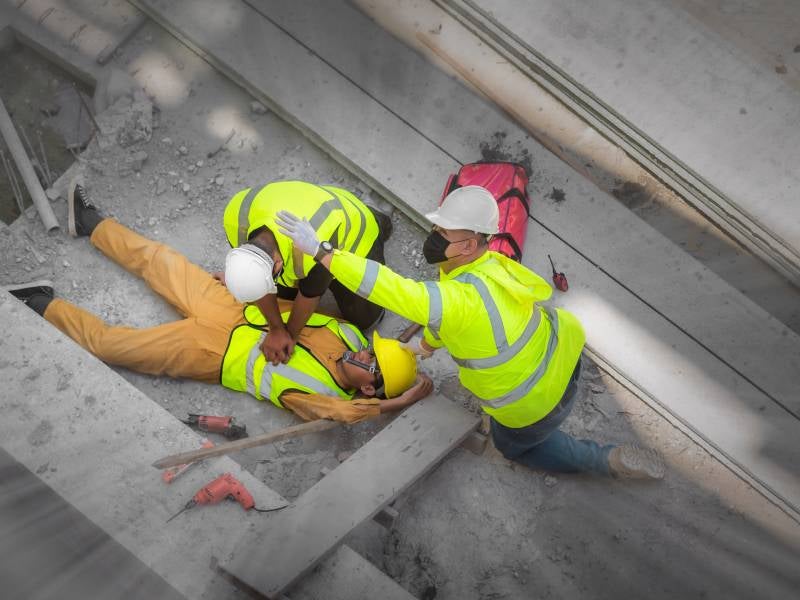
Protecting Injured Workers Across the Five Boroughs

Rosenberg, Minc, Falkoff & Wolff, LLP has represented injured construction accident victims in New York since 1922. If you or a family member has been hurt on a job site in Manhattan, Brooklyn, Queens, The Bronx, or Staten Island, understanding your legal options is the first step toward protecting your health, your income, and your family's future. This page explains what construction accidents involve, how New York Labor Law may protect injured workers, and what to do next.

Call 646-480-0830 for a Free Consultation.

No Fee Unless We Win.

Construction remains one of the most hazardous industries in New York State. Even with OSHA standards, Department of Buildings oversight, and site-specific safety plans, workers continue to face serious risks from falls, falling objects, machinery, and unsafe conditions. When an accident happens, injured workers often have questions that go well beyond a standard workers' compensation claim.

What Is a Construction Accident?

A construction accident is an injury-causing event that occurs on or around a construction, renovation, demolition, or repair site, typically involving job-site hazards or equipment. These accidents can result from falls, falling objects, defective machinery, electrical hazards, unsafe scaffolding, collapsed structures, or unsafe work conditions.

Not every construction accident results from someone else's negligence. Some accidents happen despite reasonable safety precautions. Determining whether a worker has a legal claim, and against whom, requires a careful review of what happened, who controlled the work, and what safety measures were or were not in place.

Common categories of construction-site hazards include:

  • Falls from heights (scaffolds, ladders, roofs, elevated platforms)
  • Falling objects and site debris
  • Crane, hoist, and elevator accidents
  • Forklifts and other heavy machinery
  • Electrical hazards and electrocution
  • Defective or poorly maintained equipment
  • Excavation and trench hazards
  • Structural collapses
  • Fires and explosions
  • Inadequate training or supervision
Two construction workers: one lies on the ground, another kneels beside him, reaching out.

Types of Construction Accidents We Handle

Rosenberg, Minc, Falkoff & Wolff, LLP Law represents workers and other eligible individuals injured in a wide range of construction-site accidents throughout New York City. These generally fall into several broad categories.

Falls and Elevation-Related Accidents

Falls remain among the most common and most serious construction accidents. This category includes falls from scaffolds, ladders, roofs, and elevated platforms, as well as accidents involving hoists or other elevation equipment. Falls from height can cause catastrophic injuries because of the force involved, and New York Labor Law contains specific provisions addressing certain elevation-related risks (discussed below).

Scaffolding Accidents

Scaffolding accidents can happen because of improperly secured scaffolds, defective components, scaffold collapse, or insufficient safety protection such as guardrails. Both falls from scaffolds and objects falling from scaffolds onto workers below can lead to serious injury.

Machinery and Equipment Accidents

This category covers accidents involving cranes, forklifts, hoists, elevators, and power tools such as saws, nail guns, drills, punch presses, and compressors. Liability in these cases can depend on whether the equipment was defective, improperly maintained, poorly operated, or used without adequate training or supervision.

Falling Objects and Site Debris

Workers and others near a construction site can be struck by falling tools, building materials, or debris. These accidents often involve questions about whether objects were properly secured or hoisted, and whether adequate netting, barriers, or overhead protection was in place.

Structural and Site Failures

Building collapses, structural failures, and demolition-related accidents can cause severe, multi-victim injuries. These cases often require an engineering-level investigation into design, construction methods, and site conditions.

Electrical, Fire, and Explosion Accidents

Electrocution injuries, welding and cutting accidents, gas explosions, and fires present unique hazards on active job sites, particularly during renovation work involving existing electrical systems.

Excavation and Trench Accidents

Trench collapses and excavation accidents can be especially dangerous due to the risk of entrapment and the speed at which conditions can change.
Each of these accident types can raise different legal questions and require different evidence. Where ROSENBERG, MINC, FALKOFF & WOLFF, LLP Law has published more detailed information on a specific accident type, such as scaffold accidents, ladder accidents, roofing accidents, or excavation accidents, that page offers a deeper look at the issues involved.

Common Causes of Construction Accidents

Construction accidents are commonly linked to failures in safety procedures, equipment maintenance, training, or supervision, though the actual cause must be investigated rather than assumed. Frequently cited causes include:

  • Failure to follow safety procedures or OSHA standards
  • Inadequate fall protection
  • Poor supervision or insufficient training
  • Defective or improperly maintained equipment
  • Unsafe scaffolding or lack of guardrails
  • Unsafe site conditions, including debris or uneven surfaces
  • Collapsed structures
  • Exposure to hazardous substances or fumes
  • Fires and explosions

Because more than one factor often contributes to a single accident, a thorough investigation into site records, equipment history, and witness accounts is typically necessary before concluding what went wrong.

Who May Be Responsible for a Construction Accident?

Responsibility for a construction accident depends on the specific facts, and more than one party may share legal responsibility. Potentially responsible parties can include:

  • Property owners, depending on their level of control over the site
  • General contractors, who typically have safety oversight responsibilities
  • Subcontractors, whose work may have created a hazard
  • Construction managers, where they held actual authority to supervise the work
  • Equipment manufacturers or suppliers, where a defective product contributed to the accident
  • Architects or engineers, in cases involving design or inspection failures

No party is automatically liable simply because of their role on a job site. Identifying who may be responsible generally requires reviewing the accident scene, safety procedures, contracts, maintenance records, training records, witness statements, and any applicable OSHA or Department of Buildings records.

Workers' Compensation vs. Third-Party Construction Accident Claims

Workers' compensation and a third-party personal injury claim are different legal paths, and understanding the distinction is one of the most important steps for an injured construction worker.

Workers' compensation generally provides benefits to eligible employees injured in the course of their employment, regardless of who was at fault. In exchange, employees typically cannot sue their employer directly for the injury, except in limited circumstances.

A separate personal injury claim may potentially exist against a third party, someone other than the injured worker's employer, depending on the facts. This could include a general contractor, property owner, subcontractor, or equipment manufacturer. Not every injured worker has a third-party claim, and whether one exists depends on who was involved and what caused the accident.

Key differences:

Workers' Compensation Third-Party Claim
Fault required? No Generally, yes
Who can be the defendant? Not the employer (in most cases) Parties other than the employer
Types of damages Medical benefits, wage-replacement benefits May include pain and suffering, full lost wages, and other damages

In some cases, an injured worker may be able to pursue both a workers' compensation claim and a third-party lawsuit at the same time, depending on the circumstances.

New York Labor Law and Construction Accidents

New York provides construction workers with legal protections that go beyond what most other injured workers in the state have. These protections come primarily from three sections of the New York Labor Law: Section 240 (the Scaffold Law), Section 241(6), and Section 200. Each addresses different circumstances and imposes different requirements.

Yellow hard hat on the floor in front of a blurry person wearing a safety vest and jeans.

What Is New York's Scaffold Law (Labor Law Section 240)?

New York Labor Law Section 240 addresses certain elevation-related hazards on construction sites and can impose significant responsibility on property owners and contractors when it applies. The statute requires that scaffolds, ladders, hoists, and similar devices be furnished and used in a manner that provides proper protection to covered workers.

New York's courts have held that the accidents this section reaches are generally limited to specific gravity-related events, such as a worker falling from a height or being struck by a falling object that was improperly hoisted or inadequately secured. Section 240 does not apply to every construction accident or every fall. Whether it applies depends on the type of work being performed, the nature of the hazard, and the circumstances of the accident. Because liability under this statute is tied to a violation and proximate cause, and because a worker's own conduct can sometimes be found to be the sole cause of an accident, an individualized review of the facts is necessary.

What Does Labor Law Section 241(6) Cover?

Labor Law Section 241(6) requires that construction, excavation, and demolition sites be constructed and maintained to provide reasonable and adequate protection to workers, and it incorporates specific safety rules from the New York Industrial Code. Unlike Section 240, a Section 241(6) claim depends on identifying a specific, concrete Industrial Code provision that was violated, rather than a general safety standard.

Whether Section 241(6) applies to a given accident depends on the type of work involved and which Industrial Code provisions, if any, were violated.

What Does Labor Law Section 200 Address?

Labor Law Section 200 is a general workplace safety provision requiring that work sites be constructed and operated to provide reasonable protection to workers. It reflects the common-law duty of care and applies to owners, contractors, and others involved in a project.

Liability under Section 200 often depends on whether the party being sued had actual control or supervision over the work, or notice of the dangerous condition that caused the injury. This can be a more demanding standard than Section 240, since it typically requires showing direct involvement in how the work was performed.

Serious Injuries in Construction Accidents

Construction accidents can result in a wide range of injuries, from relatively minor to catastrophic. Injuries associated with construction accidents can include:

  • Traumatic brain injuries and concussions
  • Neck and back injuries
  • Spinal cord injuries and paralysis
  • Broken or fractured bones
  • Crush injuries and amputations
  • Burns
  • Internal injuries
  • Permanent disabilities
  • Fatal injuries

Not every construction accident results in a catastrophic injury, but serious injuries can affect a worker's ability to earn a living, cover medical expenses, and care for their family long after the initial accident.

What to Do After a Construction Accident in New York

After a construction accident, seek appropriate medical attention, report the accident according to your workplace's requirements, preserve evidence, identify witnesses, and consider speaking with a construction accident attorney about your rights. The following steps can help protect both your health and any potential claim:

1

Seek medical attention

Your health comes first, and medical records will matter later.

2

Report the accident

to your employer as required.

3

Document the scene

if it is safe to do so, including photos of hazards, equipment, and conditions.

4

Identify witnesses

and record their contact information.

5

Preserve evidence

including damaged equipment, when possible, and avoid altering the accident scene.

6

Keep medical records and bills

related to your treatment.

7

Track lost income

resulting from your inability to work.

8

Consult a construction accident attorney

about potential workers' compensation and third-party claims.

Different deadlines can apply to workers' compensation claims and personal injury lawsuits, and claims involving public entities, such as a city agency, can carry especially short notice requirements. Speaking with an attorney promptly helps ensure that important deadlines are not missed.

What Compensation May Be Available After a Construction Accident?

The compensation available after a construction accident depends on the type of claim involved and the specific facts of the case.

Workers' compensation benefits can generally include coverage for reasonable and necessary medical treatment and wage-replacement benefits for eligible workers, regardless of fault.

A third-party personal injury claim, where one exists, may potentially allow for additional types of damages, depending on the circumstances, such as:

  • Medical expenses, including future care
  • Lost income and loss of future earning capacity
  • Pain and suffering
  • Compensation for permanent physical limitations

No specific outcome or dollar amount can be promised in any case. What may be recoverable depends on the applicable claim, the evidence available, and New York law.

Wrongful Death from Construction Accidents

A fatal construction accident can give rise to a wrongful death claim in appropriate circumstances. Surviving family members may have legal rights depending on the facts of the accident and applicable New York law. These cases often involve their own timelines and evidentiary needs, and speaking with an attorney as soon as possible can help preserve a family's options during an already difficult time.

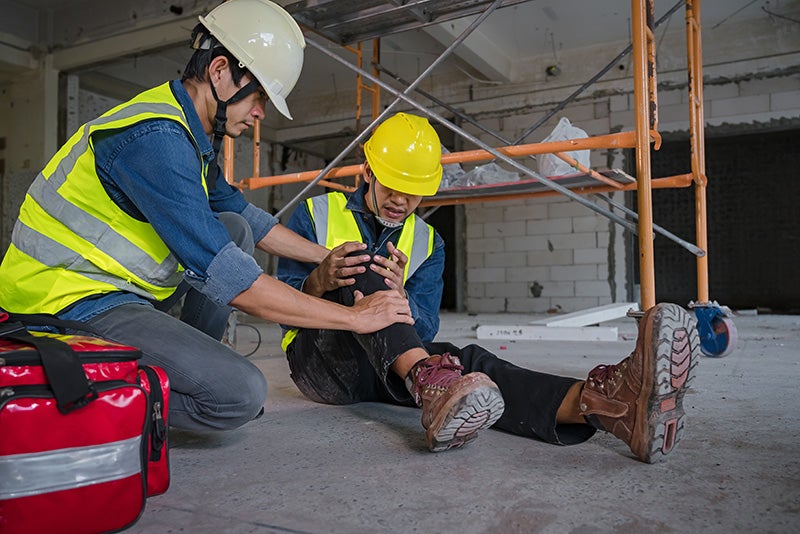
Two construction workers; one injured on the ground holding his knee, the other kneeling to assist him at a construction site.

How Rosenberg, Minc, Falkoff & Wolff, LLP Can Help

Since 1922, Rosenberg, Minc, Falkoff & Wolff, LLP has represented injured construction workers and their families throughout New York City. A thorough investigation is often central to understanding what happened and who may be responsible. This can include:

  • Investigating the accident scene and preserving physical evidence
  • Reviewing safety procedures, contracts, and maintenance records
  • Identifying potentially responsible parties
  • Evaluating workers' compensation issues alongside potential third-party claims
  • Reviewing medical records and documenting the impact of the injury
  • Communicating and negotiating with insurance companies
  • Preparing litigation and pursuing trial when appropriate

Not every case proceeds to litigation or trial, and past results, including prior settlements and verdicts obtained by the firm, do not guarantee any particular outcome in a future case. What our attorneys can offer is a careful, fact-driven review of your circumstances and honest guidance about your options.

Rosenberg, Minc, Falkoff & Wolff, LLP represents injured construction accident victims throughout Manhattan, Brooklyn, Queens, The Bronx, and Staten Island.

Call 646-480-0830 for a Free Consultation.

No Fee Unless We Win.

Call Now

Awards & Recognition

Rosenberg, Minc, Falkoff & Wolff, LLP is consistently recognized for its legal excellence and unwavering commitment to clients by prominent legal organizations. Our firm and its attorneys have earned accolades that reflect our high ethical standards and successful track record.

Martindale-Hubbell Peer Review Rated
Super Lawyers
Newsweek 10 Best Personal Injury Attorneys
Avvo Rating 10.0 Superb
Litigator Awards
Top Verdicts New York
Martindale-Hubbell Distinguished
BBB Accredited Business
Google Reviews
Yelp 5-Star Business

Hear From Our Clients

Frequently Asked Questions

The following are just a few of the questions that we will be happy to answer for you in specific detail during our initial consultation and in the course of our work together. The specific answer depends on a range of different factors in your own circumstances, which is why it is essential that we begin our work together immediately.

What should I do after a construction accident in New York?

Seek appropriate medical attention, report the accident according to your workplace's requirements, preserve evidence, and identify witnesses as soon as reasonably possible. Depending on the circumstances, you may have workers' compensation rights and a potential third-party personal injury claim.

Do I need a construction accident lawyer after being injured at work?

It depends on your circumstances, but many injured workers benefit from legal guidance, especially where a third-party claim may exist alongside workers' compensation. An attorney can help identify whether parties beyond your employer may share responsibility.

Can I receive workers' compensation after a construction accident?

Most employees injured in the course of employment are eligible for workers' compensation benefits, which generally do not require proving employer negligence. Eligibility and benefit amounts depend on the specific facts of your employment and injury.

Can I sue someone other than my employer after a construction accident?

Possibly. If a party other than your employer, such as a general contractor, property owner, or equipment manufacturer, may be legally responsible for the accident, you may have a third-party personal injury claim in addition to workers' compensation.

What is a third-party construction accident claim?

A third-party claim is a personal injury lawsuit brought against someone other than the injured worker's employer, such as a contractor, property owner, or manufacturer, when that party's conduct may have contributed to the accident.

What is New York Labor Law Section 240?

Labor Law Section 240, known as the Scaffold Law, addresses certain elevation-related construction hazards, such as falls from heights or being struck by improperly secured falling objects, and can impose significant responsibility on owners and contractors when it applies.

Does the Scaffold Law apply to every construction accident?

No. Section 240 applies only to specific gravity-related accidents involving elevation hazards, and whether it applies depends on the type of work being performed and the nature of the accident.

What is New York Labor Law Section 241(6)?

Section 241(6) requires construction, excavation, and demolition sites to meet certain safety standards drawn from the New York Industrial Code. Whether it applies depends on the specific code provision at issue and the circumstances of the accident.

What is New York Labor Law Section 200?

Section 200 is a general workplace safety statute reflecting the common-law duty to provide a reasonably safe work site. Liability often depends on whether the responsible party had control, supervision, or notice of the dangerous condition.

Who can be held responsible for a construction accident?

Potentially responsible parties can include property owners, general contractors, subcontractors, construction managers, and equipment manufacturers, depending on their role and level of control over the site or work being performed.

Can I sue a general contractor after a construction accident?

It depends on the general contractor's role and level of control over safety at the site. General contractors often have safety obligations under New York Labor Law, but responsibility must be established based on the facts.

Can I sue a property owner after a construction accident?

Property owners may potentially be responsible under New York Labor Law, particularly Sections 240 and 241(6), depending on the nature of the accident and the owner's relationship to the work performed.

What happens if defective construction equipment caused my injury?

If defective equipment contributed to your injury, the manufacturer, distributor, or supplier of that equipment may potentially be liable, in addition to any workers' compensation claim available through your employer.

What if I was injured by a falling object?

Injuries from falling objects, such as improperly secured tools or materials, may be covered under New York Labor Law Section 240 in certain circumstances, depending on how the object fell and whether proper hoisting or securing procedures were followed.

What if I fell from scaffolding?

Falls from scaffolding are among the accidents most closely associated with Labor Law Section 240, though whether the statute applies depends on the specific facts, including the scaffold's condition and the safety devices provided.

What if I fell from a ladder?

Ladder falls can potentially fall under Labor Law Section 240 protections, depending on whether the ladder was defective, improperly secured, or inadequate for the task being performed.

What if I was injured in a crane accident?

Crane accidents can involve multiple potential parties, including the crane operator's employer, the equipment owner, or the manufacturer, depending on whether the accident resulted from operator error, defective equipment, or improper maintenance.

What if I was injured by a forklift?

Forklift accidents may raise questions about training, maintenance, and site supervision. Responsibility depends on what caused the accident and who controlled the equipment and work site.

What if I was injured in a construction site collapse?

Structural collapses often require an in-depth investigation into design, construction methods, and site conditions to determine what caused the failure and who may be responsible.

What if I was injured by electrical equipment?

Electrical accidents can involve questions about site wiring, safety protocols, and whether proper precautions were taken, particularly during renovation work near existing electrical systems.

What if I was injured in an explosion or fire?

Explosions and fires on construction sites can result from gas leaks, improper storage of flammable materials, or equipment failures, and responsibility depends on the specific cause identified through investigation.

What if I was injured while working for a subcontractor?

Workers employed by a subcontractor may still have workers' compensation rights and potential third-party claims against a general contractor, property owner, or other parties, depending on the circumstances.

Can I receive workers' compensation and pursue a third-party claim at the same time?

In some cases, yes. Whether both types of claims are available depends on who was involved in the accident and whether a party other than your employer may be legally responsible.

What evidence is important after a construction accident?

Important evidence can include photographs of the accident scene, witness contact information, safety records, maintenance logs, contracts, and any OSHA or Department of Buildings records related to the incident.

How long do I have to report a construction accident in New York?

Reporting requirements can vary depending on your employer's policies and applicable law. Prompt reporting helps preserve your workers' compensation rights, so it's best to report an accident as soon as reasonably possible.

How long do I have to file a construction injury lawsuit in New York?

Deadlines vary depending on the type of claim and the parties involved. Claims against public entities can carry especially short notice requirements. An attorney can help confirm the deadlines that apply to your specific situation.

What compensation can I receive after a construction accident?

Available compensation depends on whether your claim involves workers' compensation, a third-party lawsuit, or both, and can include medical benefits, wage-replacement benefits, and, in a third-party claim, damages such as pain and suffering.

What happens if a construction accident causes a permanent disability?

Permanent disabilities can affect the type and amount of compensation available under both workers' compensation and third-party claims, depending on the severity of the disability and its impact on your ability to work.

Can a family file a claim after a fatal construction accident?

Surviving family members may have the right to pursue a wrongful death claim depending on the facts of the accident and applicable New York law.

Does Rosenberg, Minc, Falkoff & Wolff, LLP Law handle construction accidents throughout NYC?

Yes. Rosenberg, Minc, Falkoff & Wolff, LLP represents injured construction accident victims throughout New York City, including Manhattan, Brooklyn, Queens, The Bronx, and Staten Island.

Discuss Your Construction Accident Case with Rosenberg, Minc, Falkoff & Wolff, LLP Law

If you or a loved one has been injured in a construction accident in New York City, understanding your legal options shouldn't wait. Rosenberg, Minc, Falkoff & Wolff, LLP offers a free consultation to discuss what happened, answer your questions, and help you understand whether a workers' compensation claim, a third-party claim, or both may apply to your situation.

Contact Rosenberg, Minc, Falkoff & Wolff, LLP today to speak with a member of our team about your construction accident case.

Rosenberg, Minc, Falkoff & Wolff, LLP
122 E 42nd St # 3800, New York City, NY 10168
646-480-0830 Free Consultation!