
Helping Injured Riders Seek Compensation

Millions of New Yorkers rely on buses, subways, trains, and ferries every day to get to work, school, and everywhere in between. When that system fails and someone gets hurt, the aftermath can be confusing and overwhelming. Rosenberg, Minc, Falkoff & Wolff, LLP represents people injured in mass transit accidents throughout New York City, helping them understand their options and pursue the compensation they may be owed.

If you or someone you love was hurt while riding — or because of — a bus, subway car, commuter train, or ferry in Manhattan, Brooklyn, Queens, The Bronx, or Staten Island, this page answers the questions you're likely asking right now.

Call 646-480-0830 for a Free Consultation.

No Fee Unless We Win.
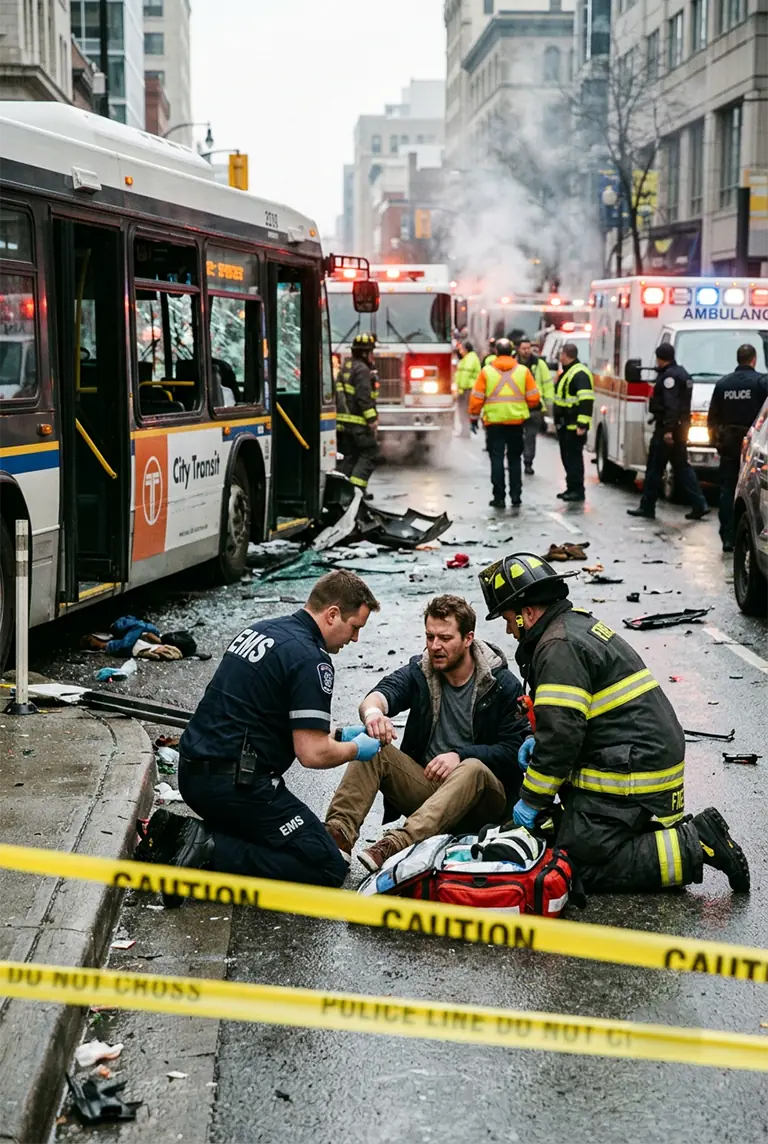
Injured passenger receiving emergency care beside a damaged city bus.

What Is a Mass Transit Accident?

A mass transit accident is any incident that causes injury to a passenger, pedestrian, or other person involving public or commercial transportation. In New York City, this most often means buses, subways, commuter trains, and ferries, though it can also include taxis and other for-hire vehicles.

These accidents can happen in many ways: a bus making a sudden stop, a subway train malfunctioning, a ferry collision, or a collision between a bus and another vehicle. Because mass transit is often operated or regulated by a public authority, these cases frequently involve legal issues that don't come up in a typical car accident claim.

Types of Mass Transit Accidents We Handle

Rosenberg, Minc, Falkoff & Wolff, LLP represents people injured in a range of mass transit incidents across New York City, including:

  • Bus accidents — collisions involving MTA buses, private bus companies, or charter and tour buses, affecting passengers, pedestrians, and other drivers
  • Subway and train accidents — injuries occurring on subway platforms, inside subway cars, or aboard commuter and passenger trains
  • Ferry and passenger vessel injuries — incidents aboard ferries or other vessels operated by a public agency or private company
  • Taxi and public transportation accidents — collisions involving taxis, liveries, or ride-share vehicles operating as part of the city's transportation network
  • Airplane accidents — we also assist surviving family members after a fatal airplane crash

Each of these accident types can involve different insurance policies, different potentially responsible parties, and different procedural rules. For accidents involving standard passenger vehicles rather than mass transit, our motor vehicle accident attorneys can help.

Bus and MTA Accidents

Bus accidents remain one of the most common forms of mass transit injury in New York City. Because many buses are operated by the Metropolitan Transportation Authority (MTA) or its affiliated companies, these claims often involve a public entity, which can affect how and when a claim must be filed. Rosenberg, Minc, Falkoff & Wolff, LLP has represented bus accident victims across the city, including passengers, pedestrians, and occupants of other vehicles struck by MTA or private buses.

Train and Subway Accidents

Subway and commuter train accidents can result from mechanical failure, platform conditions, operator error, or collisions. Depending on whether the train is operated by the MTA, the Long Island Rail Road, Metro-North, or a private carrier, different rules and deadlines may apply to a claim.

Ferry and Passenger Vessel Injuries

Passengers hurt aboard the Staten Island Ferry or another passenger vessel may face short, defendant-specific deadlines when a public agency operates the boat. As with buses and trains, identifying the correct operator and applicable rules early on matters.


Who May Be Responsible?

Determining fault after a mass transit accident isn't always straightforward. Depending on how the accident happened, responsibility may rest with one or more of the following:

  • The bus driver or train operator
  • A transit authority, such as the MTA
  • A private bus or transportation company
  • The manufacturer of a bus, train, or vehicle component
  • A company responsible for vehicle maintenance or inspection
  • Another driver, pedestrian, or bicyclist involved in the incident
  • A property owner or other party responsible for unsafe conditions

No party is automatically liable simply because an accident occurred on mass transit. A thorough investigation is typically necessary to determine who was at fault and whether more than one party shares responsibility. New York's comparative negligence rules also allow injured individuals to recover damages even when another party was only partially at fault.

What to Do After a Mass Transit Accident

The steps you take shortly after an accident can affect both your health and any potential claim. In general, you should:

  • Seek medical attention, even if injuries seem minor
  • Report the incident to the bus driver, transit staff, or appropriate authority
  • Document the scene if it's safe to do so
  • Photograph visible injuries and relevant conditions
  • Get contact information for any witnesses
  • Note the bus, train, or vehicle number and route, if possible
  • Keep all medical records and bills
  • Track any missed work and lost income
  • Preserve photos, videos, or other evidence
  • Speak with a qualified attorney promptly, especially given short claim deadlines that may apply

What Evidence Matters in a Mass Transit Accident Claim?

Strong evidence helps establish what happened and who may be responsible. Useful evidence often includes:

  • Accident or incident reports filed with the transit operator
  • Medical records documenting your injuries and treatment
  • Photographs of the scene, vehicle, or injuries
  • Video or surveillance footage, including from onboard cameras or nearby businesses
  • Contact and statement information from witnesses
  • Maintenance, inspection, or repair records
  • Proof of lost income and other financial losses

Video footage is especially important to preserve quickly. Many transit systems overwrite or delete surveillance footage within a matter of days or weeks, so prompt action can make a meaningful difference in a case.

MTA and Public Authority Claims: What You Need to Know

Can You Sue the MTA After an Accident?

In many cases, yes — but claims against the MTA or other public authorities are subject to procedural requirements that differ from claims against private individuals or companies. These requirements can include filing a formal Notice of Claim within a limited window of time, well before a lawsuit would otherwise be due.

What Is a Notice of Claim?

A Notice of Claim is a formal written notification, filed with a government or public entity, stating that you intend to pursue a legal claim against it. It typically must include basic details about the incident and the injuries involved. Not every mass transit claim requires a Notice of Claim — it depends on the specific transit operator and the facts of the case — but when it applies, missing the deadline can seriously jeopardize your ability to recover compensation.

Because these requirements vary depending on the public entity involved and the circumstances of the accident, it's important to have a knowledgeable attorney review your specific situation as soon as possible.

Call 646-480-0830 for a Free Consultation.

No Fee Unless We Win.

Call Now

How a Mass Transit Accident Attorney Can Help

Handling a mass transit claim on your own can be difficult, particularly when a public authority is involved. An attorney can help by:

  • Identifying the correct deadlines and procedural requirements for your claim
  • Investigating the accident and preserving important evidence
  • Identifying all potentially responsible parties
  • Working with financial and medical professionals to assess the full value of your losses
  • Handling communications with insurance companies and public agencies
  • Negotiating on your behalf or litigating your case if a fair resolution can't be reached

Since 1922, Rosenberg, Minc, Falkoff & Wolff, LLP has represented people injured in bus and mass transit accidents throughout New York. Our firm has recovered more than $1 billion in compensation for clients over the years, including a past $5.5 million award for a passenger injured when another vehicle collided with an MTA bus in the Bronx. These are results from prior cases and do not guarantee any particular outcome in a future matter, but they reflect the firm's long-standing commitment to mass transit accident victims.

What Compensation May Be Available?

Depending on the circumstances of your accident and the injuries involved, you may be entitled to pursue compensation for:

  • Past and future medical expenses
  • Lost wages and loss of earning capacity
  • Pain and suffering
  • Permanent disability
  • Emotional distress
  • Other losses recognized under New York law

Every case is different, and no attorney can guarantee a specific result. An honest evaluation of your claim requires a review of your medical treatment, the evidence available, and the parties involved.

Serving Injured Riders Throughout New York City

Rosenberg, Minc, Falkoff & Wolff, LLP represents mass transit accident victims across Manhattan, Brooklyn, Queens, The Bronx, and Staten Island. Whether your accident happened on a city bus in Queens, a subway platform in Manhattan, or the Staten Island Ferry, our firm is familiar with the transit systems, agencies, and legal issues unique to New York City.

Awards & Recognition

Rosenberg, Minc, Falkoff & Wolff, LLP is consistently recognized for its legal excellence and unwavering commitment to clients by prominent legal organizations. Our firm and its attorneys have earned accolades that reflect our high ethical standards and successful track record.

Martindale-Hubbell Peer Review Rated
Super Lawyers
Newsweek 10 Best Personal Injury Attorneys
Avvo Rating 10.0 Superb
Litigator Awards
Top Verdicts New York
Martindale-Hubbell Distinguished
BBB Accredited Business
Google Reviews
Yelp 5-Star Business

Hear From Our Clients

Frequently Asked Questions

What is a mass transit accident?

A mass transit accident is any incident causing injury involving public or commercial transportation, such as a bus, subway, train, or ferry. It can involve passengers, pedestrians, or other drivers, and often raises legal issues not present in typical car accident cases, especially when a public transit authority is involved.

What types of mass transit accidents does Rosenberg, Minc, Falkoff & Wolff, LLP handle?

The firm represents individuals injured in bus accidents, subway and train accidents, ferry and passenger vessel incidents, and certain taxi and public transportation accidents throughout New York City. The firm also assists surviving family members following fatal airplane accidents.

What should I do after a bus accident in New York City?

Seek medical attention first, then report the incident, document the scene if possible, and gather witness information. Keep your medical records, lost wage documentation, and any photos or videos. Speak with an attorney promptly, since claims involving public transit operators can carry short deadlines.

Can I file a claim after an MTA accident?

Yes, in many cases you can file a claim after an MTA-related accident, but the process may involve specific procedural steps, including a possible Notice of Claim. Requirements vary based on the transit operator involved and the facts of your case, so early legal guidance is important.

Can I sue the MTA after a bus or subway accident?

It may be possible to pursue a claim against the MTA, though claims against public authorities follow different rules than claims against private parties. This can include shorter deadlines and specific filing requirements. An attorney can evaluate whether your situation qualifies and what steps are needed.

What is a Notice of Claim?

A Notice of Claim is a formal written notice filed with a government or public entity informing it that you intend to pursue a legal claim. It generally must be filed within a limited time after the incident. Not every case requires one, but when it applies, missing the deadline can bar your claim.

How long do I have to file a mass transit accident claim in New York?

Deadlines vary depending on whether the claim involves a private party or a public transit authority. Claims against public entities like the MTA can involve significantly shorter windows than standard personal injury deadlines. Because these timeframes depend on your specific case, it's best to consult an attorney as soon as possible.

Who may be responsible for a bus or mass transit accident?

Responsibility may fall on the driver or operator, a transit authority, a private transportation company, a vehicle manufacturer, a maintenance provider, another driver, or another party, depending on the circumstances. An investigation is usually necessary to determine who was at fault.

What evidence can help prove a mass transit accident claim?

Helpful evidence includes incident reports, medical records, photographs, video or surveillance footage, witness statements, maintenance records, and proof of lost income. Video evidence should be preserved quickly, since many transit systems retain footage for only a limited time.

What compensation may be available after a mass transit accident?

Depending on your case, you may be able to pursue compensation for medical expenses, lost wages, loss of earning capacity, pain and suffering, disability, and emotional distress. The specific damages available depend on your injuries and the circumstances of the accident.

Can I recover compensation if another person was partially responsible?

Possibly. New York follows a comparative negligence rule, which allows an injured person to recover damages even if they were partially at fault, though the amount recovered may be reduced based on the degree of responsibility assigned.

Does Rosenberg, Minc, Falkoff & Wolff, LLP handle mass transit accidents throughout NYC?

Yes. The firm represents clients injured in mass transit accidents across Manhattan, Brooklyn, Queens, The Bronx, and Staten Island, and is familiar with the transit systems and procedural rules that apply throughout New York City.

Talk to Rosenberg, Minc, Falkoff & Wolff, LLP About Your Mass Transit Accident

If you were injured in a bus, subway, train, or ferry accident anywhere in New York City, you don't have to sort through the legal details alone. Rosenberg, Minc, Falkoff & Wolff, LLP offers free, confidential consultations to help you understand your options and the deadlines that may apply to your case. Call 646-480-0830 or contact us online today to schedule your consultation.

Contact Rosenberg, Minc, Falkoff & Wolff, LLP today at 646-480-0830 or contact us online for a free review of your case.
Rosenberg, Minc, Falkoff & Wolff, LLP
122 E 42nd St # 3800, New York City, NY 10168
646-480-0830 Free Consultations