
Trench Accidents
A trench is a narrow underground excavation that is deeper than it is wide. This type of excavation is no wider than 15 feet. Trenches are dug for a variety of reasons on construction sites and are (arguably) some of the most dangerous features of a job site. Regardless of size or scope, trenches present serious risk of injury and death to workers.
According to the Occupational Safety and Health Administration (OSHA), cave-ins are the most frequent hazard associated with trench-related accidents. However, other risks are just as prevalent. If you are injured in a trench-related accident, it is imperative that you contact a construction accident attorney in New York, immediately. Doing so will offer you an opportunity to explore your legal options for financial compensation. At Rosenberg, Minc, Falkoff & Wolff, LLP we have decades of experience helping clients that have been injured on the construction site. Give us a call to schedule your free initial consultation today.
Call 646-480-0830 for a Free Consultation.
No Fee Unless We Win.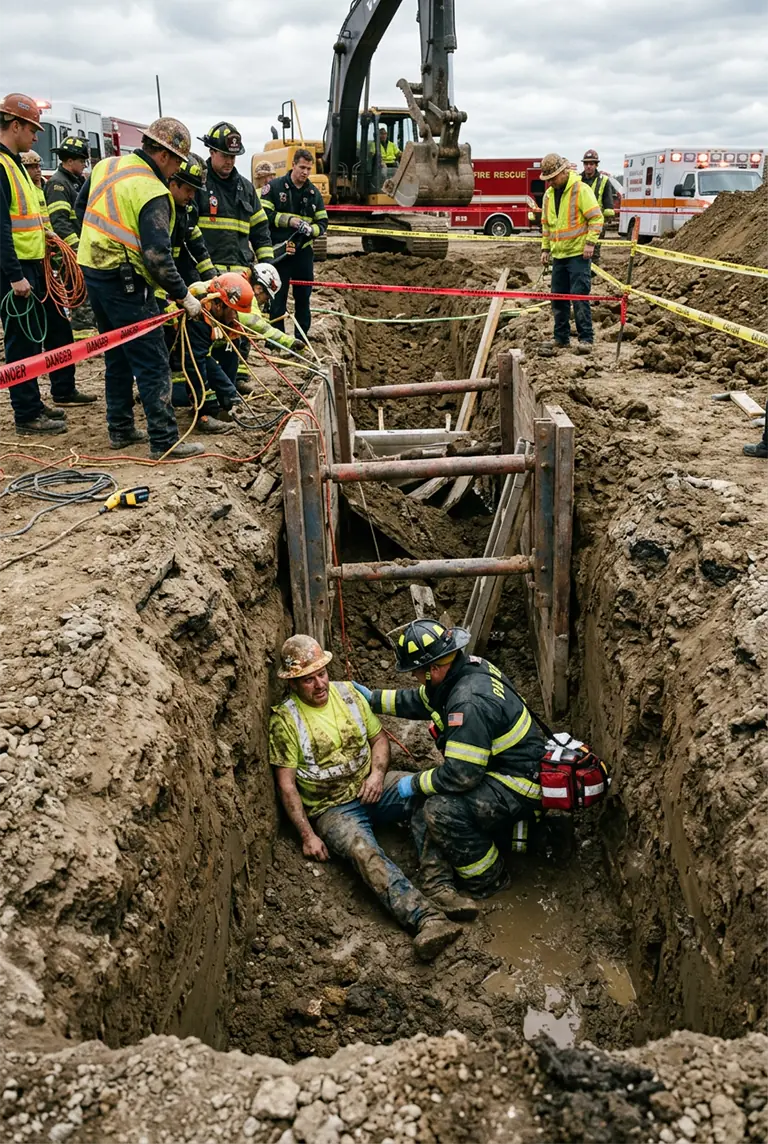
Common Causes of Trench-Related Accidents
The types of trench accidents can vary depending on the type of trench, the equipment used, workers involved, and safety measures taken to protect employees. Below is a list of the most common causes.
- Cave-ins
- Falling loads or falling equipment
- Sinking equipment
- Trench flooding
- Falling into a trench
- Being buried alive
- Being electrocuted
- Toxic gasses in the trench
- Suffocation from a lack of oxygen
- Injuries from tools
Injuries and fatalities that result from any of the causes above can typically be tied to the negligence of employers and workers.
Employer Responsibility
According to OSHA, employers are responsible for ensuring that a safe and healthy work environment is present. When a trench is dug on a construction site, the employer must comply with certain regulations. Failing to comply with them can result in an injury or fatality of one or more workers. Employers must:
- Provide the appropriate protection to prevent cave-ins
- Keep the site clear of heavy machinery, tools, and other materials that could fall into the trench
- Regularly test air-quality of trenches that are deeper than four feet
- Provide safe access to and egress from the trench
- Have a "competent person" inspect the trench each day
- Provide the appropriate personal protective gear to each employee
Employers, or a professional engineer, must analyze each construction site to determine what type of trench safety and equipment must be used.
Call 646-480-0830 for a Free Consultation.
No Fee Unless We Win.
Types of Trench Protection
There are a variety of trench safety measures that can be taken to keep workers safe. Employers should be well-versed in the following:
- Sloping — cutting back the trench wall at an angle inclined away from the excavation
- Shoring — installing aluminum, hydraulic, or other types of supports to prevent soil movement
- Shielding — using trench boxes or other supports to prevent soil cave-ins
The type of trench protection used will depend on soil classification, depth of the cut, water content of the soil, weather conditions, and other operations in the vicinity. As a rule of thumb, OSHA requires that trenches five feet or deeper require a protective system.
Awards & Recognition
Rosenberg, Minc, Falkoff & Wolff, LLP is consistently recognized for its legal excellence and unwavering commitment to clients by prominent legal organizations. Our firm and its attorneys have earned accolades that reflect our high ethical standards and successful track record.










Hear From Our Clients
Contact a Trench Accident Lawyer in New York
Trench accidents are common on construction sites. However, they don't have to happen. If you have been injured while working in or around a trench, you may be able to file a worker's compensation claim to cover any lost wages, medical costs, and injuries you sustained. Additionally, you may be able to file a personal injury claim against another party. In either case, having the right legal counsel is key.
At Rosenberg, Minc, Falkoff & Wolff, LLP we have helped thousands of clients receive the compensation they need to recover from an injury and get back to their lives. We invite you to schedule a free initial consultation with us to learn about your legal options.