
Request Free Consultation

Please fill out the form below for your free consultation or call us at 646-480-0830.

Request Free Consultation

No Fee Unless We Win

Blog / Bicycle Accidents

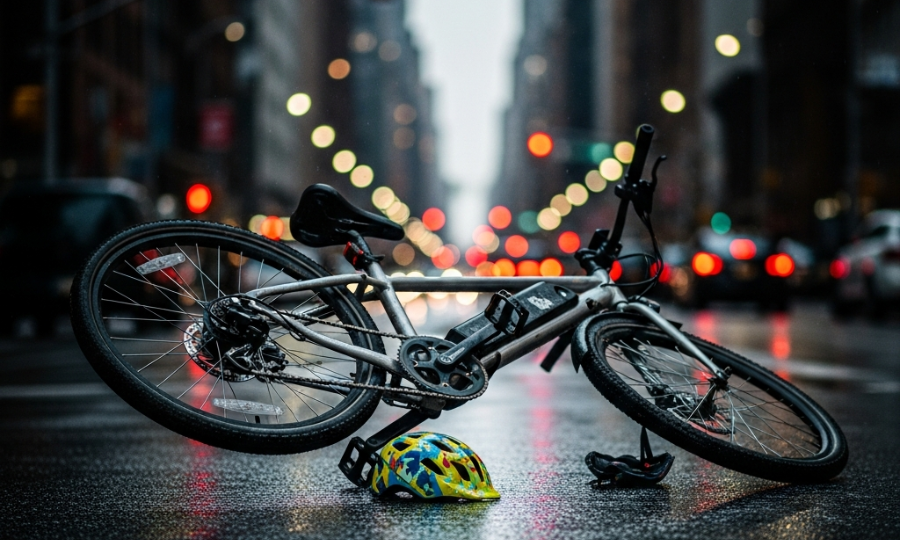
What Happens When A Bicycle Hits A Person?

What Happens When A Bicycle Hits A Person?

Pedestrian accidents in New York don’t always involve motor vehicles. They can also occur because of a negligent cyclist crashing into a pedestrian. Suing a bicyclist for financial compensation can be more complicated than filing a personal injury lawsuit in a motor vehicle collision. 

Unfortunately, many bicyclists in New York City flout the rules of the road. Every year a large number of pedestrians report injuries after they were hit by a bicycle. Pedestrians are also required to follow the rules of the road, which will mean you need a diligent New York pedestrian accident attorney to successfully pursue a claim for damages. 

A Bike Rider’s Responsibilities in New York 

Bicycles are treated the same as motor vehicles under New York law. This is why cyclists are required to follow the same rules and responsibilities as vehicles. Bike riders are required to:

  • Use the designated bike lane while riding on the road. They are not supposed to use the sidewalk or the crosswalk. 
  • Cyclists are required by law to use hand signals while stopping or turning
  • They should stop at stop signs and red lights
  • Bicyclists need to obey all traffic signals
  • Cyclists are required to yield the right of way to pedestrians as well
  • Bicyclists are responsible for the traffic accidents and subsequent injuries they cause

Steps to Take Following Pedestrian Bicycle Accident

Pedestrians can report their accident to the emergency services and police because cycles are treated the same way as cars legally. You should get emergency medical treatment if you were injured seriously when you got hit by a cyclist. You should not hesitate in calling 911 if you were hit by a cyclist and suffered severe injuries. 

You should try to get the cyclist’s contact information. Ask witnesses for their name and phone number as well. The bicycle rider may ultimately be held legally responsible for the injuries caused. You may need to take them to court. In any case, you should stay in touch with them. You will need to know their name, address, and phone number. This will be required by your attorneys as well to get in touch with the cyclist. 

Witnesses are useful since they can testify in court. You can negotiate better with the insurance companies when you know you have other people corroborating the same turn of events. Police can gather this information for you if you were knocked unconscious or are incapacitated due to the accident. 

You should know that cyclists don’t necessarily have insurance for covering accidents, unlike car drivers. In relation to this, the cyclist could be working for someone when the accident occurred. For instance, you may be hit by a bicycle courier, delivery person, or a cyclist riding as part of their job. You can sue the employer in such instances. You need to obtain the contact information for the employer, whether it is a parcel delivery service, food delivery service, or restaurant. 

Make sure you seek medical treatment for all your injuries, even if they don’t appear that serious. It is important to maintain a record of your injuries and medical care to prove their severity and how your recovery progressed. It also helps in proving how much the injuries cost you monetarily. You should consider maintaining notes of your injuries, treatment, recovery and pain. 

Assigning Fault in a New York Bicycle Injury Lawsuit

Everybody owes each other a duty of care while on the road. This includes both pedestrians and cyclists. New York is a no-fault state. Furthermore, you should still have enough evidence for suing the cyclist if they don’t have no-fault coverage. New York is also a comparative negligence state, in which more than one entity can be held liable for contributing to a collision. 

If a cyclist caused an accident in which they were riding recklessly, they will be held as at-fault. Likewise, if the pedestrian caused an accident because of jaywalking, they will not be able to receive full compensation for covering the damages. You should consult with an experienced personal injury attorney before you take any concrete steps. A skilled attorney will be able to help identify all responsible parties and place blame where deserved.

Bicyclists are required to stop and yield the right-of-way to pedestrians as per New York City traffic laws. This is especially important for crosswalks. They are required to obey all traffic lights and signs. Cyclists must use bike lanes wherever available. Most cyclist/pedestrian collisions take place in city parks. Hundreds of miles of cycling lanes were added to these parks in recent years. 

Unfortunately, many cyclists choose not to use the lanes. They also go faster as compared to city streets, making the collision results even more catastrophic. Assigning fault following a bike crash is more complex as compared to a car crash. Insurance companies generally compare the parties’ duty of care for assigning fault. 

As per the duty of care doctrine, you are responsible if you indulged in acts and activities that potentially harmed another person. Pedestrians and cyclists are both required to exercise proper safety precautions for preventing the crashes. Accidents usually occur when someone violates their duty of care. 

Suing Cyclists in New York as an Injured Pedestrian

Your only chance at recovering compensation for injuries may be to sue the bicyclist in court since insurance carriers don’t typically cover cyclists. Personal injury lawsuits can help you recover compensation. These are filed when another person is liable for the injuries caused to the victim because of negligence. 

Negligence can be described as the failure to use proper skill or care when performing a task. Negligence is a legal theory while filing a lawsuit. It allows the victim to recover compensation for the injuries and damages suffered. You would need to prove the following to establish negligence:

  • Duty of care was owed by the cyclist. For instance, the cyclist owed a duty of care to follow the road rules and drive with proper skill and care. 
  • The duty of care was breached by the cyclist. For instance, they may be riding recklessly, in violation of traffic laws, or too fast for safety.
  • The breach resulted in injuries.
  • The injuries suffered by you can be compensated through financial compensation.

There is no denying the fact that cyclists crashing into pedestrians is not as common as vehicular accidents. With that said, witnesses and police rarely ever consider these collisions as serious as car crashes. Courts tend to take all matters of injuries seriously. This is particularly true in the case of severe injuries, such as spinal cord injuries or traumatic brain injuries. 

You should consider speaking with a proven personal injury attorney in New York to discuss your case and identify whether you have a potential suit. 

Common Pedestrian Injuries in a Crash with a Bicycle

Cyclists may not go as fast as cars, but they can cause serious damage if they crash into a pedestrian. Accidents and injuries can take several forms, especially if the rider was going at unsafe speeds. These are a few common types of injuries from pedestrian/cyclist crashes:

  • Fractures in all body parts
  • Severe bruising
  • Concussions
  • Internal and external bleeding
  • Head injuries
  • Spinal damage
  • Broken collar bone

Everyone has a duty to keep their fellow roadway users safe. It is the responsibility of both pedestrians and cyclists to remain aware of their surroundings and behave in a safe manner. It’s fundamental that the injured discuss their lawsuit with a practiced pedestrian attorney when involved in a crash. 

Recoverable Damages after Your Pedestrian Accident with Bicyclist in New York City

These are a few types of compensation or damages that can be recovered following a pedestrian accident:

  • Rehabilitation costs
  • Medical expenses (present and future)
  • Loss of earning capacity
  • Future lost income
  • Pain and suffering

Family members of a pedestrian that died because of the injuries can file a wrongful death lawsuit as well. However, the statute of limitations is two years from the date of death. 

What to do if the Bicyclist Doesn’t Have Bike Insurance?

Insurance is not mandatory for bicyclists as it is for cars, buses and motorcycles. Many victims think they cannot recover damages if the cyclist doesn’t have insurance. Correlating with this, you can always claim from an umbrella or home insurance. You can file a lawsuit against the cyclist to claim compensation through wage garnishment as well. 

If the cyclist hit you while riding for their employer, you can claim compensation from the employer. This can be a food delivery service, parcel delivery service, or any other service. There is not much you can do if the cyclist hits you and flees the accident scene. You should speak with an experienced pedestrian accident attorney if this happens with you. 

The attorney may have a team of investigators for locating eyewitnesses and the perpetrator. They would be able to seek insurance information for helping the victim obtain the compensation they deserve. 

Contact a Pedestrian Accident Lawyer in New York City Today

You should consult with a skilled and experienced personal injury attorney at Rosenberg, Minc, Falkoff & Wolff, LLP if you or a loved one was seriously injured in a pedestrian accident because of a reckless or negligent cyclist. We can discuss your best legal options after reviewing your claim during a free initial consultation. To schedule your free and confidential consultation with our dedicated attorneys, give us a call at 212-344-1000.


Robert Wolff

Robert H. Wolff is a member and partner of the prestigious New York City Personal Injury Law Firm of Rosenberg Minc, Falkoff, & Wolff, LLP. Mr. Wolff graduated from SUNY Albany, cum laude, in 1978 with a B.A. in Psychology and American History. Thereafter, he attended St. John’s University School of Law, where he was a member of the Moot Court Team and the Criminal Law Society, graduating in 1981 with a Juris Doctor’s degree.
Posted in:

Related Posts

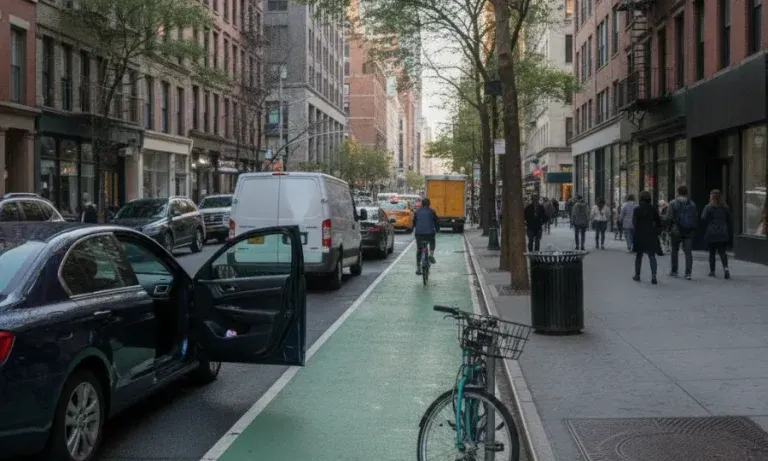
How NYC Personal Injury Lawyers Win Bike Dooring Cases

How NYC Personal Injury Lawyers Win Bike Dooring Cases

Riding a bicycle down a bustling New York City avenue requires sharp focus and quick reflexes. Even the most car eful riders face sudden hazards. An opened car door into moving traffic presents one of the most frightening dangers on city streets. As an experienced NYC personal injury lawyer, our legal team routinely represents injured cyclists who suffered severe harm because a driver or passenger failed to check their mirrors. These crashes, commonly called dooring accidents, lead to painful orthopedic trauma, concussions, and steep medical bills. Fortunately, New York traffic statutes protect riders when negligent vehicle occupants cause these sudden collisions. Key Takeaways New York Vehicle and Traffic Law Section 1214 creates an affirmative duty on drivers and passengers regarding door opening, and courts may treat violations as negligence per se when the elements of that doctrine are satisfied. Under New York Vehicle and Traffic Law Section 388(1), vehicle owners and commercial auto policies face vicarious liability when passengers negligently open doors into oncoming traffic. Appellate courts recognize that opening a car door into moving traffic can constitute the sole proximate cause of an accident, but no primary source documents the specific $2,500,000 settlement figure. Many injured cyclists wonder how fault affects their insurance claims. Under New York Vehicle and Traffic Law (NY VTL) Section 1214, no person may open a motor vehicle door on the side available to moving traffic unless it is reasonably safe to do so. Also, the rule strictly forbids leaving a door open longer than necessary to load or unload passengers. Consequently, this state statute places an affirmative legal duty directly upon motorists and passengers rather than oncoming cyclists. When a driver violates this rule, the legal standing shifts heavily in favor of the injured bicyclist. Understanding Negligence Per Se in New York Dooring Cases Establishing fault forms the bedrock of every personal injury claim. In standard car accident litigation, the injured party must prove that the driver acted carelessly under general common-law principles. However, dooring crashes follow a far more potent legal doctrine. Under New York law, a demonstrated violation of NY VTL Section 1214 can constitute negligence per se when the elements of that doctrine are satisfied. Negligence per se means that violating an enacted safety statute conclusively establishes negligent conduct as a matter of law. Therefore, the court recognizes the violation itself as definitive proof of careless behavior. This statutory standard gives our NYC personal injury attorneys immense leverage during settlement talks. Rather than debating whether the driver exercised reasonable caution, the legal dispute centers on whether the door opened into moving traffic. Once we secure police reports, witness testimony, or surveillance camera footage proving the door swung open directly into your path, liability becomes virtually indisputable. Insurance adjusters understand the power of negligence per se. Consequently, this clear finding eliminates many typical defense arguments and forces insurers to evaluate claims seriously early in the process. Municipal Regulations and Rider Protections in New York City State statutory law is not the only framework protecting cyclists across the five boroughs. In addition to state statutes, local municipal codes govern street activity. Municipal regulations further reinforce this standard under Rules of the City of New York Title 34 Section 4-12(c). This city regulation explicitly bars vehicle occupants from opening doors on the side of moving traffic whenever doing so interferes with oncoming bicycles or vehicles. In addition, the rule mandates that drivers must yield to all moving street traffic before cracking open a door. These dual layers of protection apply across all boroughs. For example, whether you ride past double-parked vehicles along Queens Boulevard or commute through protected bike lanes in Midtown Manhattan, these traffic rules shield you. Local laws treat bicycles as legitimate moving traffic. Therefore, drivers cannot dismiss a rider by claiming they expected only full-sized automobiles. When commercial delivery vans or rideshare vehicles pull to the curb and discharge passengers haphazardly, they violate both state and city traffic mandates. Appellate Precedent and the Sole Proximate Cause Standard Insurance defense adjusters often attempt to blame the bicyclist to diminish settlement payouts. They may allege that the rider traveled too fast, failed to swerve, or rode too close to parked cars. However, New York appellate courts have repeatedly rejected these blame-shifting tactics in dooring crashes. Appellate courts have affirmed that violating NY VTL Section 1214 can constitute the sole proximate cause of a collision, as demonstrated by the Appellate Division, Second Department in Montesinos v. Cote in December 2007. In that ruling, the appellate court affirmed summary judgment on liability against the driver who swung open their door into traffic. Securing summary judgment on liability means the trial judge rules on fault before the case ever reaches a jury. As a result, the jury only decides the financial compensation owed for your pain, suffering, and financial losses. Eliminating liability defenses creates immense financial pressure on insurance companies. When an insurer faces a trial focused purely on graphic injuries and medical expenses without any defense on fault, their financial exposure rises rapidly. Therefore, skilled Brooklyn bicycle crash lawyers use this appellate precedent to command higher pre-trial settlements. Passenger Actions and Vicarious Vehicle Owner Liability Many devastating dooring accidents involve taxi, rideshare, or limousine passengers exiting onto busy roadways. Injured cyclists often worry about recovering damages when an uninsured or underinsured passenger opens the door. Fortunately, New York insurance law provides broad financial protections for injured victims. Under New York Vehicle and Traffic Law Section 388(1), vehicle owners face vicarious liability for crashes caused by passengers opening doors into traffic, as affirmed by the Appellate Division, Second Department in Cohn v. Nationwide Mutual Insurance Company in October 2001. This critical legal principle means the owner’s primary auto insurance policy must provide coverage for the passenger’s negligent act. For instance, if an Uber, Lyft, or yellow cab passenger throws open a door into a bike path, the commercial vehicle policy covers the resulting damages. These commercial policies frequently carry substantial bodily injury limits. Also, corporate entities and commercial fleet owners possess significant commercial umbrella coverage. Our Queens car accident attorneys routinely identify every applicable insurance policy to maximize financial recovery for injured clients. How Clear Liability Drives Higher Pre-Trial Settlement Offers Insurance companies evaluate personal injury claims using a basic mathematical assessment of risk. When liability is uncertain, adjusters aggressively discount settlement offers, betting that a jury might assign comparative negligence to the injured cyclist. However, uncontroverted statutory liability under NY VTL Section 1214 fundamentally alters that risk calculation. When the defense cannot escape liability, the claim value reflects the full extent of physical and emotional damages. Clear proof of liability coupled with severe orthopedic injuries elevates pre-trial valuations significantly. These real-world outcomes prove that firm statutory liability secures exceptional financial recoveries across every severity level. Common Injuries in NYC Bicycle Dooring Crashes Dooring crashes rarely cause minor scrapes because the human body absorbs massive kinetic energy upon impact. A cyclist traveling at moderate speed has virtually zero time to brake when a car door suddenly swings outward. Consequently, riders often experience a severe primary collision with the metal frame of the door, followed by a violent secondary impact with the asphalt. Many cyclists sustain serious orthopedic trauma, including broken clavicles, fractured wrists, and shattered pelvic bones. Plus, the secondary impact frequently produces catastrophic head and spinal injuries. Even while wearing certified helmets, cyclists suffer traumatic brain injuries, concussions, and severe facial lacerations. Herniated cervical and lumbar discs often compress spinal nerve roots, causing radiating pain and physical disability that requires epidural injections or spinal fusion surgery. Documenting these debilitating injuries through prompt diagnostic MRI scans and objective specialist evaluations ensures insurance companies compensate every physical and emotional injury thoroughly. Overcoming the Comparative Fault Defense in Bike Lane Collisions New York operates under a pure comparative negligence system under Civil Practice Law and Rules (CPLR) Article 14-A. Under this law, an insurance adjuster will routinely argue that you share partial blame for your injuries. They might argue you should have spotted the vehicle or steered away faster. Nevertheless, experienced NYC personal injury lawyers refute these bad-faith claims by pointing directly to physical roadway designs and driver duties. Under New York law, cyclists have preferential use of designated bike lanes, and motorists must yield when crossing or turning across them, but cyclists do not possess an absolute right of way merely by being in a bike lane. Also, human reaction times make evading a door that opens within a split second physically impossible. In dense traffic along avenues in Manhattan or Brooklyn, swerving out of a bike lane into moving automotive traffic poses fatal risks. Therefore, continuing straight remains the only instinctive response for many riders. Our attorneys use accident reconstruction specialists, frame-by-frame traffic camera video, and vehicle event data recorders to demonstrate that our clients had neither the warning nor the physical distance to avoid the impact. Essential Steps to Take Immediately Following a NYC Dooring Collision The actions you take immediately following a bicycle accident significantly influence your physical recovery and the financial outcome of your legal claim. First, call 911 immediately and demand that the police respond to the scene. NY VTL Section 1214 governs dooring violations, but there is no official requirement that NYPD officers must document the violation in any specific manner in police accident reports. Next, seek prompt emergency medical attention, even if adrenaline temporarily masks your pain. Certain traumatic injuries, such as internal bleeding or micro-concussions, require prompt medical diagnosis. In addition, preserve all perishable evidence before departing the scene or as soon as your physical condition stabilizes. Capture clear photographs and videos of the opened vehicle door, the resting position of your bicycle, any damaged equipment, and surrounding street signs. Secure contact information from any bystanders, shopkeepers, or delivery workers who witnessed the incident. Finally, retain your damaged bicycle, cracked helmet, and torn riding gear without repairing or altering them. Physical evidence serves as irrefutable proof against defense claims in a court of law. Pursuing Justice with a Trusted NYC Personal Injury Lawyer Recovering from a severe dooring collision requires substantial time, dedicated medical care, and strong financial support. While you focus on healing, insurance companies deploy teams of claims adjusters and defense lawyers to protect their corporate profits. You do not have to confront these deep-pocketed corporate insurers alone. As seasoned New York trial attorneys, our firm stands up for injured cyclists across Manhattan, Brooklyn, Queens, the Bronx, and Staten Island. We investigate the crash scene thoroughly, pull vital traffic camera footage, identify all applicable commercial insurance policies, and build an airtight case based on statutory negligence. If an opened vehicle door injured you or someone you love, contact our dedicated legal team today. Schedule a free, confidential case evaluation with an accomplished NYC personal injury lawyer to protect your rights, assert statutory liability, and recover the compensation you rightfully deserve. Sources FindLaw, New York Consolidated Laws, Vehicle and Traffic Law - VAT § 1214 Opening and closing vehicle doors This article was drafted with AI assistance. Please verify all claims and information for accuracy. The content is for informational purposes only and does not constitute professional advice. Free Case Consultation Injured in an accident? Speak directly with an experienced NYC personal injury attorney at Rosenberg, Minc, Falkoff & Wolff. Your consultation is free, confidential, and risk-free. Start Your Free Case Review No obligation - No upfront fees - You don't pay unless we win Follow RMFW Law for legal insights and case results: Facebook Instagram X Pinterest Yelp YouTube Gary Silverstein Gary Silverstein has been a partner of Rosenberg, Minc, Falkoff & Wolff since 2001, and an associate of the firm since 1989. Mr. Silverstein graduated with a Bachelor of Science degree from State University of New York College at Oneonta in 1983. Mr. Silverstein holds a degree of Juris Doctor from the University of Miami School of Law, having graduated in 1988.

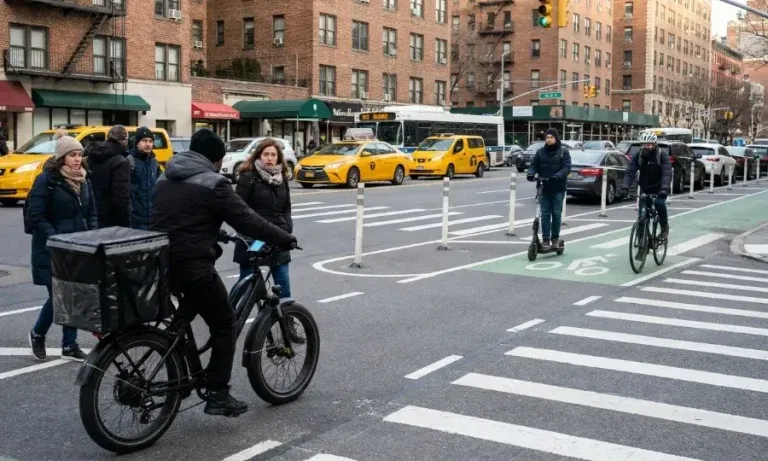
NYC E-Bike Laws and Legal Liability Under 17 New City Bills

NYC E-Bike Laws and Legal Liability Under 17 New City Bills

Streets across New York City are experiencing a profound transformation in traffic flow and micromobility enforcement. As a top NYC personal injury lawyer, our firm represents everyday people injured in unexpected collisions throughout Manhattan, Brooklyn, Queens, the Bronx, and Staten Island. On August 4, 2026, New York City Council Speaker Julie Menin announced a sweeping legislative package of 17 bills targeting e-bikes, e-scooters, and illegal motorized devices, with a key public hearing scheduled for September 30, 2026, according to amNY and Streetsblog NYC reporting. Key Takeaways NYC Council Speaker Julie Menin introduced a 17-bill legislative package on August 4, 2026, targeting e-bike and e-scooter safety with a public hearing on September 30, 2026. Intro 244 proposes banning the sale and rental of Class 3 e-bikes. First violation carries $0 penalty; subsequent violations within 2 years carry up to $2,000. Intro 0091-2026 mandates functional speedometers on shared fleet e-bikes and caps motorized speed assistance at 10 mph for new riders. Proposed bills Intro 950 and Intro 110 establish licensing and safety requirements for delivery apps. Consequently, these proposed statutes dramatically shift how fault, negligence, and corporate liability operate after a crash. Understanding these municipal and state legislative proposals is vital if you walk, ride, or drive anywhere across the five boroughs. Understanding the Council Package of 17 Micromobility Bills The legislative bundle addresses a rising wave of micromobility crashes across New York City thoroughfares. According to City Council records and amNY coverage from August 4, 2026, the City Council designed these 17 bills to rein in unlawful high-speed devices and establish strict accountability for commercial delivery operations. Also, the legislation seeks to close existing regulatory gaps between traditional bicycles and heavier motorized equipment. When high-speed devices collide with vulnerable pedestrians, catastrophic injuries occur. Therefore, lawmakers are crafting statutory standards that define exactly what vehicles are legal on city roads. In addition, these bills clarify driver obligations, equipment requirements, and commercial platform responsibilities. If you suffer injuries in an e-bike crash, these evolving legal benchmarks will directly influence your insurance claims and civil lawsuits. Intro 244 and the Proposed Ban on Class 3 E-Bikes One of the most consequential proposals in the package is Intro 244, sponsored by Council Member Crystal Hudson. According to official New York City Council legislative records for Intro 0244-2026, this bill proposes a direct ban on the sale and rental of Class 3 electric bicycles. The bill references state law definition of Class 3 e-bikes but does not itself specify 25 mph. Streetsblog NYC reported on August 6, 2026, that Intro 244 aims to narrow the definition of authorized micromobility devices under local law to lower overall street speeds. Under the text of Intro 0244-2026, retailers or rental companies violating this restriction face civil penalties, with a first violation carrying no monetary penalty and subsequent violations within 2 years carrying up to $2,000. From a personal injury perspective, selling or leasing a prohibited device creates strong grounds for negligence. For instance, if an unauthorized throttle bike strikes a pedestrian in a crosswalk, the injured victim may hold both the reckless rider and the commercial vendor accountable in civil court. Speedometer Mandates and Speed Limiting for Shared Fleets Under Intro 0091-2026 Shared micromobility systems such as app-based rental bikes represent a major share of daily street travel. According to New York City Council File Intro 0091-2026, sponsored by Council Member Gale Brewer, the Council proposes technical mandates for all shared electric bicycles and scooters. Specifically, Intro 0091-2026 requires shared devices to feature functional speedometers. In addition, the bill mandates a 10 mph electric assistance limit for new riders. As a result, fleet operators must enforce technical safeguards before unlocking higher speeds. If a shared fleet operator fails to program these speed limiters and a new rider strikes an individual in Brooklyn or Queens, that technical failure can demonstrate direct corporate negligence. Expanding Commercial Liability for App Platforms Under Intro 950 and Intro 110 For years, injured pedestrians struggled to hold multibillion-dollar food delivery apps accountable when contracted couriers caused severe crashes. The new legislative push actively bridges this gap through Intro 950, sponsored by Council Member Lynn Schulman, and Intro 110, sponsored by Council Member Selvena Brooks-Powers, as reported by CBS News and Streetsblog NYC in August 2026. These proposals require third-party delivery apps to secure licensing from the Department of Consumer and Worker Protection (DCWP). Also, the bills require delivery companies to maintain driver safety records and verify that all courier fleet devices comply fully with local safety laws. Consequently, this framework establishes corporate negligence standards. If a delivery company pushes aggressive delivery windows while permitting unregistered, illegal e-motos in its network, the platform itself faces direct legal liability for resulting injuries. Elevated Penalties for Leaving the Scene Under Resolution 231 Hit-and-run crashes involving micromobility devices have left far too many injured New Yorkers without direct recourse. In response, the City Council introduced Resolution 231 to back state-level statutory reforms, specifically New York State Senate Bill S.561 and Assembly Bill A.1679, according to an August 2026 legislative memorandum from Council Member Gale Brewer. This measure significantly increases criminal penalties and civil liability exposure for micromobility riders who leave the scene of an accident. Historically, strict leaving-the-scene statutes applied predominantly to traditional motor vehicles under the New York Vehicle and Traffic Law. Plus, Resolution 231 seeks parity between e-bike operators and motor vehicle drivers. When a rider flees an injured pedestrian, that unlawful act creates severe punitive consequences and strengthens civil claims for gross negligence. State Licensing and DMV Registration Under Priscilla’s Law Identification remains a major hurdle when resolving pedestrian injury claims involving commercial riders. As reported by Chelsea News NY on August 17, 2026, the City Council package formally supports the Commercial E-Bike Licensing Act (S.7587/A.7833). Priscilla’s Law proposes mandatory Department of Motor Vehicles (DMV) registration and visible license plates on all e-bikes and e-scooters operating in large cities. Consequently, visible license plates eliminate courier anonymity. Pedestrians, cyclists, and witnesses can readily identify the specific device involved in a crash, allowing our Queens car accident attorneys and personal injury team to swiftly secure crucial evidence. Illegal E-Motos and Statutory Negligence Under NYS VTL 121-b Many devices on city streets are not lawful e-bikes at all. Under existing baseline regulations analyzed during the Council review, devices that exceed certain speed thresholds are classified as limited use motorcycles under New York State Vehicle and Traffic Law Section 121-b. According to legal analyses published by Ebike Oracle in July 2026, operating these devices without a valid driver license, DMV registration, and liability insurance violates state law. In New York personal injury law, violating an enacted safety statute constitutes negligence per se. When an operator unlawfully rides an unregistered, uninsurable moped on pedestrian walkways or bike lanes, that statutory violation establishes immediate legal fault for resulting damages. Comparative Fault and Pedestrian Rights on NYC Streets New York follows a pure comparative negligence doctrine under Civil Practice Law and Rules Section 1411. This means an injured person can recover damages even if they share partial responsibility for a collision. However, insurance adjusters often attempt to shift blame onto injured pedestrians or regular cyclists. They may argue the pedestrian stepped outside a crosswalk or failed to notice an oncoming electric bike traveling silently at high speed. Our experienced legal team counters these defense arguments with traffic camera footage, commercial app dispatch data, and witness statements. Demonstrating the operator exceeded speed caps or violated city equipment mandates protects your right to full financial recovery. Crucial Next Steps After an E-Bike or Micromobility Accident If you or a loved one sustains injuries in an e-bike crash across New York City, swift and decisive action is critical. The steps you take immediately following a collision directly protect your physical health and your legal rights. Call 911 Immediately: Request police and emergency medical services so officers can draft an official NYPD collision report. Document the Scene: Capture detailed photographs of all vehicles, damage, street conditions, license plates, delivery company branding, and visible injuries. Identify Witnesses: Collect full names, phone numbers, and contact details from bystanders and nearby business employees. Seek Prompt Medical Care: Visit an emergency room or urgent care center right away, as traumatic brain injuries and internal trauma often worsen over time. Consult a Dedicated Personal Injury Attorney: Speak with a qualified NYC personal injury lawyer before talking to insurance adjusters or accepting quick settlement offers. As these 17 City Council bills progress through public hearings, New York City traffic laws will continue to strengthen protections for accident victims. Our firm remains dedicated to guiding injured clients through complex insurance disputes, holding negligent operators accountable, and securing the comprehensive compensation you deserve. This article was drafted with AI assistance. Please verify all claims and information for accuracy. The content is for informational purposes only and does not constitute professional advice. Free Case Consultation Injured in an accident? Speak directly with an experienced NYC personal injury attorney at Rosenberg, Minc, Falkoff & Wolff. Your consultation is free, confidential, and risk-free. Start Your Free Case Review No obligation - No upfront fees - You don't pay unless we win Follow RMFW Law for legal insights and case results: Facebook Instagram X Pinterest Yelp YouTube Gary Silverstein Gary Silverstein has been a partner of Rosenberg, Minc, Falkoff & Wolff since 2001, and an associate of the firm since 1989. Mr. Silverstein graduated with a Bachelor of Science degree from State University of New York College at Oneonta in 1983. Mr. Silverstein holds a degree of Juris Doctor from the University of Miami School of Law, having graduated in 1988.

E-Bike & E-Scooter Child Accidents

NYC E-Bike & E-Scooter Child Accidents: Liability Laws Explained

New York City’s bustling streets have seen a dramatic rise in electric bicycle s and scooters, offering convenient travel for many. However, this surge in micromobility devices also brings a concerning increase in accident s, particularly involving children. As a trusted NYC personal injury lawyer, our firm has witnessed firsthand the complexities and devastating consequences when a child is injured in an e-bike or e-scooter incident. Understanding the legal landscape is crucial for affected families seeking justice and compensation. Key Takeaways Pediatric e-scooter injuries in NYC have seen a significant increase between 2020 and 2022, according to some studies. New York State law generally requires e-bike and e-scooter operators to be at least 16 years old, with the American Academy of Pediatrics recommending against e-scooter use for those under 16. Proposed "Priscilla's Law" aims to require certain accountability measures for e-bikes and e-scooters in NYC. Liability for child e-bike and e-scooter accidents can extend to parents, negligent drivers, rental companies, manufacturers, or even city agencies, depending on the circumstances. The Alarming Rise in Child E-Bike and E-Scooter Injuries The numbers reveal a serious trend regarding child e-bike and e-scooter accidents in NYC. Pediatric e-scooter injuries in New York City, for instance, have seen a significant increase between 2020 and 2022, according to some studies. This significant increase highlights the urgent need for heightened awareness and robust legal action. A comprehensive five-year study conducted by NYU Langone Health at NYC Health + Hospitals/Bellevue further illustrates the severity of this issue. Micromobility injuries, encompassing both electric and pedal-powered devices, accounted for a notable percentage of trauma patients admitted to the hospital. This share dramatically increased over several years. These accidents often result in severe and life-altering injuries for children. Public health research indicates that a significant portion of patients suffered traumatic brain injury. Also, pedestrians struck by electric vehicles experienced brain injuries at nearly double the rate of the riders themselves. This data underscores the profound risks these devices pose to all road users, especially vulnerable children. Beyond Manhattan, hospitals across the region report similar trends. One regional children's hospital, for example, reported a substantial increase in trauma admissions related to e-bikes and e-scooters over a two-year period. These admissions include cases ranging from minor injuries to severe head and brain trauma, and even fatalities. Such statistics demand a clear understanding of the legal avenues available to protect injured children and their families. Understanding New York's E-Device Regulations New York State law has specific regulations governing the operation of e-bikes and e-scooters, particularly concerning age. Generally, operators of e-bikes and e-scooters must be at least 16 years old. This age restriction is critical, yet many younger children are still found operating these devices on public streets, often leading to dangerous situations. The American Academy of Pediatrics strongly recommends that children under the age of 16 should not use e-scooters. This recommendation aligns with the state's legal requirements, emphasizing the developmental and safety considerations for young riders. Despite these guidelines, enforcement can be challenging, leaving many families vulnerable. Helmet use is another vital aspect of e-device safety. In New York City, helmets are required for 16- and 17-year-olds operating an e-scooter, and for all operators of a Class 3 e-bike regardless of age. While helmets are not legally required for all adult riders of Class 1 and 2 e-bikes or e-scooters, they are always recommended as a critical safety measure. Wearing a properly fitted helmet can significantly reduce the risk of head injury in an accident. Further regulations dictate where these devices can be operated. In New York City, e-bikes and e-scooters are permitted in bike lanes and on streets with a posted speed limit of 30 miles per hour or less. However, riding on sidewalks is generally prohibited throughout New York City, with exceptions for children 12 or younger on bikes with wheels under 26 inches and where signs permit it. E-scooters also have a maximum speed limit of 15 mph in NYC. All riders must obey standard traffic laws, including stopping at red lights and stop signs, yielding the right-of-way, and using hand signals when turning. Violating these rules can directly impact liability in an accident. "Priscilla's Law" and the Push for Accountability The tragic death of Priscilla Loke in 2023, struck by an e-bike rider who fled the scene in Chinatown, galvanized a movement for stronger regulations. In response, "Priscilla's Law" has been proposed in the New York State Senate (S2599A) and Assembly (A339A). This critical legislation aims to enhance accountability for e-bike and e-scooter operators. The legislation would require license plates and DMV registration but does not include mandatory insurance. The primary goal of this law is to resolve the significant problem of identifying riders who cause accidents and then flee, leaving victims without recourse. Also, Priscilla's Law seeks to ensure that victims of e-bike and e-scooter crashes have financial protection. By improving rider identification, the bill aims to provide a clearer path for injured parties to seek compensation. It would also empower law enforcement to issue fines and impound non-compliant vehicles, strengthening enforcement efforts. This proposed law represents a significant step toward creating a safer environment for everyone on New York City streets. Determining Liability in Child E-Bike and E-Scooter Accidents When a child is injured in an e-bike or e-scooter accident in New York City, determining who is at fault can be complex. Multiple parties may share responsibility, and a thorough investigation is essential to identify all liable entities. Our Bronx personal injury lawyers meticulously examine every detail to build a strong case for our clients. Parental Responsibility Parents may face liability if their negligence contributed to a child's accident. For example, if parents knowingly allow a child under the legal age of 16 to operate an e-bike or e-scooter on public streets, they could be held responsible for any resulting injuries or damages. This falls under the legal principle of parental negligence, which holds parents accountable for failing to adequately supervise their children or prevent them from engaging in dangerous activities. Allowing a child to ride an e-bike illegally on busy Brooklyn streets could constitute such negligence. Negligent Drivers or Other Riders Many accidents involve collisions between e-devices and other vehicles. If a motorist strikes a child on an e-bike or e-scooter, the driver of the car or truck may be liable. Drivers owe a duty of care to all road users, including children, and failing to observe traffic laws or driving while distracted can lead to severe consequences. Similarly, if another e-bike or e-scooter rider operates their device recklessly and causes an accident, they can be held responsible for the child's injuries. Rental Company and Manufacturer Liability In some cases, the e-bike or e-scooter itself may be a contributing factor to the accident. If a faulty braking system, a manufacturing defect, or a design flaw causes an injury, the manufacturer could be held liable under product liability law. Pursuing such a claim requires expert investigation into the device's design and production. Our Queens car accident attorneys have the resources to handle these complex product liability claims. For devices rented from companies like Lime or Citi Bike, the rental company could also bear responsibility. While user agreements often attempt to shift liability to the rider, companies can be held accountable for negligent maintenance or mechanical failures that lead to accidents. In New York City, shared e-scooter riders are required to be 16 or older, with mandatory helmets for 16-17 year olds. Governmental Entity Liability Sometimes, hazardous road conditions contribute to accidents. A government agency responsible for maintaining safe roadways and bike lanes could share responsibility if, for example, a poorly designed bike lane or a significant pothole caused the child's accident. Identifying such factors requires a thorough investigation of the accident scene and local infrastructure. Seeking Full and Fair Compensation for Your Child's Injuries When a child suffers injuries in an e-bike or e-scooter accident, the path to recovery can be long and challenging. Families often face significant medical bills, ongoing therapy, and emotional distress. New York's comparative negligence laws mean that multiple parties may share responsibility for an accident, and compensation is awarded based on each party's degree of fault. Our experienced attorneys work tirelessly to ensure that all responsible parties are identified and held accountable. Compensation in these cases can cover a range of damages. This includes emergency medical expenses, future medical treatments, and long-term physical therapy. Additionally, families may seek recovery for the child's pain and suffering, as well as the loss of enjoyment of life. If a parent loses wages due to caring for an injured child, those lost earnings may also be recoverable. Property damage, such as a damaged e-bike or e-scooter, can also be included in a claim. Navigating these legal complexities requires the guidance of a knowledgeable personal injury attorney in New York City. Our firm is dedicated to providing compassionate and authoritative legal representation for accident victims. We understand the unique challenges involved in child injury cases and are committed to fighting for the maximum compensation your family deserves. Do not hesitate to seek legal counsel if your child has been injured; securing experienced representation is the crucial first step toward protecting their future. Sources NYC.gov — Bicycle and Scooter Safety Related Reading Bronx Building Collapse Liability and Tenant Rights Explained Understanding Uber Lyft Accident Coverage in New York Long Term Traumatic Brain Injury Impacts in NYC Frequently Asked Questions What is the legal age to ride an e-bike or e-scooter in New York City? New York State law generally mandates that operators of e-bikes and e-scooters must be at least 16 years old. The American Academy of Pediatrics also recommends that children under 16 should not use e-scooters due to safety concerns. What is Priscilla's Law and how would it impact e-bike accidents in NYC? Priscilla's Law is proposed legislation in New York that would require e-bikes and e-scooters in NYC to have license plates and DMV registration. This law aims to increase accountability for riders and ensure victims of hit-and-run accidents have a way to identify at-fault parties and seek compensation. Can parents be held responsible if their child causes an e-bike accident? Yes, parents can be held liable if they negligently allow their child, especially if under the age of 16, to operate an e-bike or e-scooter on public streets, contributing to an accident. This falls under parental negligence doctrines, which consider a parent's duty to supervise their children. What types of compensation are available for child e-bike or e-scooter injuries? Compensation for child e-bike or e-scooter injuries can cover emergency medical expenses, long-term physical therapy, lost wages for parents, property damage, and the child's pain and suffering. An experienced attorney can help identify all potential damages and pursue full compensation. This article was drafted with AI assistance. Please verify all claims and information for accuracy. The content is for informational purposes only and does not constitute professional advice. Free Case Consultation Injured in an accident? Speak directly with an experienced NYC personal injury attorney at Rosenberg, Minc, Falkoff & Wolff. Your consultation is free, confidential, and risk-free. Start Your Free Case Review No obligation - No upfront fees - You don't pay unless we win Follow RMFW Law for legal insights and case results: Facebook Instagram X Pinterest Yelp YouTube Gary Silverstein Gary Silverstein has been a partner of Rosenberg, Minc, Falkoff & Wolff since 2001, and an associate of the firm since 1989. Mr. Silverstein graduated with a Bachelor of Science degree from State University of New York College at Oneonta in 1983. Mr. Silverstein holds a degree of Juris Doctor from the University of Miami School of Law, having graduated in 1988.