
Request Free Consultation

Please fill out the form below for your free consultation or call us at 646-480-0830.

Request Free Consultation

No Fee Unless We Win

Blog / Pedestrian Accidents

NYC Pedestrian Accident No-Fault: Your Essential Guide

NYC Pedestrian Accident No-Fault

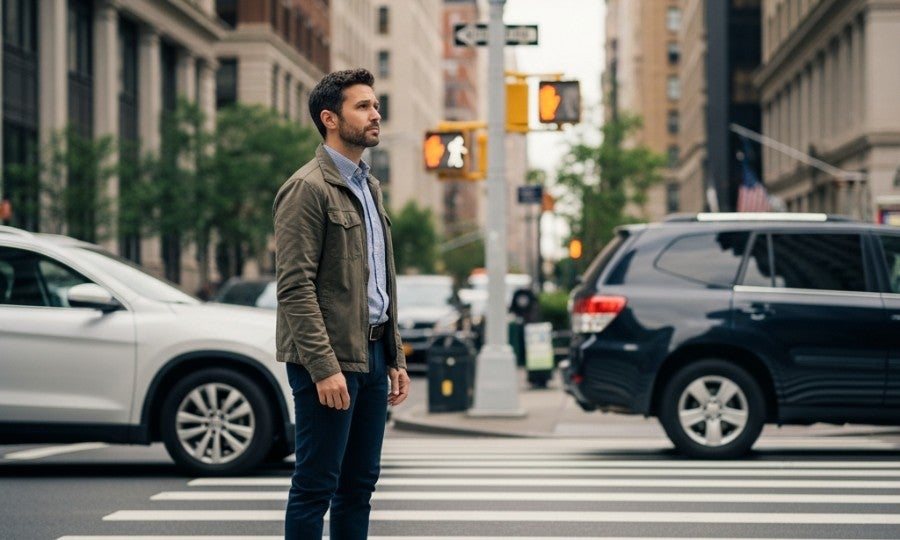
Imagine you're walking across a busy New York City street, minding your own business, when suddenly, you're involved in an accident with a vehicle. It's a terrifying, disorienting experience, isn't it? Beyond the immediate shock and pain, your mind likely races with questions: How will I pay for medical treatment? What about lost wages if I can't work? This is where New York's unique No-Fault insurance system steps in, particularly for pedestrians. Understanding it can feel daunting, but it’s absolutely crucial to protecting your rights and ensuring you get the care you need.

In New York, if you're a pedestrian injured in an accident involving a motor vehicle, you're generally entitled to "No-Fault" benefits, also known as Personal Injury Protection (PIP). This system is designed to provide prompt payment for your medical expenses and lost earnings, regardless of who was at fault for the accident. It sounds straightforward, but there are layers to peel back. We're going to walk you through exactly what No-Fault means for you after a pedestrian accident in NYC, covering what it covers, who pays, and the critical steps you need to take.

What Exactly is NYC's No-Fault Insurance (PIP)?

Here's the thing: New York State operates under a "No-Fault" insurance law, as outlined in Article 51 of the New York State Insurance Law. This means that if you're injured in a car accident – and this includes pedestrians hit by vehicles – your initial medical expenses and a portion of your lost wages are covered by an insurance policy, regardless of who caused the collision. It's a system designed to streamline the process, getting you essential benefits quickly without the immediate need to prove fault.

For pedestrians, this typically means the No-Fault benefits will come from the insurance policy of the vehicle that struck you. If that vehicle was uninsured, or if you also own a car with New York insurance, your own policy might kick in. And if neither of those options apply, there's even a safety net through the Motor Vehicle Accident Indemnification Corporation (MVAIC) for qualified victims. This layered approach ensures that, in most cases, you won't be left without initial coverage for immediate needs.

Who's Covered Under No-Fault in a Pedestrian Accident?

You might wonder, "Am I actually covered as a pedestrian?" The answer is a resounding yes! New York's No-Fault law broadly defines "covered persons" to include pedestrians, passengers, and drivers. Specifically, if you're a pedestrian struck by a car, you are a "covered person" under the vehicle's No-Fault policy. This is a fundamental aspect of the law, designed to protect everyone on the road, not just those inside vehicles.

The priority for coverage generally follows a specific order. First, it's the insurance policy of the vehicle that hit you. If that vehicle is uninsured or if you're struck by a hit-and-run driver and you own a car with New York insurance, your own policy would likely be the primary source. Should neither of these scenarios apply, and you meet certain residency and income requirements, MVAIC can serve as a payer of last resort. This intricate system, while sometimes confusing, ultimately aims to ensure that injured pedestrians have a pathway to essential benefits.

What Does No-Fault Actually Cover?

So, what does this No-Fault coverage actually provide? The basic Personal Injury Protection (PIP) in New York offers up to $50,000 in benefits for what are called "basic economic losses." This isn't just a generic number; it's specifically allocated to cover several key areas:

  • Medical Expenses: This is the big one. No-Fault covers reasonable and necessary medical and rehabilitation expenses incurred as a result of the accident. Think hospital stays, doctor visits, physical therapy, chiropractic care, prescription medications, and even necessary medical equipment. They want you to get better, and this coverage helps facilitate that.
  • Lost Wages: If your injuries prevent you from working, No-Fault can cover 80% of your lost earnings, up to a maximum of $2,000 per month, for up to three years from the date of the accident. This can be a huge relief when you're facing medical bills and can't earn a living.
  • Other Reasonable Expenses: This category includes less obvious but equally important costs, such as transportation expenses to and from medical appointments, and even up to $25 per day for essential services you can no longer perform yourself (like household tasks) for up to a year.

It's important to remember that the standard No-Fault policy provides a maximum of $50,000 for these combined benefits. While this sounds like a lot, serious injuries can quickly exhaust these funds. Some policies, however, carry optional additional PIP coverage, which can increase these limits. It's always a good idea to understand the full scope of the coverage available, whether from the striking vehicle's policy or your own.

Navigating the "Serious Injury" Threshold

You might be thinking, "This all sounds great for medical bills and lost wages, but what about my pain and suffering?" That's a very valid question, and it brings us to one of the most significant aspects of New York's No-Fault law: the "serious injury" threshold. Generally speaking, the No-Fault system restricts your ability to sue the at-fault driver for non-economic damages, like pain and suffering, unless your injuries meet a specific legal definition of "serious injury."

This "serious injury" threshold, defined in New York Insurance Law § 5102(d), isn't just a casual term; it's a precise legal standard. It includes categories such as:

  • Fracture
  • Significant disfigurement
  • Dismemberment
  • Permanent loss of use of a body organ, member, function or system
  • Permanent consequential limitation of use of a body organ or member
  • Significant limitation of use of a body function or system
  • A medically determined injury or impairment of a non-permanent nature which prevents the injured person from performing substantially all of the material acts which constitute such person's usual and customary daily activities for not less than 90 days during the 180 days immediately following the occurrence of the injury or impairment.

As you can see, this isn't a low bar. A minor sprain, for example, might not meet this threshold, while a broken leg requiring surgery almost certainly would. Proving a "serious injury" often requires extensive medical documentation and expert testimony, which can feel like a complex legal hurdle, we know. This is why having experienced legal counsel is often invaluable; they can help evaluate your injuries against these criteria and advise on your eligibility to pursue a claim for pain and suffering.

Your Crucial Steps After an NYC Pedestrian Accident

If you find yourself in the unfortunate situation of a pedestrian accident, taking the right steps immediately can significantly impact your ability to receive the benefits you're entitled to. Don't delay; prompt action is key:

1. Seek Medical Attention Immediately

Even if you feel fine, or your injuries seem minor, get checked out by a doctor or go to an emergency room. Adrenaline can mask pain, and some injuries, like concussions or internal bleeding, might not be immediately apparent. Medical documentation from the outset creates an official record of your injuries, which is absolutely critical for any insurance claim. This isn't just about your health; it's about establishing a clear link between the accident and your injuries.

2. Report the Accident to the Police

Call 911. A police report provides an official, impartial account of the accident, including details like the date, time, location, involved parties, and any witness information. This report can be a vital piece of evidence for your No-Fault claim and any potential personal injury lawsuit.

3. Gather Information at the Scene

If you're able, collect as much information as possible:

  • The driver's name, address, phone number, and driver's license number.
  • The vehicle's license plate number, make, model, and year.
  • The driver's insurance company name and policy number.
  • Contact information for any witnesses.
  • Take photos or videos of the accident scene, vehicle damage, your injuries, and any relevant road conditions.

(We know this can be tough when you're shaken up, but even a few details can make a big difference.)

4. Notify Insurance Companies Promptly (Crucial 30-Day Deadline!)

This is perhaps the most critical step for No-Fault benefits. You must file a No-Fault application (NF-2 form) with the appropriate insurance company within 30 days of the accident. This is a strict deadline, and missing it can jeopardize your right to receive benefits. The application typically goes to the insurance company of the vehicle that struck you. If you're unsure which insurer to contact, an attorney can help identify the correct party.

5. Document Everything

Keep meticulous records of all medical appointments, treatments, prescriptions, and out-of-pocket expenses. Maintain a log of your missed workdays and any communications with insurance companies. This comprehensive documentation will be invaluable when processing your claim and proving your losses.

Isn't it easier to just handle it myself? While you can file a No-Fault claim on your own, the process can be complex, especially if your injuries are serious or if there are disputes with the insurance company. An experienced personal injury attorney understands New York's No-Fault laws, can help ensure all deadlines are met, gather necessary evidence, and advocate on your behalf to maximize your benefits. They can also assess whether your injuries meet the "serious injury" threshold, allowing you to pursue a claim for pain and suffering.

Common Pitfalls to Avoid

Even with the best intentions, people sometimes make mistakes that can harm their No-Fault claims. Be mindful of these common pitfalls:

  • Delaying Medical Treatment: As we mentioned, not seeking immediate care can make it harder to prove your injuries were directly caused by the accident.
  • Missing Deadlines: The 30-day deadline for filing the No-Fault application is non-negotiable. Don't miss it!
  • Giving Recorded Statements Without Advice: Insurance companies may try to get you to give a recorded statement. While you must cooperate with your own insurer, it's wise to consult with an attorney before providing any statements, especially to the at-fault driver's insurer.
  • Not Understanding Your Coverage: Basic PIP might not be enough. Know your own policy's limits and any additional coverage you might have.

While no one wants to imagine being in a pedestrian accident in a bustling city like New York, understanding your rights under No-Fault insurance is incredibly empowering. It provides a crucial safety net for your medical care and lost wages during a challenging time. By taking prompt, informed action and potentially seeking professional guidance, you can navigate the complexities of the system and focus on your recovery. Don't let confusion add to your stress; empower yourself with knowledge and proactive steps. We're here to help.

This article was drafted with AI assistance. Please verify all claims and information for accuracy. The content is for informational purposes only and does not constitute professional advice.

Free Case Consultation

Injured in an accident? Speak directly with an experienced NYC personal injury attorney at Rosenberg, Minc, Falkoff & Wolff. Your consultation is free, confidential, and risk-free.

Start Your Free Case Review →

No obligation • No upfront fees • You don’t pay unless we win

Follow RMFW Law for legal insights and case results:


Gary Silverstein

Gary Silverstein has been a partner of Rosenberg, Minc, Falkoff & Wolff since 2001, and an associate of the firm since 1989. Mr. Silverstein graduated with a Bachelor of Science degree from State University of New York College at Oneonta in 1983. Mr. Silverstein holds a degree of Juris Doctor from the University of Miami School of Law, having graduated in 1988.

Posted in:

Related Posts

Brooklyn Sidewalk Injury Lawyer

Brooklyn Sidewalk Injury Lawyer: Guidance After a Fall

Understanding Side walk Fall s in Brooklyn and New York City Walking through Brooklyn should never lead to a emergency room visit. However, cracked pavement, uneven flags, and neglected walkways cause thousands of severe injuries across NYC every year. When you trip and fall on a broken walkway, finding out who is legally responsible can feel confusing. Key Takeaways NYC Administrative Code § 7-210 shifts primary sidewalk injury liability from the City directly to abutting commercial and residential property owners. Owner-occupied 1-to-3 family residential homes used exclusively for living are exempt under § 7-210(b). The 90-day Notice of Claim requirement comes from General Municipal Law § 50-e when suing the City, not as a direct requirement of § 7-210(b) itself. The New York Court of Appeals established in Xiang Fu He v. Troon Management, Inc. that landlords owe a non-delegable duty and remain liable for sidewalk defects regardless of tenant lease agreements. Many pedestrians assume the City of New York automatically covers public sidewalk injuries. Under NYC Administrative Code § 7-210, primary civil liability for personal injuries caused by unsafe sidewalk conditions shifted from the City directly to abutting real property owners, as detailed by Justia Law. Therefore, private commercial owners, corporate landlords, and multi-family residential building owners bear the legal responsibility to keep public walkways safe. As a top NYC personal injury lawyer, our firm helps injured pedestrians navigate these complex premises liability rules. Understanding who is liable for your Brooklyn sidewalk fall requires examining the specific property type, statutory exemptions, and municipal notice requirements. The Primary Rule of NYC Administrative Code § 7-210 Before 2003, injured pedestrians usually had to bring lawsuits against the municipal government for public walkway defects. Consequently, the City Council enacted § 7-210 to place maintenance duties directly on property owners whose land borders the walkway. This law mandates that abutting owners maintain walkways in a reasonably safe condition. As a result, property owners must clear hazards, fix broken concrete, and address dangerous weather conditions promptly. If an owner fails to maintain their walkway and a pedestrian gets hurt, the owner must compensate the injured victim for medical costs and lost wages. This legal framework protects Brooklyn residents by encouraging proper property upkeep across all five boroughs. The Essential Owner-Occupied Residential Exemption Important exceptions exist within the city code that change who you can hold legally responsible. Specifically, the liability-shifting rule in NYC Administrative Code § 7-210(b) explicitly exempts one-, two-, or three-family residential properties that are whole or partially owner-occupied and used exclusively for residential purposes, according to Justia Law. For example, if you trip outside a single-family house where the homeowner actually resides, the private homeowner is usually exempt from automatic civil liability under § 7-210. In these specific circumstances, primary legal responsibility remains with the City of New York. However, the property must meet both statutory conditions, meaning it must be owner-occupied and used solely for residential living. Also, property owners seeking summary judgment under the § 7-210(b) exemption bear the burden of proving actual owner-occupied status rather than mere ownership, as established by relevant case law. Therefore, an out-of-state landlord who owns a two-family Brooklyn brownstone but rents out both units cannot claim this legal exemption. What Specific Defects Require Sidewalk Repair Not every tiny imperfection on a walkway justifies a personal injury lawsuit. Under NYC Administrative Code § 19-152, physical defects that mandate repair by abutting property owners include vertical elevation differences of 1/2 inch or greater, cracked concrete with loose pieces, and unflush hardware, as documented by The Law Offices of Thomas J. Lavin. Plus, hardware like utility grates or metal doors must sit level with the concrete surface. In addition, property owners must fix structural hazards like sunken slabs, sloped flags, and missing concrete pieces. When property owners ignore these substantial physical defects, severe trip and fall accidents happen. Documenting the exact size and nature of the sidewalk flaw right after your fall creates critical evidence for your claim. Non-Delegable Duties and Out-of-Possession Landlords Commercial landlords often attempt to escape financial liability by blaming their commercial tenants or maintenance contractors. However, the New York Court of Appeals ruled that property owners owe a non-delegable legal duty to the public under § 7-210, meaning landlords remain primarily liable for injuries even if a commercial lease assigns sidewalk maintenance duties to a tenant, as decided in Xiang Fu He v. Troon Management, Inc. on October 24, 2019. Therefore, a commercial property owner cannot hide behind a lease agreement to escape an injury claim. Even if a lease requires a restaurant or retail shop to shovel snow or fix broken pavement, the property owner remains legally responsible to injured pedestrians. However, lease agreements can still create secondary disputes between property owners and commercial tenants. In Guzman v. Howe, the Appellate Division reinstated claims against a Brooklyn restaurant lessee, establishing that ambiguous lease terms regarding sidewalk maintenance obligations create triable issues of fact regarding landlord and tenant responsibilities. Consequently, an experienced Brooklyn sidewalk injury lawyer will evaluate both the building owner and commercial tenants to preserve all potential sources of financial recovery. Proving Negligence in a Brooklyn Sidewalk Injury Claim Holding a non-exempt property owner responsible requires proving specific legal elements under New York personal injury law. Under § 7-210, non-exempt property owners are liable for injuries caused by failure to maintain sidewalks in reasonably safe condition, without requiring proof of creation, notice, or special use. First, creating a defect occurs when an owner performs poor concrete repairs or installs improper driveway cuts. Second, actual notice means the owner received prior written complaints or official city violation notices about the hazard. Third, constructive notice means the structural defect existed long enough for a reasonable owner to discover and repair it. Finally, special use occurs when an owner uses the public walkway for a private benefit, such as installing a cellar door or delivery grate. Proving these elements requires gathering clear evidence quickly before the property owner attempts to fix the hazard or alter the scene. Filing Deadlines and the Notice of Claim Requirement Understanding time limitations is vital after suffering a sidewalk injury in New York City. Standard personal injury lawsuits against private landlords generally carry a three-year statute of limitations. However, when your injury occurs on property maintained by the municipality, strict short deadlines apply. When a fall occurs on a sidewalk still maintained by the City, such as adjacent to an exempt owner-occupied home, the injured party must serve a Notice of Claim on the City within 90 days under General Municipal Law § 50-e, as highlighted by The Newman Firm on August 3, 2026. Missing this crucial 90-day window can bar your legal right to compensation permanently. Because identifying the property owner and determining exemption status takes time, speaking with an attorney immediately after an accident is essential. Prompt action ensures your legal counsel can inspect the sidewalk, file required municipal notices, and protect your right to compensation. Steps to Take Immediately After a Sidewalk Fall Taking specific actions right after a fall can strengthen your premises liability claim significantly. Follow these essential steps if you suffer an injury on a New York sidewalk: Seek immediate medical attention: Visit an urgent care center or emergency room right away to document your physical injuries. Photograph the exact hazard: Take clear, close-up photos of the sidewalk defect, including elevation changes, cracks, loose concrete, or ice accumulation. Use a coin or ruler for scale if possible. Gather witness contact details: Obtain names, phone numbers, and addresses of anyone who saw you fall or witnessed the hazardous condition. Identify nearby commercial cameras: Look for security cameras on adjacent commercial properties that may have recorded your fall. Report the incident: Notify nearby property owners or store managers, but avoid signing written statements without legal advice. Consult a personal injury attorney: Speak with a qualified NYC personal injury lawyer who understands Administrative Code § 7-210 and local court rulings. How Legal Counsel Protects Your Recovery Navigating NYC premises liability claims requires extensive knowledge of municipal codes, appellate decisions, and insurance negotiation tactics. Our Queens car accident attorneys explain how insurance laws apply to multi-vehicle crashes, and similarly, our sidewalk injury team breaks down complex premises liability laws into plain English for accident victims. We perform thorough title searches to verify owner-occupied status, obtain surveillance footage, consult engineering experts, and interface directly with insurance adjusters. If you’ve been injured in a Brooklyn sidewalk fall or a construction accident, you may be entitled to compensation for your medical costs, lost income, and physical suffering. Contacting an experienced attorney immediately helps ensure your rights remain protected at every stage of your claim. Sources Justia Law, NYC Administrative Code § 7-210 Court of Appeals of New York, Xiang Fu He v. Troon Management, Inc. New York Appellate Division Second Department, Summary Judgment Ruling on § 7-210(b) Owner-Occupied Exemption This article was drafted with AI assistance. Please verify all claims and information for accuracy. The content is for informational purposes only and does not constitute professional advice. Free Case Consultation Injured in an accident? Speak directly with an experienced NYC personal injury attorney at Rosenberg, Minc, Falkoff & Wolff. Your consultation is free, confidential, and risk-free. Start Your Free Case Review No obligation - No upfront fees - You don't pay unless we win Follow RMFW Law for legal insights and case results: Facebook Instagram X Pinterest Yelp YouTube Gary Silverstein Gary Silverstein has been a partner of Rosenberg, Minc, Falkoff & Wolff since 2001, and an associate of the firm since 1989. Mr. Silverstein graduated with a Bachelor of Science degree from State University of New York College at Oneonta in 1983. Mr. Silverstein holds a degree of Juris Doctor from the University of Miami School of Law, having graduated in 1988.

NYC Personal Injury Lawyer Explains Sidewalk Maintenance Rules

NYC Personal Injury Lawyer Explains Sidewalk Maintenance Rules

Understanding New York City Sidewalk Liability Law s Walking through Brooklyn or Manhattan should not lead to a trip to the emergency room. However, thousands of New Yorkers suffer injuries every year because of neglected concrete walkways. The NYC Comptroller's FY 2023 Annual Claims Report shows 2,350 sidewalk personal injury claims, but the specific settlement amount for sidewalk claims is not $53.5 million as stated. That figure does not even account for the high volume of claims filed against private building owners across the five boroughs. Key Takeaways Under NYC Administrative Code Section 7-210, commercial landlords and multi-family residential property owners carry legal liability for sidewalk maintenance and pedestrian falls. The New York Court of Appeals established in Xiang Fu He v. Troon Management, Inc. that a landlord's sidewalk safety duties are non-delegable regardless of tenant lease terms. The 90-day notice requirement under General Municipal Law Section 50-e applies when suing a public corporation, but injuries on sidewalks abutting exempt properties don't automatically require filing against the City. As an experienced NYC personal injury lawyer, I frequently explain to clients that local laws shifted sidewalk maintenance duties years ago. Specifically, New York City Administrative Code Section 7-210 changed how sidewalk accident claims work across the city. Under this statute, primary legal liability for sidewalk defects shifted away from the municipality and onto abutting private real property owners. Consequently, commercial property owners and multi-family residential landlords bear the financial responsibility when pedestrians fall on broken walkways in front of their buildings. Therefore, if you trip on a cracked sidewalk outside a storefront, your legal claim usually lies directly against the property owner. Understanding these legal rules helps accident victims take confident action after suffering a serious fall. The Core Provisions of New York City Administrative Code Section 7-210 In 2003, New York City enacted Administrative Code Section 7-210 to ensure property owners keep public walkways safe. Also, the statute mandates that abutting landowners must construct, repave, repair, and maintain adjoining sidewalks in a reasonably safe condition. As a result, property owners who fail to uphold this statutory duty face direct legal liability for injuries caused by their negligence. However, the law creates a specific exemption for small residential properties. Under New York City Administrative Code Section 7-210(b), one-family, two-family, and three-family residential properties are exempt from this strict liability shift. For this exemption to apply, the owner must occupy at least part of the residential property. Additionally, the property must serve exclusively residential purposes. When an injury occurs outside an exempt owner-occupied home, legal responsibility remains with the municipality rather than the homeowner. Meanwhile, commercial properties, apartment complexes, multi-family rental buildings, and corporate real estate remain fully subject to Administrative Code Section 7-210. Therefore, identifying property ownership constitutes one of the most critical first steps in any Brooklyn sidewalk injury investigation. Landlord Duties Are Non-Delegable Under New York Law Commercial landlords often attempt to escape financial responsibility by pointing to lease agreements. For example, a landlord might argue that a commercial tenant agreed to sweep, shovel, or repair the sidewalk. However, the New York Court of Appeals closed this defense in the milestone 2019 ruling Xiang Fu He v. Troon Management, Inc. In the Xiang Fu He v. Troon Management decision, New York's highest court established that a landlord's duty to maintain adjoining sidewalks under Section 7-210 is completely non-delegable. Consequently, commercial property owners retain primary legal liability to injured pedestrians regardless of what a tenant contract says. Although a landlord may pursue contractual indemnification from a commercial tenant in a separate agreement, the injured pedestrian still holds the property owner accountable in court. As a result, building owners cannot hide behind third-party maintenance contracts or commercial leases. Our Brooklyn construction accident and premises liability legal team uses this precedent to protect injured pedestrians when landlords try to shift the blame. Recognizing Actionable Sidewalk Defects Under City Rules Not every minor imperfection on a sidewalk justifies a lawsuit. Instead, local municipal codes establish clear standards for what constitutes a dangerous, actionable defect. Specifically, New York City Administrative Code Section 19-152 defines physical sidewalk defects that require property owner repair. Under Section 19-152, actionable defects include vertical height differentials between adjacent sidewalk flags or raised hardware. In addition, the code classifies cracked, loose, or rocking concrete slabs as hazardous conditions that property owners must correct. Other common actionable hazards include trip ledges, severely sloped flagstones, and structural holes. Plus, weather-related hazards involve distinct legal timelines. The four-hour rule has exceptions - when snow stops between 5:00 PM and 8:59 PM, property owners have 14 hours to clear sidewalks. However, property owner liability remains limited while a winter storm is actively falling under the long-standing storm-in-progress doctrine. Therefore, establishing the exact timing of weather conditions plays a pivotal role in ice slip and fall claims. Proving Landlord Negligence After a Brooklyn Sidewalk Fall Winning a personal injury claim requires more than showing that a sidewalk flag was broken. Also, New York law requires the injured party to demonstrate that the property owner acted negligently. To establish legal liability under Administrative Code Section 7-210, you must prove one of three legal elements. First, you can prove that the building owner or their agent created the hazardous condition through improper work. Second, you can show that the owner made a special use of the sidewalk flag for their own commercial benefit, such as installing a cellar doorway or delivery grate. Third, you can demonstrate that the owner had actual or constructive notice of the dangerous condition before your fall occurred. Constructive notice means that the defect existed for a sufficient length of time for a reasonable owner to discover and repair it. To build a compelling case, our legal team gathers timestamped photo evidence featuring measuring tools alongside weather records and property maintenance logs. Acting quickly helps preserve critical evidence before a landlord can patch over the hazardous defect. Special Rules and Deadlines for Claims Against the City of New York When a sidewalk fall happens outside an exempt owner-occupied home or near municipal property, different legal rules apply. For instance, sidewalks abutting public schools, parks, government buildings, and city-maintained roadways remain under municipal jurisdiction. In these cases, claims must proceed directly against the City of New York. However, bringing a claim against a municipal entity involves strict statutory deadlines and legal hurdles. Under New York General Municipal Law Section 50-e, an injured party must file a formal Notice of Claim with the City of New York within 90 days of the accident. Missing this 90-day window almost always forfeits your right to compensation permanently. In addition, New York state law requires proof of prior written notice for sidewalk claims against the city. Specifically, you must show that the city received written notice of the precise defect prior to your injury. Because these cases involve tight deadlines and rigorous proof standards, consulting a knowledgeable NYC personal injury lawyer immediately after a fall is essential. What to Do Immediately After Suffering a Sidewalk Injury The steps you take immediately following a sidewalk fall can directly impact your health and your legal recovery. First, seek medical attention right away, even if your injuries seem minor initially. Medical records provide vital proof that connects your injuries directly to the accident. Next, document the scene of the fall thoroughly if you are physically able to do so. Take clear photographs of the broken concrete slab, raised flagstone, or unaddressed ice from multiple angles. For example, placing a small object or ruler next to a vertical lip helps establish the height differential under Section 19-152. In addition, gather contact information from any eyewitnesses who saw your fall. Finally, avoid discussing the details of your fall with property owners or insurance adjusters before consulting a legal representative. Commercial insurance carriers often attempt to minimize payouts or blame pedestrians for failing to look down. An experienced attorney handles all communications with insurers, conducts property searches, and protects your legal rights from day one. Sources New York City Comptroller, Fiscal Year 2023 Annual Claims Report New York State Senate, New York General Municipal Law Section 50-e This article was drafted with AI assistance. Please verify all claims and information for accuracy. The content is for informational purposes only and does not constitute professional advice. Free Case Consultation Injured in an accident? Speak directly with an experienced NYC personal injury attorney at Rosenberg, Minc, Falkoff & Wolff. Your consultation is free, confidential, and risk-free. Start Your Free Case Review No obligation - No upfront fees - You don't pay unless we win Follow RMFW Law for legal insights and case results: Facebook Instagram X Pinterest Yelp YouTube Gary Silverstein Gary Silverstein has been a partner of Rosenberg, Minc, Falkoff & Wolff since 2001, and an associate of the firm since 1989. Mr. Silverstein graduated with a Bachelor of Science degree from State University of New York College at Oneonta in 1983. Mr. Silverstein holds a degree of Juris Doctor from the University of Miami School of Law, having graduated in 1988.

NYC Pedestrian Accidents

NYC Pedestrian Accidents: Who Has the Right of Way?

Pedestrians do have a right of way in New York, but this right isn’t absolute and is governed by a detailed legal framework that places responsibilities on both drivers and pedestrians. The notion of a pedestrian’s right of way is one of the most critical aspects of New York’s traffic laws, given the state's densely populated urban centers. The legal system in New York is designed to protect pedestrians, who are the most vulnerable users of the roadways, and it has evolved over time to become even more protective, particularly within New York City. The Foundational Legal Framework: New York State Vehicle and Traffic Law The fundamental rules of the road for pedestrians in New York are laid out in the New York State Vehicle and Traffic Law (VTL). This body of law sets the baseline for pedestrian rights and duties across the entire state. The most important statutes that govern a pedestrian's right of way are found within this law. VTL § 1151 The first and most critical law is VTL § 1151, which grants pedestrians the right of way when in a crosswalk. This section of the law states that when a pedestrian is lawfully in a crosswalk and the "WALK" signal is lit, they have the right of way over any vehicles. Drivers must yield to the pedestrian and allow them to cross the street safely. This protection is not limited to marked crosswalks. The law applies to any intersection, even if the crosswalk lines are not painted on the pavement. The intent is to protect pedestrians who are crossing where they are expected to be. VTL § 1152 The law also addresses the responsibility of pedestrians, particularly in situations where they are not in a crosswalk. VTL § 1152 deals with pedestrians crossing a roadway at any point other than a crosswalk. In these situations, the law requires that the pedestrian yield the right of way to all vehicles on the roadway. This is often what people refer to as "jaywalking." While a pedestrian may be violating this statute by crossing in the middle of a block, it is a common misconception that this violation absolves the driver of all responsibility if an accident occurs. As we will see, that is not the case. VTL § 1146 Beyond these two core statutes, the VTL also outlines the fundamental duty of care that drivers must exercise. VTL § 1146 is a particularly important statute that requires a driver to exercise due care to avoid colliding with any pedestrian. This means that a driver, regardless of a pedestrian's actions, still has a legal obligation to take reasonable measures to avoid a collision. This is a vital legal principle because it creates a safety net for pedestrians and ensures that even if a pedestrian is technically violating a law, a driver cannot simply hit them without consequence if a collision could have been avoided. This "due care" provision is a cornerstone of pedestrian protection in New York. New York City's Enhanced Protections: Vision Zero While the state VTL provides the foundational legal framework, New York City, with its unique density and high volume of pedestrian traffic, has enacted its own additional laws to further protect pedestrians. These laws, a core component of the city's Vision Zero initiative, have fundamentally changed the legal landscape for drivers. The most significant of these is New York City's Right-of-Way Law (Local Law 29 of 2014). This law makes it a misdemeanor for a driver to fail to yield to a pedestrian or a cyclist who has the right of way, if that failure results in a collision that causes a physical injury. Previously, a driver who failed to yield might only face a traffic ticket. Now, a driver could face criminal charges, including jail time, and an investigation by the NYPD's Collision Investigation Squad. This law has created a powerful deterrent for drivers and a stronger legal foundation for injured pedestrians. The Vision Zero initiative also includes other measures that directly impact a pedestrian's safety and legal standing. These include: Lowered Speed Limits: The citywide speed limit was lowered from 30 mph to 25 mph, which has a direct and significant impact on pedestrian survival rates in a collision. Leading Pedestrian Intervals: At many intersections, the "WALK" signal comes on several seconds before the green light for vehicles, giving pedestrians a head start and making them more visible to turning drivers. Traffic Calming Measures: The city has implemented numerous physical design changes, such as pedestrian islands, curb extensions, and protected bike lanes, to create a safer environment and reinforce the idea that pedestrians are a priority. These local laws and initiatives are not just public safety programs; they are legal tools that a pedestrian's attorney can use to prove a driver's negligence and secure compensation. Applying the Law: Real-World Scenarios The rules surrounding a pedestrian's right of way can seem confusing, so let's apply them to some common real-world scenarios. At a Marked Crosswalk with a Signal: This is the clearest scenario. If you are in a marked crosswalk and the "WALK" signal is illuminated, you have the absolute right of way. Drivers are required to stop and yield to you. If a driver hits you in this situation, they are almost certainly liable for your injuries. At an Unmarked Intersection: This is where many people misunderstand the law. In New York, the law still treats an unmarked intersection as a crosswalk. If a driver is approaching an intersection and you are in the unmarked crosswalk, you have the right of way, and the driver must yield. This is a critical point that can be easily overlooked. When a Car is Turning: This is one of the most common causes of pedestrian accidents in New York City. A driver who is turning at an intersection must yield to any pedestrians who are in the crosswalk and have the "WALK" signal. Even if the driver has a green light, they cannot turn into a pedestrian who is lawfully crossing the street. Crossing Against the Light ("Jaywalking"): This is perhaps the most nuanced scenario. If you cross the street against the light or in the middle of a block (not in a crosswalk), you are technically violating VTL § 1152. However, this does not give a driver a free pass to hit you. Under New York's "due care" law, a driver is still required to take reasonable measures to avoid a collision. If a driver sees you from a block away and has plenty of time to slow down or stop, but hits you anyway, they can still be found negligent. The Role of Comparative Negligence Law The concept of pure comparative negligence is fundamental to a pedestrian accident case in New York. It is a legal doctrine that allows a plaintiff (the injured pedestrian) to recover damages even if they were partially at fault for the accident. The amount of their recovery is simply reduced by the percentage of fault assigned to them. For example, let's say you were crossing the street against the light, and a driver who was texting and driving hits you. A jury might decide that you were 20% at fault for crossing against the light, but the driver was 80% at fault for being distracted and failing to see you. In this case, you would still be able to recover 80% of your total damages. This system provides a fair way to compensate injured parties and ensures that a driver's negligence does not go unpunished just because a pedestrian made a mistake. This is a critical legal concept because it means that even if you feel you were partly to blame for an accident, you may still have a very strong case. An experienced New York pedestrian accident lawyer can navigate this principle and present evidence to a jury to minimize your percentage of fault and maximize your compensation. Responsibilities of Pedestrians: It's a Two-Way Street To be truly informed, it's important to understand that the right of way is not a free pass to ignore all traffic laws. Pedestrians also have legal responsibilities. Under the VTL, pedestrians must: Obey traffic signals: Just as drivers must obey traffic signals, pedestrians must also obey "WALK" and "DON'T WALK" signs. Use crosswalks when available: When a crosswalk is present, pedestrians are required to use it. Not leave a curb or safety zone suddenly: A pedestrian cannot suddenly dart into the path of a vehicle that is so close that it is impossible for the driver to yield. Violating these rules can be considered a form of negligence and can be used by the defense to argue for a higher percentage of comparative fault. While a driver is almost always at a higher legal standard of care due to the sheer destructive potential of their vehicle, a pedestrian's actions are still a factor in any legal analysis. Given the complexities of comparative negligence, the strict deadlines for filing claims, and the aggressive tactics of insurance companies, it is prudent to seek the counsel of a skilled New York pedestrian accident lawyer. They can help you prove liability of the negligent driver and fight for the highest possible compensation you may be entitled to. How Our NYC Pedestrian Accident Attorney Daniel Minc Will Prove the Negligent Driver Violated Your Right of Way and Caused Your Injuries Being struck by a vehicle in New York City is a life-altering experience. After the initial shock and injury, the legal battle begins, and in pedestrian accident cases, it usually starts with a simple but crucial question: "Who had the right of way?" While New York law provides strong protections for pedestrians, having the right of way and proving you had the right of way are two entirely different things. A negligent driver and their powerful insurance company will almost always try to shift the blame to you, claiming you darted into traffic or were distracted. It’s in this moment that the expertise of a top New York City pedestrian accident attorney becomes not just helpful, but absolutely essential. At Rosenberg, Minc, Falkoff & Wolff, LLP, our New York City pedestrian accident lawyer Daniel C. Minc knows that proving a pedestrian's right of way is a systematic, evidence-based process that helps build an undeniable case for damages. We understand the high-stakes game that is a pedestrian accident lawsuit in New York City, and our approach is designed to counter the defendant’s tactics and prove that the driver’s negligence, not your actions, was the sole cause of the accident. The Central Challenge: Your Word Against Theirs The first hurdle in any pedestrian accident case is overcoming the driver’s version of events. In almost every instance, a driver will claim you appeared out of nowhere, you were crossing outside of a crosswalk, or that you were walking against the light. Their insurance company will then use this claim to argue that you are at least partially responsible, and that any potential compensation should be reduced or eliminated entirely. This is why we don't rely on your testimony alone, no matter how truthful it is. We understand that a jury needs more than a he-said-she-said argument. We need concrete, irrefutable evidence that proves your position and the driver’s violation of the law. Daniel Minc and his investigative team immediately launch into a full-scale evidence collection process, designed to leave no stone unturned. The Investigative Playbook: Proving Your Right of Way in New York In the fast-paced environment of the five boroughs, evidence can vanish in a moment. Our team acts with urgency, leveraging our deep knowledge of the city's resources to secure and preserve the critical evidence that will prove you had the right of way. Securing and Analyzing Surveillance Footage: Our team immediately sends preservation letters to businesses, residential buildings, and the city’s Department of Transportation to secure any security camera or traffic camera footage of the accident. A video that shows the "WALK" signal in your favor, or a driver running a red light, is often the most powerful form of evidence. We also look for footage that shows the driver's vehicle in the moments leading up to the accident, which can reveal a pattern of reckless driving or distraction. Finding and Interviewing Eyewitnesses: A neutral third-party witness can be the key to winning your case. Our investigators canvass the area around the accident scene, speak with local business owners, and follow up on any leads from the police report to find people who saw the accident happen. We then take sworn statements from these witnesses to lock in their testimony and prevent the defense from trying to intimidate or mislead them later. Obtaining and Scrutinizing the Police Report: The NYPD police report is a key starting point for our investigation. While it may not contain a final determination of fault, it includes vital information like the driver's contact information, their insurance details, and, in some cases, the officer's own observations or a diagram of the accident scene. We diligently review this report for inconsistencies, omissions, or details that can support your claim. Leveraging Digital and Technical Data: Our investigation goes beyond simple witness testimony. We work to obtain data from the at-fault vehicle's Event Data Recorder (EDR), generally referred to as a "black box." This data can show the vehicle's speed, braking patterns, and steering input in the seconds before the crash. We also may subpoena data from the city's traffic light management system to prove exactly when the traffic signal was in your favor at the time of the accident. This technical evidence is almost impossible for the defense to refute. The Legal Strategy: Connecting Evidence to the Law Collecting evidence is only half the battle. The other half is using that evidence to build an airtight legal argument. Daniel Minc's expertise lies in taking this mountain of evidence and crafting a legal narrative that is both compelling and directly tied to New York's laws. The Power of NYC's "Right-of-Way Law": We use New York City's Local Law 29 of 2014, a key part of the Vision Zero initiative, to argue that the driver committed not just a traffic violation, but a criminal act. By showing that the driver failed to yield to you while you were in the crosswalk with a "WALK" sign, and that this failure caused your physical injury, we elevate the severity of their actions. This puts immense pressure on the driver's insurance company to settle, as they want to avoid a potentially devastating jury verdict. The "Due Care" Argument: Even in situations where you may have been crossing outside of a crosswalk, we use VTL § 1146, which requires a driver to exercise "due care" to avoid a collision. We argue that no matter where you were, a reasonable driver should have seen you and avoided hitting you. We use evidence like the driver's EDR data to show they were speeding or distracted, or surveillance footage to show that you were visible for a prolonged period of time. Rebutting Comparative Negligence Claims: The defendant will almost always try to use New York's pure comparative negligence law to reduce your compensation. Our strategy is to use our comprehensive evidence to minimize or completely eliminate any fault placed on you. We will argue that even if you were technically violating a minor traffic rule, the driver’s egregious negligence was the primary cause of the accident, thereby ensuring that your total compensation is not reduced. The Role of Expert Witnesses In some of the most complex cases, the use of expert witnesses becomes paramount to proving a right of way violation. Daniel Minc has a network of top professionals who can bring scientific and technical clarity to your case. For instance, an accident reconstructionist can use all the evidence we have collected to create a scientific recreation of the accident, showing the jury exactly how it happened. A traffic signal expert can provide sworn testimony to confirm the timing of a traffic signal at the moment of the crash. This expert testimony turns a he-said-she-said argument into a factual, evidence-based conclusion that is difficult for the defense to overcome. Get New York’s Best Pedestrian Accident Attorney on Your Side In a New York City pedestrian accident, simply having the right of way is not enough to win your case. You need a skilled and relentless attorney who knows how to prove it. The driver and their insurance company will fight fiercely to shift the blame and avoid paying you the compensation you are owed. Our NYC pedestrian accident lawyer Daniel Minc and the team at Rosenberg, Minc, Falkoff & Wolff, LLP, understand this battle and are prepared for it. By leveraging our systematic investigative approach, our deep knowledge of New York's laws, and our network of experts, we build a strong case that proves the driver's violation of your right of way, holds them accountable, and secures the maximum compensation you need to heal and move forward. To schedule your free consultation, call us at 212-344-1000 or contact us online. Daniel Minc Daniel C. Minc is a Member and Partner of the prominent New York City law firm of Rosenberg, Minc, Falkoff & Wolff, LLP. Mr. Minc holds a Bachelor’s Degree from Hofstra University, a Master of Arts Degree in Economics from the State University of New York at Stony Brook and a Juris Doctor Degree from Seton Hall University School of Law.