Request Free Consultation

Please fill out the form below for your free consultation or call us at 646-480-0830.

Request Free Consultation

No Fee Unless We Win

Blog / Hazardous Materials

Filing a Lawsuit For Contaminated Water

A New York-based environmental advocacy group, the Natural Resources Defense Council (NDRC) reported that in 2015, nearly 77 million people in the United States lived in places where the water systems violated safety regulations in some form, including the 1974 Safe Drinking Water Act. According to a new study, if you live in the US, there is a nearly 1 in 4 chance that you either have tap water that is unsafe for drinking or that has not been monitored properly for contaminants in accordance with federal law. The report from the Natural Resources Defense Council found that there were approximately 80,000 violations of regulations for drinking water safety that were reported in 2015. Of those, over 12,000 were “health based” violations, or cases involving actual problems with contamination.

Types and Sources of Contaminated Water

There is an alarming increase in water contamination, causing serious harm, even life-threatening ones, to hundreds of thousands of people and the environment. There are environmental laws in place to protect people and dumping of toxic waste or other hazardous materials in public land, streams, rivers and lakes is prohibited by environmental law policy. However, new chemicals that natural gas companies use in tracking, for instance, can adversely impede regulation and pollute the source of drinking water. Apart from illegal dumping and fracking (fracking is huge in states like North Dakota and Texas and the water there is just fine – just offering a complete picture here), other such practices such as industries and factories using large underground storage tanks and construction with toxic lead pipes can result in water pollution. Along with contaminants that come from industrial practices such as underground storage tanks and mining, groundwater, which is used by more than 50% of the population in the US, and a major source for irrigation of crops, is polluted through pesticides, fertilizers, untreated septic waste, etc. Contamination of well water can be caused by contaminants used at a number of different sites such as gas stations, oil refineries, railroad yards, waste storage/chemical plant facilities, land fills, machine shops, dry cleaning stores, incinerators, and lumber yards. For instance, there are often cases of nitrate contamination in rural areas that rely heavily on well water. To compound the problem of well water contamination, toxic chemicals may have increased contamination as they leach into the ground water. While there are many types of substances that contaminate drinking water, the more prevalent types include the following:

  • Fracking
  • Lead
  • Benzine
  • Arsenic
  • Nitrate

Other types of contaminants of drinking water include oil, gasoline, petroleum, phenols, PCE, TCE, MTBE, various volatile organic compounds (VOCs), and other chemicals. Agricultural runoffs, like pesticides, fertilizers, bacteria and fecal matter, can also contaminate drinking water. Exposure to water that is contaminated with pesticide or bacteria can be life-threatening, depending on the duration and levels of the exposure. Drinking water sources can be contaminated by industrial sources through storm water runoff and wastewater discharges. The chemicals that are used in industrial applications vary significantly and there are new chemicals that are constantly invented, in particular for the oil and gas industry’s fracking operations but fracking has not contaminated any water despite what some political groups have to say about it. Fracking has made America an energy powerhouse and helped out the middle class in many states but this is another topic.

Health Risks of Contaminated Water

Research of water contamination has proven that people with long-term exposure to high levels of water contaminants such as nitrates, lead, benzene and a wide range of other chemicals have become ill as a result of that exposure. Some chemicals like benzene – a carcinogenic and linked to leukemia – have life-threatening effects. When you drink contaminated water, it can lead to many different health risks. For instance, if pesticides, solvents, and other chemicals contaminate the water, the health effects can include damage to the reproductive system, kidneys, and liver, and you must keep in mind that many chemicals are carcinogenic. The NDRC lists some common, but harmful substances that are found in ground and well water, including lead, rocket fuel, coliform, arsenic, germs and disease-carrying parasites, and other harmful contaminants. Symptoms of nitrate contamination include shortness of breath as well as methemoglobinemia, which is also known as “baby blue syndrome,” a blood disorder that can potentially be fatal. Other conditions and illnesses linked to drinking water with high levels of nitrates include:

  • Gastrointestinal illnesses, including cancer
  • Birth defects
  • Thyroid disorders, including cancer
  • Miscarriages

MN AG Settles with 3M for $850 Million

MN AG announced a settlement of $850 million with 3M in the state’s lawsuit against the company for its disposal of PFCs in the east metro. A press release stated that the funds from the settlement would be used to finance projects involving drinking water and sustainability of water in the area that was affected by 3M’s disposal of chemicals. The settlement came after the trial’s opening day – it was anticipated to be the most expensive environmental lawsuit in the history of Minnesota – was stopped without warning. Jury selection was yet to begin when the announcement that there would not be a trial was made by officials. The lawsuit filed by the state against the Maplewood-based multinational conglomerate corporation, 3M asked the company to pay $5 billion to clean up environmental damaged that its chemical dumping caused. The lawsuit states that starting in the 1950s, the company knowingly dumped huge quantities of PFCs, which are highly dangerous chemicals, at four dumpsites in the east metro area. The chemicals were used in the manufacturing of household items such as stain repellent and nonstick cookware. 3M stopped the production of PFCs in 2002. The state claimed that the chemicals seeped into the ground water, which in turn polluted the drinking water for thousands of people who were living in communities such as Oakdale, Cottage Grove and Lake Elmo. The Attorney General’s office claimed that the contamination of water resulted in an increase in the rate of low birth weights, birth defects, cancer, and other illnesses for that area’s residents.

Filing a Lawsuit

The type of environmental lawsuit that you are eligible to file depends on what your results are. If your aim is to simply make sure that the polluters or establishments are just forced to clean up the mess they may have caused, you can then bring your case to the attention of the Environmental protection Agency, who then takes necessary administrative action against the company that caused the pollution. If this is the course of action you take, the EPA will conduct an investigation to determine if there is contamination. Another option is to raise a “citizen suit” in the court with the help of an attorney to make the polluter clear out the contamination. If the agency has already identified contamination, you may also choose to sue the polluter on behalf of the government. You can also file a lawsuit if the government has not shown that there is a hazard, however you will have the added responsibility of conducting the investigation and proving that the hazard exists. If you wish to recover monetary damages for the harm and inconvenience caused to you by exposure to contaminated water or any kind of environmental hazard, or for property damage caused by pollution, you will require to go to a court of law in order to file a standard civil suit. This is like any other type of personal injury lawsuit – you will need to hire a legal counselor who can assist you in proving your case in court and there is no one better in this field than RMFW Law. To prove your case, you must show that you were exposed to a hazard, and that you were harmed by that hazard. In some cases, joining a class action suit can be a quick way to proving that the hazard caused you harm. Once you prove that you were exposed to the hazard and should be able to join the class, the responsibility of proving that the company did something wrong is taken on by the class. If there is no class action to join or if you prefer not joining one, you will need to prove “causation.” This means that you need to have solid proof that you were hurt or harmed by the exposure. You can do this by proving that the hazard in your case is known to result in certain illnesses. Another thing you can do is collect evidence showing that other people also became sick after they were exposed to the hazard. But regardless you need a fabulous law firm on your side and the best firm in the region is RMFW Law. Our honesty and work ethic is second to none and we know the law. If someone has cost you dearly, they deserve to pay a price for that.

Oil Companies Pay $196 Million for Pollution in New Jersey

Three major oil companies come to a settlement to pay close to $200 million to New Jersey over a lengthy pollution lawsuit that has gone on for more than 10 years. The office of the New Jersey Attorney General announced that a total of $196.5 million would be paid as settlements from lawsuits filed against Shell, BP and Sunoco over methyl tertiary butyl ether (MTBE). That total was broken down as follows:

  • $64 million was Sunoco’s settlement, which it has already paid to the government.
  • $64 million was BPs settlement. So far, the company has paid $32 million to the state of New Jersey. The remaining half, with interest, will be paid in July.
  • $68.5 million is Shell’s settlement.

According to the US Environmental Protection Agency (EPA), the chemical MTBE is added to gasoline to give the fuel’s octane a boost, which in turn helps the fuel burn more completely and lower tailpipe emissions. MTBE dissolves in water very easily, meaning that it is capable of contaminating drinking water systems without too much trouble at all. The American Cancer Society, said that the chemical is known to cancer in lab animals, but it is not clear if the chemical is a carcinogen in humans. Due to the federal Energy Policy Act of 2005, use of MTBE has been phased out around the United States with ethanol replacing the chemical in gasoline. In June 2007, Anne Milgram, the former Attorney General, filed a single complaint against a number of defendants on the New Jersey Department of Environmental Protection’s behalf over MTBE pollution sites around the state. Filed under the State Water Pollution Control Act, the lawsuit stated that New Jersey sought money to cover cleaning up waters polluted by MTBE as well as damages. Since then, the complaint has been amended, most recently in 2012. In the current version of the complaint, over 30 defendants were named, including companies that refine petroleum, companies that sell gasoline in the state and MTBE-manufacturing chemical companies. The state reached settlements with 15 of the defendants for a total of over $350 million. That total included the $196.5 million from Shell, BP and Sunoco along with the following:

  • ConocoPhillips: $39 million
  • Hess: $35.3 million
  • Coastal: $20 million
  • Citgo: $23.3 million
  • Lyondell: $15.1 million
  • Valero: $17.5 million
  • Vitol: $2.2. million
  • Duke Energy: $1.7 million
  • George E. Warren Corporation: $2.1 million
  • Crown Central Petroleum: $275,000
  • Western Yorktown Refining: $285,000
  • Marathon: $255,000

A spokesman for the Attorney General said that litigation was ongoing with more companies, including ExxonMobil.

Recovering Damages for Environmental Lawsuits

In most cases of environmental lawsuits, companies will offer to settle, which means that they will offer you a sum of money so that the case does not go to court. If you are filing the lawsuit yourself, you must decide if the money that the companies offer is enough. You give up the right to sue once you settle. If you do not go settle, your case will go to court. If you are able to prove your case in the trial, the amount of money that the company has to pay will be decided by the jury. If you are part of a class action suit, you will usually not get to decide whether the settlement should be accepted or not. It will boil down to what the class decides. If you or a loved one has been harmed due to contaminated drinking water, you should immediately seek the help of an attorney with experience in environmental pollution cases. Contact Rosenberg, Minc, Falkoff, & Wolff, of RMFW Law at 212 697 9280 to find an experienced attorney to handle your case. This type of case can be very complex, which is why you need the help of a stellar legal pro who will help you determine your best course of action. Once your attorney has decided that you have enough evidence to file an environmental lawsuit for contaminated water, you can sue the company/companies or the government agency responsible for the contamination and recover compensation to help you with expensive medical bills for your treatment, pain, and suffering and many other damages. The first meeting is free. In fact, when you deal with RMFW Law, you pay us nothing up front. We have won big money for people in the past and present, you can be on this amazing list. Call us today!


Robert Wolff

Robert H. Wolff is a member and partner of the prestigious New York City Personal Injury Law Firm of Rosenberg Minc, Falkoff, & Wolff, LLP. Mr. Wolff graduated from SUNY Albany, cum laude, in 1978 with a B.A. in Psychology and American History. Thereafter, he attended St. John’s University School of Law, where he was a member of the Moot Court Team and the Criminal Law Society, graduating in 1981 with a Juris Doctor’s degree.
Posted in:

Recommended Posts

Everything You Need to Know About the 90 180 Day Rule Repeal

Everything You Need to Know About the 90 180 Day Rule Repeal

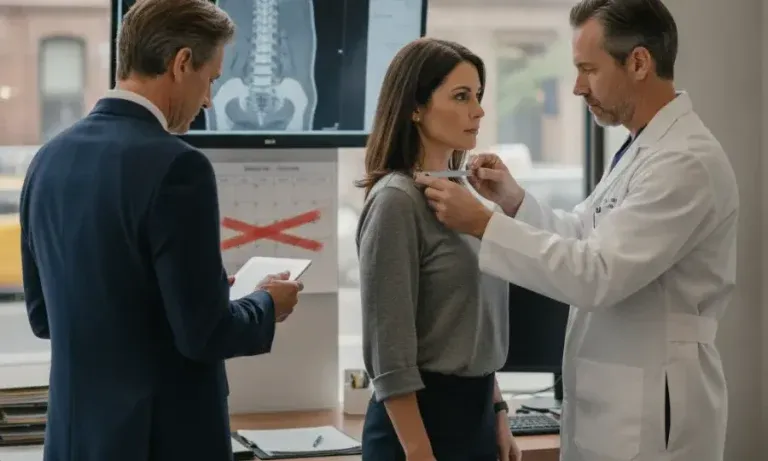
A crash on the Brooklyn - Queens Expressway or a rear-end collision along Grand Concourse can derail your life in seconds. For decades, injured New York ers relied on a familiar legal standard to recover compensation for their pain and disruption. However, New York auto accident litigation recently underwent its most significant transformation in a generation. As a top NYC personal injury lawyer, our firm helps injured clients make sense of these major statutory shifts every single day. Key Takeaways Part EE of Chapter 58 of the Laws of 2026 officially repealed the 90/180-day temporary disability category under Insurance Law Section 5102(d) for all lawsuits filed on or after May 26, 2026. New York requires objective proof for serious injury claims, but allows either quantitative measurements or qualitative assessment with objective basis; MRI plus goniometer/inclinometer testing is not mandatory in every case. New York retains pure comparative negligence generally under CPLR §1411(a); modified comparative fault with >50% bar applies only to non-economic damages in motor vehicle cases under new §1411(b), not all car accident damages. Insurance Law Section 5104(d) establishes a $100,000 cap on non-economic damages for at-fault injured persons in serious injury cases who operated uninsured vehicles, drove while impaired and were convicted, or committed felonies and were convicted. Under Part EE of Chapter 58 of the Laws of 2026, the New York State Legislature officially repealed the 90/180-day temporary disability category from Insurance Law Section 5102(d). According to the New York State Department of Financial Services in Insurance Circular Letter No. 3 issued on July 1, 2026, this change took effect for all actions commenced on or after May 26, 2026. Therefore, accident victims can no longer rely on temporary lifestyle limitations to pursue compensation for non-economic loss. This ultimate guide walks you through the revised legal framework. You will learn why lawmakers enacted this change, how courts now evaluate serious physical harm, and what steps you must take immediately after a crash to protect your rights. Understanding the Repeal of the 90/180-Day Rule New York operates as a no-fault auto insurance state. Your personal injury protection benefits cover medical bills and basic lost wages regardless of fault. However, you cannot sue a careless driver for pain and suffering unless your injuries meet the threshold defined in Insurance Law Section 5102(d). Historically, the 90/180-day rule offered a crucial pathway for injured individuals. A claimant could satisfy the threshold by proving a medically determined injury prevented them from performing substantially all customary daily activities for 90 out of the 180 days immediately following the crash. Insurance defense attorneys frequently targeted this category during litigation. Consequently, the Legislature eliminated the provision entirely to curtail soft-tissue claims. If your crash occurred recently and your lawsuit began on or after May 26, 2026, this traditional avenue no longer exists. Remaining Categories Under the Serious Injury Threshold Because lawmakers abolished the temporary disability standard, motor vehicle collision victims must satisfy one of the remaining statutory categories. Recovering non-economic damages now demands verifiable objective clinical findings under the surviving categories. To pursue compensation for pain and suffering, your medical proof must satisfy at least one of the following definitions: Death resulting from the motor vehicle collision. Dismemberment or significant disfigurement, such as severe surgical scarring. A bone fracture confirmed through diagnostic radiography. Loss of a fetus. Permanent loss of use of a body organ, member, function, or system. Permanent consequential limitation of use of a body organ or member. Significant limitation of use of a body function or system. In practice, most contested claims now center on significant limitations or permanent consequential limitations involving the spine, shoulders, knees, or brain. Proving these injuries requires sophisticated documentation and expert legal advocacy. Documenting Objective Medical Proof After a Crash Subjective complaints of discomfort no longer hold weight in New York courtrooms. Establishing a significant or permanent consequential limitation demands objective clinical findings. Quantitative Versus Qualitative Medical Evidence Courts require objective diagnostic tools to corroborate your symptoms. For instance, orthopedic specialists must utilize devices such as goniometers or inclinometers to record exact percentage reductions in your range of motion. Comparing your restricted mobility against normal physiological ranges gives the court concrete numerical proof. Qualitative assessments also play a vital role. A treating physician must provide an authoritative medical narrative explaining how your structural injuries limit your physical capabilities. When your doctor pairs these observations with advanced imaging, your case gains substantial credibility. The Indispensable Role of Advanced Diagnostic Imaging MRIs, CT scans, and electrodiagnostic nerve studies provide the backbone of modern threshold litigation. For example, if you suffer herniated discs in a Queens car crash, a radiologist must identify the structural disc pathology on an MRI film. Also, your physician must connect that structural abnormality directly to your measured physical limitations. Defense medical examiners routinely argue that spinal disc bulges stem from age-related degeneration rather than traumatic impact. Therefore, your medical team must explicitly distinguish traumatic injury from preexisting conditions in your formal records. New Procedural Sequence for Fault and Injury Determinations The legislative reform package reshaped the procedural roadmap of motor vehicle trials across New York State. The New York State Department of Financial Services emphasized that amendments to Insurance Law Section 5104(a) create a specific sequence for resolving claims. Under this statutory mandate, a court cannot fix liability for non-economic loss, nor can prejudgment interest begin to accrue, until the trier of fact resolves two distinct questions in order: The jury must first establish fault and determine the defendant driver acted negligently. The jury must subsequently confirm that the plaintiff sustained a qualifying serious injury under Section 5102(d). This statutory sequencing alters trial presentation. If our Queens car accident attorneys take a multi-vehicle collision before a jury, we must first secure a liability verdict before the court addresses non-economic damage awards. This structure prevents juries from conflating severe physical harm with clear liability. Modified Comparative Fault and New Statutory Damage Caps Along with changing the injury threshold, the 2026 legislation restructured fault allocation and financial recoveries. These sweeping modifications demand careful strategic planning from the outset of every claim. The Shift to Modified Comparative Negligence For half a century, New York observed a pure comparative fault standard under Civil Practice Law and Rules Section 1411. A claimant could recover damages even if they bore the majority of responsibility for an accident. Lawmakers officially amended CPLR Section 1411 for auto accident claims. New York retains pure comparative negligence generally under CPLR §1411(a); modified comparative fault with >50% bar applies only to non-economic damages in motor vehicle cases under new §1411(b), not all car accident damages. Consequently, if an insurance adjuster or defense attorney convinces a jury that you were 51 percent responsible for a crash, you recover nothing for your pain and suffering. Early accident reconstruction and thorough witness interviews have become critical tools to disprove comparative fault allegations. Statutory Caps Under Insurance Law Section 5104(d) The legislature also established a strict limitation on recoveries for certain at-fault motorists. Analysis of the addition of Insurance Law Section 5104(d) indicates it imposes a statutory cap of $100,000 on non-economic damages for specific claimants. This $100,000 limitation restricts injured motorists who bear partial fault and fall into any of the following categories at the time of the crash: Operating an uninsured motor vehicle with a coverage lapse exceeding 30 days. Driving while intoxicated or driving while ability impaired by drugs or alcohol. Operating a motor vehicle during the commission of a felony. These severe statutory restrictions reflect a deliberate effort to hold culpable motorists accountable while limiting insurer exposure across the state. Heightened Defense Motion Practice and Early Dismissals Insurance carriers have adjusted their defense tactics in response to the statutory repeal. Defense attorneys now utilize aggressive summary judgment motions to eliminate subjective injury claims before trial. In past years, plaintiffs could survive summary judgment by presenting sworn affidavits asserting they missed three months of work or daily routines. Because the 90/180-day category no longer exists, judges regularly grant defense dismissals when cases lack objective clinical findings. To withstand these legal challenges, our legal team works alongside your treating doctors from day one. We ensure that every medical evaluation contains quantifiable testing, contemporaneous records, and clear causal analysis linking your symptoms directly to the crash. Strategic Action Plan for Injured New Yorkers Navigating an insurance claim after a serious collision requires immediate, disciplined action. If you suffered harm on New York roadways, taking proactive measures will protect your physical recovery and legal standing. First, seek immediate emergency medical attention. Gaps in care give insurance carriers an excuse to argue that your physical limitations arose from unrelated events. Visiting an emergency room or urgent care center creates an immediate written record of traumatic injury. Next, attend every recommended physical therapy, chiropractic, or orthopedic appointment. Unexplained gaps in treatment allow defense counsel to claim that your condition resolved or lacked severity. If you cannot attend a session due to financial or personal hardship, inform your physician so they can note the reason in your chart. Finally, retain skilled legal counsel before providing recorded statements to insurance adjusters. Adjusters often ask leading questions designed to elicit subjective descriptions rather than objective findings. Having an advocate handle communications ensures you avoid critical missteps during the claims process. Frequently Asked Questions What was the 90/180-day rule in New York car accident cases? The 90/180-day rule allowed injured victims to qualify for pain and suffering damages by showing a medically determined injury prevented them from performing their normal daily activities for at least 90 of the first 180 days after a crash. Part EE of Chapter 58 of the Laws of 2026 repealed this category for all lawsuits filed on or after May 26, 2026. Can I still file a personal injury claim for soft-tissue injuries? Yes, you can still pursue a claim for soft-tissue injuries such as herniated discs or torn ligaments. However, you must prove the condition constitutes a significant limitation or permanent consequential limitation. This requires objective diagnostic imaging and quantitative range-of-motion testing rather than subjective pain reports. How does the new modified comparative fault rule affect my case? Under the amended CPLR Section 1411, you cannot recover any non-economic damages if a jury finds you more than 50 percent responsible for the collision. If your fault is 50 percent or less, your total financial award is reduced in proportion to your share of responsibility. What objective medical testing is required to meet the serious injury threshold? Courts require objective diagnostic evidence, including MRIs, CT scans, X-rays, and electrodiagnostic tests. Additionally, treating doctors must quantitatively document joint or spinal mobility restrictions using measurement instruments such as goniometers or inclinometers during clinical examinations. Protecting Your Rights Under New York Law The elimination of the 90/180-day rule marks a new era in New York motor vehicle accident litigation. Proving serious physical trauma now requires higher standards of objective proof, diligent record-keeping, and strategic legal preparation. When facing these evolving statutory hurdles, partnering with an experienced NYC personal injury lawyer ensures your case receives the thorough documentation required to secure justice and full financial recovery. Sources New York State Department of Financial Services, Insurance Circular Letter No. 3 (2026): Implementation of Part EE of Chapter 58 of the Laws of 2026 This article was drafted with AI assistance. Please verify all claims and information for accuracy. The content is for informational purposes only and does not constitute professional advice. Free Case Consultation Injured in an accident? Speak directly with an experienced NYC personal injury attorney at Rosenberg, Minc, Falkoff & Wolff. Your consultation is free, confidential, and risk-free. Start Your Free Case Review No obligation - No upfront fees - You don't pay unless we win Follow RMFW Law for legal insights and case results: Facebook Instagram X Pinterest Yelp YouTube Gary Silverstein Gary Silverstein has been a partner of Rosenberg, Minc, Falkoff & Wolff since 2001, and an associate of the firm since 1989. Mr. Silverstein graduated with a Bachelor of Science degree from State University of New York College at Oneonta in 1983. Mr. Silverstein holds a degree of Juris Doctor from the University of Miami School of Law, having graduated in 1988.

How NYC Personal Injury Lawyers Win Bike Dooring Cases

How NYC Personal Injury Lawyers Win Bike Dooring Cases

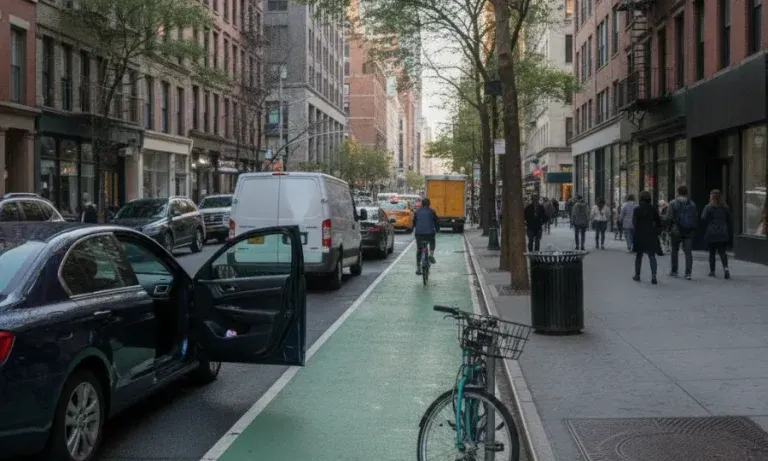
Riding a bicycle down a bustling New York City avenue requires sharp focus and quick reflexes. Even the most car eful riders face sudden hazards. An opened car door into moving traffic presents one of the most frightening dangers on city streets. As an experienced NYC personal injury lawyer, our legal team routinely represents injured cyclists who suffered severe harm because a driver or passenger failed to check their mirrors. These crashes, commonly called dooring accidents, lead to painful orthopedic trauma, concussions, and steep medical bills. Fortunately, New York traffic statutes protect riders when negligent vehicle occupants cause these sudden collisions. Key Takeaways New York Vehicle and Traffic Law Section 1214 creates an affirmative duty on drivers and passengers regarding door opening, and courts may treat violations as negligence per se when the elements of that doctrine are satisfied. Under New York Vehicle and Traffic Law Section 388(1), vehicle owners and commercial auto policies face vicarious liability when passengers negligently open doors into oncoming traffic. Appellate courts recognize that opening a car door into moving traffic can constitute the sole proximate cause of an accident, but no primary source documents the specific $2,500,000 settlement figure. Many injured cyclists wonder how fault affects their insurance claims. Under New York Vehicle and Traffic Law (NY VTL) Section 1214, no person may open a motor vehicle door on the side available to moving traffic unless it is reasonably safe to do so. Also, the rule strictly forbids leaving a door open longer than necessary to load or unload passengers. Consequently, this state statute places an affirmative legal duty directly upon motorists and passengers rather than oncoming cyclists. When a driver violates this rule, the legal standing shifts heavily in favor of the injured bicyclist. Understanding Negligence Per Se in New York Dooring Cases Establishing fault forms the bedrock of every personal injury claim. In standard car accident litigation, the injured party must prove that the driver acted carelessly under general common-law principles. However, dooring crashes follow a far more potent legal doctrine. Under New York law, a demonstrated violation of NY VTL Section 1214 can constitute negligence per se when the elements of that doctrine are satisfied. Negligence per se means that violating an enacted safety statute conclusively establishes negligent conduct as a matter of law. Therefore, the court recognizes the violation itself as definitive proof of careless behavior. This statutory standard gives our NYC personal injury attorneys immense leverage during settlement talks. Rather than debating whether the driver exercised reasonable caution, the legal dispute centers on whether the door opened into moving traffic. Once we secure police reports, witness testimony, or surveillance camera footage proving the door swung open directly into your path, liability becomes virtually indisputable. Insurance adjusters understand the power of negligence per se. Consequently, this clear finding eliminates many typical defense arguments and forces insurers to evaluate claims seriously early in the process. Municipal Regulations and Rider Protections in New York City State statutory law is not the only framework protecting cyclists across the five boroughs. In addition to state statutes, local municipal codes govern street activity. Municipal regulations further reinforce this standard under Rules of the City of New York Title 34 Section 4-12(c). This city regulation explicitly bars vehicle occupants from opening doors on the side of moving traffic whenever doing so interferes with oncoming bicycles or vehicles. In addition, the rule mandates that drivers must yield to all moving street traffic before cracking open a door. These dual layers of protection apply across all boroughs. For example, whether you ride past double-parked vehicles along Queens Boulevard or commute through protected bike lanes in Midtown Manhattan, these traffic rules shield you. Local laws treat bicycles as legitimate moving traffic. Therefore, drivers cannot dismiss a rider by claiming they expected only full-sized automobiles. When commercial delivery vans or rideshare vehicles pull to the curb and discharge passengers haphazardly, they violate both state and city traffic mandates. Appellate Precedent and the Sole Proximate Cause Standard Insurance defense adjusters often attempt to blame the bicyclist to diminish settlement payouts. They may allege that the rider traveled too fast, failed to swerve, or rode too close to parked cars. However, New York appellate courts have repeatedly rejected these blame-shifting tactics in dooring crashes. Appellate courts have affirmed that violating NY VTL Section 1214 can constitute the sole proximate cause of a collision, as demonstrated by the Appellate Division, Second Department in Montesinos v. Cote in December 2007. In that ruling, the appellate court affirmed summary judgment on liability against the driver who swung open their door into traffic. Securing summary judgment on liability means the trial judge rules on fault before the case ever reaches a jury. As a result, the jury only decides the financial compensation owed for your pain, suffering, and financial losses. Eliminating liability defenses creates immense financial pressure on insurance companies. When an insurer faces a trial focused purely on graphic injuries and medical expenses without any defense on fault, their financial exposure rises rapidly. Therefore, skilled Brooklyn bicycle crash lawyers use this appellate precedent to command higher pre-trial settlements. Passenger Actions and Vicarious Vehicle Owner Liability Many devastating dooring accidents involve taxi, rideshare, or limousine passengers exiting onto busy roadways. Injured cyclists often worry about recovering damages when an uninsured or underinsured passenger opens the door. Fortunately, New York insurance law provides broad financial protections for injured victims. Under New York Vehicle and Traffic Law Section 388(1), vehicle owners face vicarious liability for crashes caused by passengers opening doors into traffic, as affirmed by the Appellate Division, Second Department in Cohn v. Nationwide Mutual Insurance Company in October 2001. This critical legal principle means the owner’s primary auto insurance policy must provide coverage for the passenger’s negligent act. For instance, if an Uber, Lyft, or yellow cab passenger throws open a door into a bike path, the commercial vehicle policy covers the resulting damages. These commercial policies frequently carry substantial bodily injury limits. Also, corporate entities and commercial fleet owners possess significant commercial umbrella coverage. Our Queens car accident attorneys routinely identify every applicable insurance policy to maximize financial recovery for injured clients. How Clear Liability Drives Higher Pre-Trial Settlement Offers Insurance companies evaluate personal injury claims using a basic mathematical assessment of risk. When liability is uncertain, adjusters aggressively discount settlement offers, betting that a jury might assign comparative negligence to the injured cyclist. However, uncontroverted statutory liability under NY VTL Section 1214 fundamentally alters that risk calculation. When the defense cannot escape liability, the claim value reflects the full extent of physical and emotional damages. Clear proof of liability coupled with severe orthopedic injuries elevates pre-trial valuations significantly. These real-world outcomes prove that firm statutory liability secures exceptional financial recoveries across every severity level. Common Injuries in NYC Bicycle Dooring Crashes Dooring crashes rarely cause minor scrapes because the human body absorbs massive kinetic energy upon impact. A cyclist traveling at moderate speed has virtually zero time to brake when a car door suddenly swings outward. Consequently, riders often experience a severe primary collision with the metal frame of the door, followed by a violent secondary impact with the asphalt. Many cyclists sustain serious orthopedic trauma, including broken clavicles, fractured wrists, and shattered pelvic bones. Plus, the secondary impact frequently produces catastrophic head and spinal injuries. Even while wearing certified helmets, cyclists suffer traumatic brain injuries, concussions, and severe facial lacerations. Herniated cervical and lumbar discs often compress spinal nerve roots, causing radiating pain and physical disability that requires epidural injections or spinal fusion surgery. Documenting these debilitating injuries through prompt diagnostic MRI scans and objective specialist evaluations ensures insurance companies compensate every physical and emotional injury thoroughly. Overcoming the Comparative Fault Defense in Bike Lane Collisions New York operates under a pure comparative negligence system under Civil Practice Law and Rules (CPLR) Article 14-A. Under this law, an insurance adjuster will routinely argue that you share partial blame for your injuries. They might argue you should have spotted the vehicle or steered away faster. Nevertheless, experienced NYC personal injury lawyers refute these bad-faith claims by pointing directly to physical roadway designs and driver duties. Under New York law, cyclists have preferential use of designated bike lanes, and motorists must yield when crossing or turning across them, but cyclists do not possess an absolute right of way merely by being in a bike lane. Also, human reaction times make evading a door that opens within a split second physically impossible. In dense traffic along avenues in Manhattan or Brooklyn, swerving out of a bike lane into moving automotive traffic poses fatal risks. Therefore, continuing straight remains the only instinctive response for many riders. Our attorneys use accident reconstruction specialists, frame-by-frame traffic camera video, and vehicle event data recorders to demonstrate that our clients had neither the warning nor the physical distance to avoid the impact. Essential Steps to Take Immediately Following a NYC Dooring Collision The actions you take immediately following a bicycle accident significantly influence your physical recovery and the financial outcome of your legal claim. First, call 911 immediately and demand that the police respond to the scene. NY VTL Section 1214 governs dooring violations, but there is no official requirement that NYPD officers must document the violation in any specific manner in police accident reports. Next, seek prompt emergency medical attention, even if adrenaline temporarily masks your pain. Certain traumatic injuries, such as internal bleeding or micro-concussions, require prompt medical diagnosis. In addition, preserve all perishable evidence before departing the scene or as soon as your physical condition stabilizes. Capture clear photographs and videos of the opened vehicle door, the resting position of your bicycle, any damaged equipment, and surrounding street signs. Secure contact information from any bystanders, shopkeepers, or delivery workers who witnessed the incident. Finally, retain your damaged bicycle, cracked helmet, and torn riding gear without repairing or altering them. Physical evidence serves as irrefutable proof against defense claims in a court of law. Pursuing Justice with a Trusted NYC Personal Injury Lawyer Recovering from a severe dooring collision requires substantial time, dedicated medical care, and strong financial support. While you focus on healing, insurance companies deploy teams of claims adjusters and defense lawyers to protect their corporate profits. You do not have to confront these deep-pocketed corporate insurers alone. As seasoned New York trial attorneys, our firm stands up for injured cyclists across Manhattan, Brooklyn, Queens, the Bronx, and Staten Island. We investigate the crash scene thoroughly, pull vital traffic camera footage, identify all applicable commercial insurance policies, and build an airtight case based on statutory negligence. If an opened vehicle door injured you or someone you love, contact our dedicated legal team today. Schedule a free, confidential case evaluation with an accomplished NYC personal injury lawyer to protect your rights, assert statutory liability, and recover the compensation you rightfully deserve. Sources FindLaw, New York Consolidated Laws, Vehicle and Traffic Law - VAT § 1214 Opening and closing vehicle doors This article was drafted with AI assistance. Please verify all claims and information for accuracy. The content is for informational purposes only and does not constitute professional advice. Free Case Consultation Injured in an accident? Speak directly with an experienced NYC personal injury attorney at Rosenberg, Minc, Falkoff & Wolff. Your consultation is free, confidential, and risk-free. Start Your Free Case Review No obligation - No upfront fees - You don't pay unless we win Follow RMFW Law for legal insights and case results: Facebook Instagram X Pinterest Yelp YouTube Gary Silverstein Gary Silverstein has been a partner of Rosenberg, Minc, Falkoff & Wolff since 2001, and an associate of the firm since 1989. Mr. Silverstein graduated with a Bachelor of Science degree from State University of New York College at Oneonta in 1983. Mr. Silverstein holds a degree of Juris Doctor from the University of Miami School of Law, having graduated in 1988.

NYC Personal Injury Lawyer for Autonomous Vehicle Collision Claims

NYC Personal Injury Lawyer for Autonomous Vehicle Collision Claims

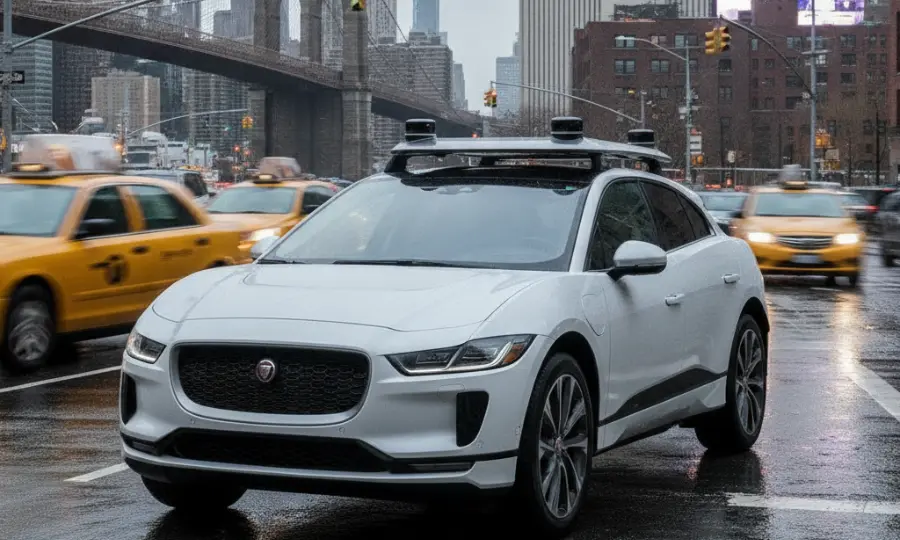
Autonomous vehicle s once felt like distant science fiction on New York streets. Today, test vehicles with sophisticated sensors navigate busy avenues alongside yellow cabs, delivery truck s, and pedestrian s. However, high tech machinery does not erase traffic danger. When an automated test vehicle collides with another car or strikes a pedestrian, complex legal questions immediately arise. As a top NYC personal injury lawyer, our firm helps injured New Yorkers uncover the truth after sudden, devastating collisions. Victims often wonder who bears legal responsibility when an onboard computer shares control with an in-vehicle test operator. Key Takeaways Under NYC DOT rules established in March 2024, autonomous vehicle testing strictly requires an approved human test operator behind the wheel ready to take control at all times. The NYC DOT permitting framework requires AV testing companies to carry substantial automobile and personal injury liability coverage. New York CPLR Article 14-A establishes pure comparative negligence for reducing damages based on a claimant's own culpable conduct, but does not specifically authorize juries to split liability between negligent safety drivers and autonomous software developers. Injured victims should act quickly to formally demand preservation of microsecond sensor logs, cabin video, and telematics data before critical collision evidence is erased. Establishing fault in these incidents requires examining the exact interaction between human oversight and automated decision systems. Under New York law, injured motorists and pedestrians have clear avenues to pursue financial compensation. Consequently, understanding how New York courts, municipal regulations, and corporate insurance policies interact is critical for anyone injured by an autonomous vehicle. The Regulatory Reality of Autonomous Vehicle Testing in NYC New York City does not permit fully driverless robotaxis to roam public roads without supervision. Under New York State law and the NYC Department of Transportation permitting framework launched in March 2024, autonomous vehicle testing requires an approved test-vehicle operator to be present behind the wheel and ready to assume manual control at all times. Therefore, every automated vehicle testing in New York operates with a designated safety specialist seated in the driver seat. Also, the municipal regulatory standard in New York City remains remarkably demanding. Testing applicants in New York City must meet a unique regulatory benchmark requiring operating companies to self-certify that their test vehicles will navigate municipal streets with a high degree of safety. This high standard protects the public across crowded neighborhoods. Because state law continues to require human fallback operators, injured victims retain clear personal injury claims against human drivers alongside the tech corporations operating the fleets. Safety Operator Negligence: Human Responsibility Behind the Wheel When an autonomous test vehicle strikes someone on a city street, the first inquiry focuses on human actions. The safety operator sitting in the vehicle owes a strict legal duty of care to everyone sharing the road. If you suffered harm in a Brooklyn car accident or sustained serious injuries in Manhattan traffic, our legal team investigates whether the safety specialist acted with reasonable care. A safety driver must monitor surroundings constantly and remain ready to take over manual control instantly. Human operators frequently face severe distractions inside testing cabins. For instance, an operator might look down at a diagnostic tablet, daydream, or scroll on a mobile device. That momentary delay in stepping on the brake pedal or steering away from danger constitutes actionable legal negligence. Also, human drivers often experience delayed reaction times due to cognitive automation complacency. When automated systems steer and stop smoothly for hours, safety drivers inevitably experience reduced situational awareness. However, New York personal injury law does not excuse inattention simply because a computer handled steering inputs. If an operator fails to see a cyclist or brakes too late to prevent a rear-end collision, that failure exposes the operator and their employer to full financial liability. Autonomous Software Liability: Defective Algorithms and Hardware Glitches While the human operator holds significant legal duty, autonomous vehicle developers also face parallel product liability claims. Autonomous vehicle technology relies on an intricate web of sensors, high-definition cameras, radar, light detection systems, and machine learning models. When these mechanical or digital components fail, the corporate entity that designed and deployed the system must answer for the harm caused. Autonomous vehicle developers face product liability theories involving design defects, algorithm failures, or inadequate failure-to-warn systems under New York law. A software defect occurs when an autonomous system fails to detect objects accurately under real-world conditions. For example, blinding glare on the Long Island Expressway, sudden heavy rainfall over Queens, or unexpected construction debris on FDR Drive can confuse machine vision models. If an algorithm misclassifies an oncoming motorcycle as background scenery, the software exhibits a fatal design flaw. In addition, system failures often involve improper transition alert mechanisms. An autonomous vehicle developer must design an alert protocol that provides human operators sufficient warning before relinquishing vehicle control. If the onboard software encounters an unmapped detour and immediately disengages without sounding an adequate alarm, the safety driver has zero seconds to react. Under product liability law, an inadequate warning design makes the automotive manufacturer or tech company strictly liable for resulting personal injuries. Pure Comparative Negligence and Apportioning Fault Under New York Law Autonomous vehicle collisions rarely present simple, single-cause scenarios. Instead, they typically involve a combined failure of artificial intelligence and human oversight. Because New York enforces pure comparative negligence under CPLR Article 14-A, juries tasked with AV collision disputes are empowered to apportion proximate cause percentages between a distracted safety driver delayed takeover and software misidentification, potentially leaving multiple co-defendants liable. Consider a realistic collision scenario at a busy intersection in Downtown Brooklyn. An autonomous vehicle approaches a crosswalk where a pedestrian begins crossing with the walk signal. The vehicle onboard perception software misidentifies the pedestrian as a stationary road sign and maintains cruising speed. Meanwhile, the safety driver looks at an onboard telematics screen rather than watching the roadway. By the time the computer sounds an emergency takeover chime, the vehicle stands twenty feet from the crosswalk. The safety driver slams the manual brakes, but the car strikes the pedestrian. In this scenario, both parties contributed directly to the victim’s catastrophic injuries. A New York jury can evaluate the evidence and allocate responsibility between the parties. For instance, a jury might determine that the software developer shares sixty percent of the fault for code defects and poor sensor interpretation, while attributing forty percent of fault to the safety operator for negligent surveillance. Under CPLR Article 14-A, this joint apportionment ensures the injured victim can recover full damages across every responsible corporate defendant. Preserving Digital Evidence and Uncovering Microsecond Black Box Data Winning an autonomous vehicle injury claim requires immediate technical investigation. Unlike traditional car crashes that rely primarily on witness statements and physical skid marks, autonomous vehicle lawsuits depend on digital telematics. Litigating fault between human takeover delays and software malfunctions relies heavily on microsecond event logs such as sensor calibration data, disengagement alerts, and steering and braking telematics, which plaintiffs attorneys target through formal preservation demands. These complex digital logs record the precise microsecond when an onboard system detected a hazard. They show whether the computer issued an acoustic warning, when the safety operator gripped the steering wheel, and how hard the driver pressed the brake pedal. If an injured plaintiff delays hiring legal counsel, vital digital data might be overwritten or deleted during automated fleet maintenance cycles. Experienced personal injury attorneys immediately dispatch formal spoliation letters to preserve: Raw sensor feeds, including exterior high-resolution camera video, LiDAR point clouds, and radar returns. Interior cabin camera footage proving whether the safety operator was texting, distracted, or properly alert. Disengagement logs showing whether the automated system shut down voluntarily or failed unexpectedly. Diagnostic fault codes and recent over-the-air firmware updates applied to vehicle computing units. Our Queens car accident attorneys explain how insurance laws and digital discovery apply to multi-vehicle crashes and complex fleet investigations. By securing this data promptly, your legal team can retain leading automotive engineers and software reconstructionists to pinpoint exactly where human error and software bugs converged. Mandatory Insurance Coverage for New York City Testing Fleets Injured New Yorkers often worry about whether enough insurance money exists to cover catastrophic medical bills, lengthy hospital stays, and permanent lost earning capacity. Fortunately, testing an autonomous vehicle in New York City requires substantial financial security. Operating companies cannot casually bring experimental cars onto municipal streets without backing up their safety claims with millions in liability insurance. The NYC DOT permitting process mandates that applicant companies carry substantial automobile liability coverage and personal injury liability coverage, alongside indemnifying the City of New York against legal liabilities resulting from AV testing operations. Consequently, victims injured in autonomous crashes do not face the meager minimum auto insurance limits typical of standard private passenger vehicles in New York. These multi-million-dollar insurance policies provide crucial financial protection. Catastrophic injuries, including traumatic brain damage, spinal cord trauma, crushed limbs, and multiple fractures, demand extensive lifetime care. Because autonomous vehicle test fleets carry robust multi-million-dollar insurance limits, injured victims can pursue meaningful compensation covering past medical bills, future nursing care, loss of career earnings, and intense physical pain and suffering. Steps to Take if an Autonomous Vehicle Hits You in NYC If you or someone you love suffers injuries in an accident involving an autonomous test car in any New York borough, immediate proactive measures will safeguard your health and your legal rights. Take these essential steps directly after a crash: Call 911 immediately. Ensure NYPD officers respond to the scene and file a formal collision report. Tell the responding officers that the vehicle was operating as an autonomous or test vehicle. Seek emergency medical care. Adrenaline often masks severe injuries after impact. Visit an emergency room immediately to document every injury, from concussions to soft tissue damage. Document the scene visually. Take photographs of the vehicle exterior, paying special attention to roof-mounted sensor pods, corporate logos, and license plates. Photograph interior cabin cameras and onboard laptop screens if visible through the windows. Avoid giving recorded statements to corporate insurers. Representatives from the fleet company will call quickly. Do not sign settlement releases or agree to recorded telephone interviews without legal counsel present. Contact a seasoned NYC personal injury lawyer immediately. Prompt legal action ensures spoliation letters reach corporate headquarters before vital digital telematics logs disappear. Autonomous vehicle technology continues to evolve rapidly across the United States. However, high-tech corporate ambition can never override the basic safety of New York pedestrians, cyclists, and motorists. If an autonomous test car caused you injury, our dedicated legal team will aggressively investigate the safety driver actions, audit the company software telematics, and hold all negligent corporations accountable under New York law. Sources This article was drafted with AI assistance. Please verify all claims and information for accuracy. The content is for informational purposes only and does not constitute professional advice. Free Case Consultation Injured in an accident? Speak directly with an experienced NYC personal injury attorney at Rosenberg, Minc, Falkoff & Wolff. Your consultation is free, confidential, and risk-free. Start Your Free Case Review No obligation - No upfront fees - You don't pay unless we win Follow RMFW Law for legal insights and case results: Facebook Instagram X Pinterest Yelp YouTube Gary Silverstein Gary Silverstein has been a partner of Rosenberg, Minc, Falkoff & Wolff since 2001, and an associate of the firm since 1989. Mr. Silverstein graduated with a Bachelor of Science degree from State University of New York College at Oneonta in 1983. Mr. Silverstein holds a degree of Juris Doctor from the University of Miami School of Law, having graduated in 1988.