Request Free Consultation

Please fill out the form below for your free consultation or call us at 646-480-0830.

Request Free Consultation

No Fee Unless We Win

Blog / Personal Injury

Negligence Can Cause Playground Injuries to Your Child in NY

Negligence Can Cause Playground Injuries to Your Child in NY

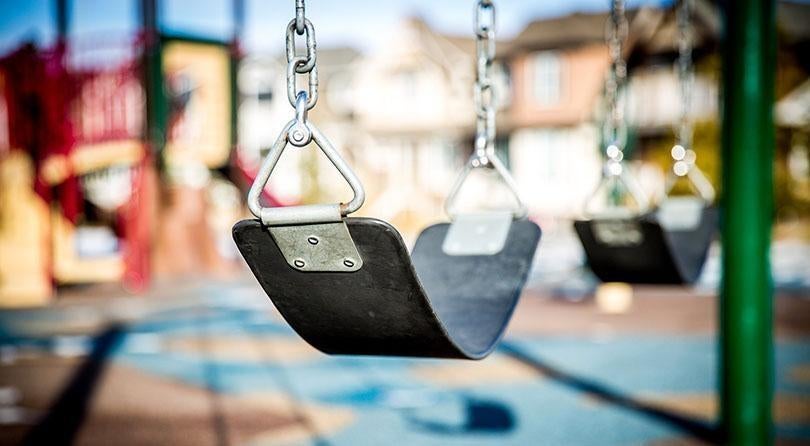
Nothing brings more pleasure to a parent than to watch their children play happily on a playground. Hearing the shrills of delight while at the swing sets is heart-warming. Parents think their children are safe as long as they have an eye on them. Unfortunately, outdoor play areas while welcoming and appealing can pose a serious threat to children of all ages.

Nothing brings more pleasure to a parent than to watch their children play happily on a playground. Hearing the shrills of delight while at the swing sets is heart-warming. Parents think their children are safe as long as they have an eye on them. Unfortunately, outdoor play areas while welcoming and appealing can pose a serious threat to children of all ages.

In fact, you may already be aware of the consequences if your child has been injured in a private or a public play area. Playground accidents in New York have significant consequences. It can turn the average enjoyable family outing into something horrific. It could be the difference between telling your child a bedtime story or spending the night in the emergency room. You may need to take time off work as well to care for your injured kid.

There are many forms to negligence resulting in playground injuries. It can substandard equipment, inadequate maintenance, lack of supervision, improper surfaces, and much more. This type of negligence can occur at an outdoor play set at home, daycare center or outside in a public area.

The best course of action if your child got injured while playing at home of another or the playground is to get in touch with a New York personal injury lawyer. The same holds true if you suspect product defect or negligence to have jeopardized the safety of your child.

Troubling and Surprising Facts about Playground Accidents

Safe Kids Worldwide and CDC have gleaned these facts from various hospital reports and studies:

  • According to an NYC study, playgrounds in poorer neighborhoods are more hazardous than those in areas with higher-income
  • Emergency room is visited by more than 200,000 US children for injuries in the playground
  • Nearly 15 children on an average die each year in playground accidents. The most common cause is strangulation.
  • The age group between 5 and 9 have a higher risk of meeting with accidents in a playground
  • Girls get injured more seriously than boys
  • 53% playground injuries involve climbing equipment
  • 67% playground injuries resulted in swings

Acts of Negligence Leading to Playground Injuries in New York

The last thing a law firm wants to hear is that your child got hurt. Physical pain or emotional suffering is not what a child should suffer, especially when it is because of another’s negligence. Unfortunately, children often suffer from playground injury accidents in NYC. It is important for playgrounds to be comfortable and safe. They should not be hazardous of threatening the health of children.

These are a few acts of negligence:

  • Lack of maintenance: Playground should be maintained regularly to be safe for children. Broken parts, rusty equipment and unsafe conditions such as stones or sharp sticks can result in in unnecessary injuries.
  • Improper supervision: You could have a claim against the company or individual if the injuries are because of a lack of supervision. It’s vital for children to be supervised at all times to prevent them from getting hurt from other children or engaging in the unsafe use of equipment.
  • Unsafe property: Property elements can result in injuries, such as from lack of fencing, body of water, chemicals, or exposed roots in the playground. These issues would fall under property owner liability.
  • Dangerous and defective equipment: Injuries in some cases may occur because of playground equipment defects. The distributor or manufacturer may be responsible for the injuries of your child in this case.
  • Poorly built structures: Playground injuries on private properties may occur because the owner did not put the equipment together in a correct way. Issues with elements pinching fingers, structure collapsing, or hard ground material can lead to property owner liability.

Instances of Playground Negligence in New York City

These are a few other common instances of negligence:

  • Insufficient mulch levels creating hard surfaces
  • Monkey slides, bars and other equipment that is too high on the ground
  • Equipment installed too close resulting in possibilities of collision
  • Equipment in disrepair because of lack of maintenance
  • Improper installation leading to potential traps for children
  • Tree stumps, anchoring posts and other tripping hazards that are not sufficiently covered or promptly removed
  • No guardrails in elevated surfaces

Pursuit of compensation begins with determining all the causes of your child’s injuries and the at-fault parties. Generally, to prove these elements you may require photographs of the playground, investigation, interviews with witnesses and other things.

Working with a knowledgeable and experienced law firm can make it easier to file a lawsuit during this difficult time. You do not have to fight against an unsafe playground all alone.

Suing a Public School for Injuries

Many people don’t know that if their child gets injured while at a public school, they are not liable for paying any damages. In some situations, public schools are protected by governmental immunity. However, you should still get in touch with a law office if your child has been injured because of the negligence of a public school in New York.

Suing a Private School for Injuries

Private schools are different from public schools. They don’t receive governmental immunity. Parents can sue private schools for injuries suffered because of negligence. They can receive compensation for the injuries suffered by their child.

Seeking Compensation Because of Negligent Teacher

Teachers in New York City need to adhere to the minimum safety guidelines as told by the Board of Education. This is to ensure that children are safe when at school. You may be entitled to receive compensation if your child got injured because a teacher failed to act responsibly.

Preventing Playground Injuries and Accidents

Parents trust playgrounds in their neighborhoods and schools to be safe with properly maintained equipment. This trust can often be taken for granted. However, there are ways to ensure that playgrounds are safe by those regulating the play area to do the following:

  • Posting signage that outlines age-appropriateness for designated areas of play and certain pieces of equipment
  • Limiting the number of children playing in a designated area or on a piece of equipment
  • Enforcing implementing proper ground surfaces other than concrete and asphalt
  • Teaching children on playing safely on equipment
  • Looking for trash and broken pieces of glass in the play area and routinely checking the equipment for broken pieces and sharp edges
  • Educating children about proper play manners, such as no shoving, pushing or trampling

Playgrounds are a favorite destination for children of all ages and they will continue to be developed in neighborhoods. It is a combined responsibility when it comes to keeping our children safe. However, proving the at-fault person in the event of a playground injury can be challenging.

Frequently Asked Questions

What are the time limits?

Notice of claim for playgrounds operated by New York City should be filed within 90 days of the accident with the City of New York. These claims can be prepared by skilled attorneys and filed properly without missing the statute of limitations. You may not be able to sue the City for a playground injury if you fail to file the notice of claim within the stipulated period of time unless you attain a court ordered special permission.

What happens once the notice of claim is filed?

The City has the right to a hearing once the notice of claim is filed. They may ask you about the accident and how your child got injured. You should work with a capable attorney that can prepare you for these questions so that you know exactly what to expect.

Should I consult with an attorney right away?

You need evidence that there was negligence on behalf of the City in addition to ensuring that the notice of claim gets filed timely. Contemporaneous measurements by an investigator or expert and photographs of the condition that resulted in the injury make for the best evidence. If you don’t take the photographs you risk losing evidence if the City corrects the problem.

Consulting with an Accomplished New York City Playground Injury Attorney

Costs involved with litigating playground related injuries can quickly escalate if you file the claim on your own. There are several steps that are time consuming. You may not be able to determine the at-fault party and whether product defect or negligence was to blame. The cost of playground equipment related injuries run into several billions of dollars each year. Playground injuries may result in extended time off work to care for your injured child and costly medical bills.

Your best course of action instead of tackling these legal issues on your own is to get in touch with a law firm that specializes in the area of playground liability. The legal team at Rosenberg, Minc, Falkoff & Wolff in New York consists of playground injury attorneys that are renowned for achieving desired results. We are standing by to help you understand your options and answer all your questions regarding the incident.

Rosenberg, Minc, Falkoff & Wolff playground accident attorneys are prepared to prosecute the lawsuit in an aggressive and dedicated manner. We invite you to get in touch with us to discuss your case without any obligation. If you or your loved ones have been injured from playground  in NYC or a free review of your case, call Rosenberg, Minc, Falkoff & Wolff, LLP today at 212-344-1000 or contact us online.


Robert Wolff

Robert H. Wolff is a member and partner of the prestigious New York City Personal Injury Law Firm of Rosenberg Minc, Falkoff, & Wolff, LLP. Mr. Wolff graduated from SUNY Albany, cum laude, in 1978 with a B.A. in Psychology and American History. Thereafter, he attended St. John’s University School of Law, where he was a member of the Moot Court Team and the Criminal Law Society, graduating in 1981 with a Juris Doctor’s degree.

Posted in:

Related Posts

A Step by Step Guide to Suing the City for NYC Park Injuries

A Step by Step Guide to Suing the City for NYC Park Injuries

A sunny afternoon at a Brooklyn playground or a basketball game on a Manhattan court can change in a h ear tbeat. When cracked pavement, broken bleachers, or neglected equipment cause serious harm, the path to recovery feels overwhelming. However, holding municipal property owners accountable in New York City requires strict adherence to tight legal procedures. You will learn how to protect your rights, meet critical deadlines, and pursue fair compensation after an accident on municipal property. Key Takeaways Under New York General Municipal Law § 50-e, claimants must serve a sworn Notice of Claim within 90 days of when the claim arises for tort claims against public corporations (including NYC), not limited to injuries on municipal property. Claims for injuries in NYC parks and recreational facilities must be served directly on the NYC Comptroller rather than the Parks Department. The New York City Comptroller's Office reported paying $1.04 billion across tort claims in FY 2024 out of $1.94 billion in total claim resolutions. A lawsuit against the City of New York must be commenced within a specific timeframe from the date of the incident. Under New York General Municipal Law § 50-e(1)(a), serving a formal Notice of Claim within a specific timeframe is mandatory before filing a personal injury lawsuit against the City of New York. Missing this deadline by even a single day can permanently bar your right to recover damages. As a dedicated NYC personal injury lawyer team, we guide injured New Yorkers through every stage of municipal claims so they can focus on healing. What You Need Before Starting Your Claim Preparation is essential when bringing a claim against a public corporation. Gather the following documentation as early as possible: Exact date, time, and specific location of the incident within the park or recreational court. Photographs and video footage showing the hazardous condition, surrounding area, and your visible injuries. Contact information for all eyewitnesses who saw the incident occur. Medical records, emergency room summaries, and physician treatment notes. Police reports or NYC Parks Department incident logs, if emergency personnel responded. Step 1: Document the Hazardous Park or Court Defect Immediately Municipal parks and athletic courts throughout the five boroughs experience intense daily use. Broken pavement, uneven blacktop, damaged fencing, and neglected playground equipment can quickly cause traumatic injuries. Therefore, collecting visual proof right after the incident provides the foundation for your case. Take clear photos from multiple angles before city crews repair the condition or weather erases evidence. Note the nearest park entrance, street intersection, lamppost number, or court number. Also, speak to any fellow park visitors or recreational players who observed your fall and request their phone numbers. Immediate documentation preserves crucial details that establish municipal negligence later. Pro tip: Capture wide establishing shots showing the broader area alongside close-up photos with a small object, such as a coin or pen, to demonstrate the depth and scale of the defect. Step 2: Obtain Comprehensive Medical Care and Retain Treatment Records Your health and safety must always come first. Seek immediate medical attention at an urgent care facility or hospital emergency room, even if your injuries seem manageable initially. Common park and court accidents involve torn ligaments, fractures, severe concussions, and spinal trauma that worsen over time. Explain precisely how your injury occurred to every examining physician. Ensure the triage notes accurately state that you were hurt at a public park or court facility. In addition, request copies of all discharge papers, diagnostic imaging scans, and follow-up treatment plans. These official records establish a direct causal link between the municipal property hazard and your physical damages. Watch out: Gaps in medical treatment provide municipal defense lawyers an excuse to argue that your injuries arose from unrelated activities rather than the park hazard. Step 3: Draft a Detailed Sworn Notice of Claim Under New York General Municipal Law § 50-e(2), a Notice of Claim must be in writing and sworn to under oath by or on behalf of the claimant. The document must explicitly describe the claimant’s identity, the nature of the claim, the exact time and location of the incident, and the specific items of damage sustained. Vague descriptions can jeopardize your entire legal action. For instance, stating that a trip happened inside Flushing Meadows Corona Park is insufficient; you must identify the exact court, path, or bench location. Plus, outlining the full scope of your physical, emotional, and financial losses ensures the municipal authority receives proper legal notification of your claim. Pro tip: Have a qualified attorney draft and verify the document to avoid technical omissions that municipal defense attorneys routinely exploit during motion practice. Step 4: Serve the Notice of Claim on the NYC Comptroller Many injured victims mistakenly believe they should deliver their notice directly to the Department of Parks and Recreation. However, a notice of claim for injuries in city-managed spaces must be served on the NYC Comptroller: New York General Municipal Law § 50-e sets the tort notice requirements, and New York City Charter § 394 designates the Comptroller as the officer who receives claims against the City. You can serve the Comptroller electronically through the official eClaim portal, by personal hand delivery, or through registered or certified mail. When you use certified mail, retain the stamped postal receipt and tracking confirmation. Meeting the strict 90-day window under GML § 50-e is non-negotiable, so completing service well ahead of the 90th day eliminates unnecessary risks. Watch out: Serving the wrong agency or relying on standard first-class mail without verifiable proof of delivery can invalidate your claim entirely. Step 5: Navigate the 30-Day Investigation Window and the 50-h Hearing Under New York General Municipal Law § 50-h, the City of New York has up to 90 days from filing of the notice of claim to serve a demand for examination, not a mandatory 30-day investigation window. During this period, the municipality investigates the incident scene, reviews maintenance logs, and decides whether to negotiate an early settlement. In most instances, the City will demand a statutory 50-h hearing. This proceeding consists of an oral examination under oath conducted by an attorney representing the City, alongside a potential physical examination by a city-designated physician. You must submit to this hearing before filing a formal lawsuit in court. Your Queens car accident attorneys and municipal injury lawyers will help prepare you to answer questions about the incident, your medical history, and your daily limitations honestly and concisely. Pro tip: Review your initial sworn notice and medical timeline carefully before the 50-h hearing so your oral testimony aligns with your written submissions. Step 6: File Your Summons and Complaint Within the Statute of Limitations Serving a timely Notice of Claim preserves your right to proceed, but it does not initiate a court lawsuit. A lawsuit against the City of New York for tort injuries must be commenced within a specific period from the incident date. Failing to file your summons and complaint before this deadline permanently closes the courthouse doors. Although the New York City Comptroller’s Office reported resolving 13,397 claims against the City for a record $1.94 billion in FY 2024, with tort claims accounting for $1.04 billion of that payout, the City vigorously defends untimelier actions. Initiating legal proceedings promptly gives your legal team sufficient time to conduct formal discovery and depose municipal maintenance supervisors. Watch out: The 90-day notice deadline does not pause or extend the ultimate statute of limitations under New York law. What to Do If You Missed the 90-Day Notice Deadline If more than 90 days have elapsed since your park or court injury, do not lose hope immediately. A court holds discretionary authority to grant leave to serve a late Notice of Claim, provided you apply before the statute of limitations expires. Under the binding standard established by the New York Court of Appeals in Newcomb v. Middle Country Central School District (28 N.Y.3d 455), judges evaluate whether you have a reasonable excuse for the delay, whether the municipality acquired actual timely knowledge of the essential facts within the 90-day period or shortly thereafter, and whether the delay caused substantial prejudice to the public corporation. If the City filed an incident report on the day of your injury, that contemporaneous record can support your petition significantly. Take Confident Next Steps Toward Justice Navigating municipal injury claims involves complex administrative procedures, stringent timelines, and determined government defense counsel. However, understanding the step-by-step process empowers you to take decisive action after an unexpected recreational accident. When an unsafe public space harms you or a family member, seeking guidance from an experienced NYC personal injury lawyer ensures your rights remain fully protected every step of the way. Sources New York State Senate, New York General Municipal Law § 50-e: Notice of Claim Office of the New York City Comptroller, Claims Dashboard for Fiscal Year 2024 This article was drafted with AI assistance. Please verify all claims and information for accuracy. The content is for informational purposes only and does not constitute professional advice. Free Case Consultation Injured in an accident? Speak directly with an experienced NYC personal injury attorney at Rosenberg, Minc, Falkoff & Wolff. Your consultation is free, confidential, and risk-free. Start Your Free Case Review No obligation - No upfront fees - You don't pay unless we win Follow RMFW Law for legal insights and case results: Facebook Instagram X Pinterest Yelp YouTube Gary Silverstein Gary Silverstein has been a partner of Rosenberg, Minc, Falkoff & Wolff since 2001, and an associate of the firm since 1989. Mr. Silverstein graduated with a Bachelor of Science degree from State University of New York College at Oneonta in 1983. Mr. Silverstein holds a degree of Juris Doctor from the University of Miami School of Law, having graduated in 1988.

Preparing for Consultations with Top New York Injury Lawyers

Preparing for Consultations with Top New York Injury Lawyers

A sudden personal injury accident in New York City can derail your life in seconds. Whether you were s truck by a reckless driver in Brooklyn, injured on a Manhattan construction site, or involved in a multi-vehicle crash in Queens, the days following an incident feel chaotic. Gathering the right documentation before sitting down for your initial legal consultation is one of the most effective ways to protect your rights and keep your claim moving forward smoothly. Key Takeaways Under NY CPLR Section 214(5), standard injury suits must be filed within three years, but General Municipal Law Section 50-e requires a sworn Notice of Claim within 90 days for city entities. NY Insurance Law Section 5102(a) provides up to $50,000 in No-Fault PIP benefits, capping lost earnings reimbursement at $2,000 per month for up to three years. Bringing official DMV MV-104AN police reports, medical bills, wage statements, and scene photos to your initial legal review drastically speeds up your case evaluation. When you meet with a legal team, clear documentary evidence allows your attorney to evaluate liability, assess total damages, and build a persuasive strategy immediately. Coming prepared transforms your initial consultation into a direct, focused strategy session. Official Police Reports and Scene Documentation Official law enforcement documentation forms the foundation of almost every personal injury action. Following a traffic collision in any of the five boroughs, responding officers document the incident on Form MV-104AN, as outlined in official New York DMV crash report manuals. This standardized record records vital facts, including officer observations, weather conditions, driver statements, and preliminary fault determinations. Under New York Vehicle and Traffic Law Section 600, all motorists involved in a crash are legally required to stop and exchange names, addresses, driver’s license details, and insurance information. Bringing this exchanged information to your consultation helps your lawyer identify all potentially liable parties and insurance coverage limits right away. In addition to official reports, photos and videos taken at the scene provide invaluable visual evidence. Try to compile the following items: Clear photos showing vehicle damage, road conditions, traffic signals, and weather factors Images of visible physical injuries, including cuts, bruising, or surgical dressings Photographs of damaged personal property, such as crushed smartphones or torn clothing Contact details for neutral eyewitnesses who saw the incident occur Medical Records, Bills, and Treatment Logs Establishing the full extent of your physical injuries requires thorough, organized medical records. Under New York Insurance Law Section 5102(a), basic economic loss coverage through No-Fault Personal Injury Protection (PIP) provides up to $50,000 per person for necessary medical care and related economic costs. Providing your attorney with complete medical documentation ensures every expense is properly calculated and submitted. To establish the required legal threshold for non-economic damages, plaintiffs must demonstrate a serious injury under New York Insurance Law Section 5102(d), such as a fracture or significant disfigurement. On May 26, 2026, New York State enacted auto liability reforms that eliminated the traditional 90/180-day non-permanent impairment category from the statutory serious injury threshold. Consequently, presenting immediate objective medical evidence, such as diagnostic imaging and emergency room records, is more critical than ever. Bring these health-related documents to your initial legal review: Emergency department discharge summaries and ambulance transport logs Diagnostic test results, including X-rays, MRI scans, and CT imaging reports Itemized hospital bills, physical therapy statements, and prescription receipts Written treatment plans from primary doctors and orthopedic specialists A daily personal pain journal tracking your pain levels, physical limitations, and missed daily activities Employment Evidence and Proof of Lost Income Severe injuries frequently keep accident victims away from work, leading to immediate financial strain. Proper documentation allows your attorney to pursue comprehensive reimbursement for lost earnings and reduced future earning capacity. Under New York Insurance Law Section 5102(a), No-Fault PIP benefits cap monthly lost earnings reimbursement at $2,000 per month for up to three years. If your actual loss exceeds this statutory cap, your attorney can seek the remaining balance through a third-party personal injury lawsuit against the at-fault party. To substantiate your lost wage claim, collect the following financial documents: Recent W-2 forms, 1099 tax returns, or federal income tax filings Pay stubs showing pre-accident wage earnings and lost work hours A formal letter from your employer's human resources department confirming missed shifts and salary rates Doctor's notes explicitly authorizing your time off work for medical recovery Critical Legal Deadlines for New York Injury Claims Acting quickly to collect your documents is essential because New York law enforces strict statutory deadlines on personal injury actions. Missing a filing window can permanently extinguish your right to seek financial recovery. Under New York Civil Practice Law and Rules Section 214(5), standard personal injury lawsuits based on general negligence must be filed within three years of the accident date. However, medical malpractice actions operate under a shorter timeline; under Civil Practice Law and Rules Section 214-a, medical malpractice claims must be filed within two years and six months of the negligent act or the end of continuous treatment. The timeline is even shorter if your injury involves a municipal entity, such as a New York City Transit Authority bus or a roadway maintained by the City of New York. Under New York General Municipal Law Section 50-e, a formal sworn Notice of Claim must be served on the municipality within 90 days of the incident. Bringing your documents to a lawyer immediately ensures these strict municipal filing limits are met. How Organized Evidence Accelerates Your Case Arriving at your legal consultation with organized documents allows your legal team to start investigating right away. Instead of spending weeks requesting old medical records or searching for police reports, your attorney can immediately file administrative notices, preserve witness testimony, and negotiate directly with insurance adjusters. Gathering your paperwork ahead of time protects your legal rights, helps reduce personal stress, and ensures your legal team can fight effectively for every dollar of compensation you deserve. Sources New York State Senate, Civil Practice Law & Rules Section 214 - Actions to be commenced within three years New York State Department of Motor Vehicles, Police Crash Report Submission Instructions Manual (MV-104A) This article was drafted with AI assistance. Please verify all claims and information for accuracy. The content is for informational purposes only and does not constitute professional advice. Free Case Consultation Injured in an accident? Speak directly with an experienced NYC personal injury attorney at Rosenberg, Minc, Falkoff & Wolff. Your consultation is free, confidential, and risk-free. Start Your Free Case Review No obligation - No upfront fees - You don't pay unless we win Follow RMFW Law for legal insights and case results: Facebook Instagram X Pinterest Yelp YouTube Gary Silverstein Gary Silverstein has been a partner of Rosenberg, Minc, Falkoff & Wolff since 2001, and an associate of the firm since 1989. Mr. Silverstein graduated with a Bachelor of Science degree from State University of New York College at Oneonta in 1983. Mr. Silverstein holds a degree of Juris Doctor from the University of Miami School of Law, having graduated in 1988.

The $82M Verdict

The $82M Verdict: Subway Track Accidents and MTA Liability

When a Brooklyn federal jury awarded n ear ly $82 million to Brazilian tourist Luisa Janssen Harger Da Silva, it sent a powerful shockwave through the entire Metropolitan Transportation Authority. According to court records from the United States District Court for the Eastern District of New York, the jury found the transit agency negligent after Da Silva fainted and fell onto the subway tracks at the Atlantic Avenue-Barclays Center station in 2016. An oncoming B train s truck her, resulting in the amputation of her left arm and left leg. For decades, the transit authority operated under the assumption that they were largely shielded from law suits involving track falls. However, this historic verdict completely redefines how we prove transit agency negligence in New York City. Key Takeaways A Brooklyn federal jury awarded Luisa Janssen Da Silva $81.7 million, including $70 million for pain and suffering, after she fell onto the tracks and was struck by a train. The landmark verdict established transit authority liability for failing to install platform safety barriers despite possessing internal safety data. The court denied the transit agency qualified immunity because they failed to conduct reasonable safety studies prior to the 2016 accident. Commuters injured in NYC transit accidents must file a formal Notice of Claim within 90 days of the incident to protect their right to seek compensation. If you or someone you love has suffered injuries on a subway platform, this case changes the legal landscape. As a top NYC personal injury lawyer, our firm understands how to hold massive public entities accountable when they fail to protect the public. Consequently, we are closely analyzing this landmark decision to help other accident victims seek the justice they deserve. The Groundbreaking Details of the Luisa Janssen Verdict To understand the impact of this case, we must look at the specific compensation the jury awarded. According to court records published by the Brooklyn Eagle, the jury awarded Da Silva a total of $81.7 million. This total included various allocations for pain and suffering, medical costs, and lost earnings. The size of this award reflects the extreme physical and emotional trauma the young woman endured, which included 24 days of intensive treatment at Bellevue Hospital and multiple reconstructive surgeries. Also, this case represents the first successful claim in the United States where a train-strike victim held a transit system accountable for failing to install platform safety barriers. For years, the transit authority blamed passengers for track falls, attributing incidents to intoxication, medical emergencies, or personal recklessness. However, this trial shifted the focus from passenger behavior to systemic agency neglect. How the Plaintiff Overcame Government Immunity Suing a public entity like the Metropolitan Transportation Authority is notoriously difficult. Typically, government agencies claim qualified immunity, which protects them from lawsuits regarding their planning and discretionary decisions. In Harger Da Silva v. New York City Transit Authority, the defendants argued that their decisions regarding station design and safety installations were protected under this immunity doctrine. However, the plaintiff's legal team successfully defeated this defense. According to court documents from the Eastern District of New York, the lawyers exposed a critical vulnerability in the defense. They revealed that the transit authority had possessed internal safety data indicating that people regularly fell onto the tracks, yet the agency had failed to conduct a single reasonable study on how to prevent these falls prior to the 2016 accident. Plus, the plaintiff proved that the transit authority had previously rejected a no-cost industry proposal to install platform screen doors system-wide. Because the agency failed to conduct adequate safety studies, the court ruled they could not claim qualified immunity. Proving Negligence in New York Subway Track Accidents If you are injured in a Brooklyn construction accident, a slip and fall, or a transit collision, proving negligence is the foundation of your case. In subway track accidents, establishing negligence requires showing that the transit authority knew about a hazard and failed to take reasonable steps to correct it. The Luisa Janssen case provides a clear blueprint for how a skilled nyc personal injury lawyer can prove this negligence. First, we must establish that a hazard was foreseeable. According to historical transit records presented during the trial, train strikes have occurred regularly, indicating a foreseeable danger. Second, we must show that feasible safety solutions existed. The plaintiff’s team demonstrated that platform edge barriers and track intrusion detection systems were widely available and highly effective. Finally, we must prove that the agency's failure to implement these solutions directly caused the victim's injuries. The Role of Train Operator Negligence While the lack of platform barriers was a central issue, the Luisa Janssen case also focused on the actions of the train operator. Federal regulations assign vigilance and warning duties to designated watchmen/lookouts and roadway workers, not train operators generally. Last clear chance doctrine can apply to railroad cases but there is no distinct 'train operator vigilance' concept that is often evaluated under this doctrine. This legal concept holds a defendant liable if they had a clear opportunity to avoid an accident but failed to do so. During the trial, the jury evaluated whether the train operator could have seen Da Silva on the tracks in time to stop the train. Although the defense argued that the situation was an unavoidable emergency, the jury ultimately found that the combined negligence of the transit authority and the subway operator caused the catastrophic accident. Therefore, if you are injured on the tracks, your attorney will carefully analyze train speed, operator reaction times, and station lighting to determine if the operator could have prevented the collision. What This Verdict Means for NYC Subway Riders This landmark verdict is already forcing tangible changes across the city. In direct response to the mounting legal pressure and public safety concerns highlighted by this lawsuit, the transit authority began installing fixed-rail platform barriers at select stations. However, hundreds of busy stations across Manhattan, Brooklyn, Queens, and the Bronx still lack these vital safety features. Meanwhile, riders continue to face daily risks on crowded, narrow, and poorly maintained platforms. If you suffer an injury due to a platform hazard, a push, or a medical emergency that sends you onto the tracks, you should know that you have legal options. The law demands that transit agencies provide a reasonably safe environment for the millions of commuters who rely on their services every day. Taking the Next Steps After a Transit Accident If you or a loved one has been injured in a subway accident, taking swift action is absolutely critical. Unlike claims against private individuals, lawsuits against public entities in New York are subject to incredibly strict deadlines. For example, the 90-day Notice of Claim requirement applies only to claims against municipal/public entities, not all accidents in NYC. First, seek immediate medical attention and ensure your injuries are fully documented. Next, avoid speaking with transit investigators or insurance adjusters without legal representation. Finally, contact an experienced Brooklyn subway accident attorney who can immediately secure vital evidence, such as station surveillance footage, train black box data, and operator records. Our dedicated legal team is here to guide you through every step of this complex process, ensuring your rights are protected and you receive the maximum compensation possible. Sources U.S. District Court for the Eastern District of New York, Luisa Janssen Harger Da Silva v. New York City Transit Authority et al., No. 1:17-cv-04550 This article was drafted with AI assistance. Please verify all claims and information for accuracy. The content is for informational purposes only and does not constitute professional advice. Free Case Consultation Injured in an accident? Speak directly with an experienced NYC personal injury attorney at Rosenberg, Minc, Falkoff & Wolff. Your consultation is free, confidential, and risk-free. Start Your Free Case Review No obligation - No upfront fees - You don't pay unless we win Follow RMFW Law for legal insights and case results: Facebook Instagram X Pinterest Yelp YouTube Gary Silverstein Gary Silverstein has been a partner of Rosenberg, Minc, Falkoff & Wolff since 2001, and an associate of the firm since 1989. Mr. Silverstein graduated with a Bachelor of Science degree from State University of New York College at Oneonta in 1983. Mr. Silverstein holds a degree of Juris Doctor from the University of Miami School of Law, having graduated in 1988.