
Request Free Consultation

Please fill out the form below for your free consultation or call us at 646-480-0830.

Request Free Consultation

No Fee Unless We Win

Blog / Car Accidents

How to Calculate Car Accident Injury Settlement in New York?

How to Calculate Car Accident Injury Settlement in New York?

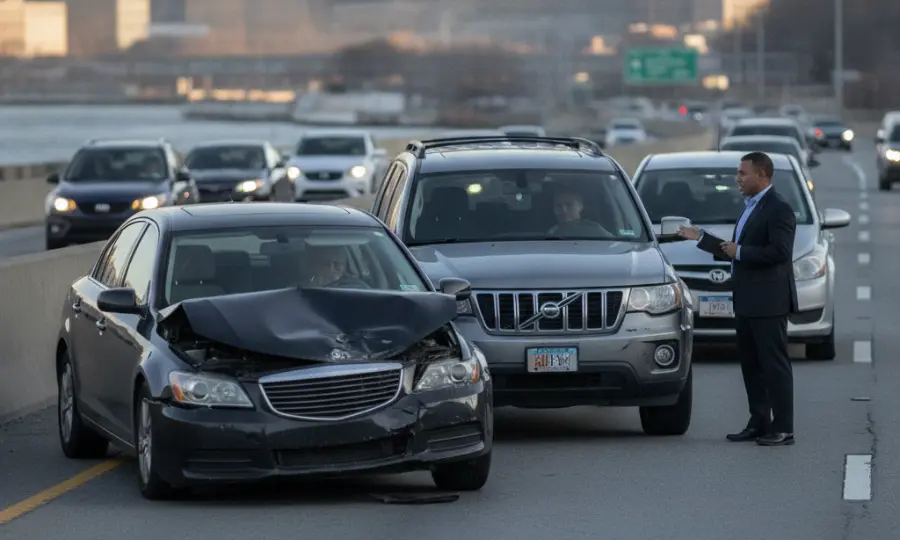
A car accident resulting from another's negligence can turn your life upside down. In these cases in New York, the injured victim should know how to calculate the estimated car accident settlement amount they can expect towards their financial recovery.

Key components in the settlement may include medical expenses, lost wages, property damage, and pain and suffering. By carefully documenting these costs in consultation with a skilled New York City car accident attorney, you can gain a clearer picture of the compensation you may be entitled to. This thorough approach helps ensure that you are adequately compensated for your losses and can begin to rebuild your life.

Online Car Accident Settlement Calculator to Estimate Your Personal Injury Settlement Amount in New York

A useful tool to estimate your car accident settlement amount is our New York Car Accident Settlement Calculator. This free tool helps you get a rough idea of what your claim might be worth based on medical expenses, lost wages, property damage, and pain and suffering. Simply enter your details above to calculate your potential settlement amount instantly.

For a more accurate evaluation of your case, contact our experienced legal team today.

Call us at 212-344-1000 or fill out our online contact form to get started with a free case evaluation.

How Does an Online Car Accident Settlement Calculator Work?

An online car accident settlement calculator is a tool designed to give you a rough estimate of the compensation you might expect from a personal injury claim. It factors in various elements such as medical expenses, lost wages, property damage, and non-economic damages like pain and suffering. Here's how it typically works for New York personal injury cases:

  • Input Medical Expenses: Enter the total cost of your medical treatment, including hospital bills, surgery costs, rehabilitation, and any ongoing medical care.
  • Lost Wages: Calculate the income you have lost due to the accident. This includes both past and future lost wages if you are unable to return to work.
  • Property Damage: Include the cost of repairs or replacement of your vehicle and any other property damaged in the accident.
  • Pain and Suffering: While this is more subjective, some calculators use a multiplier method. This involves multiplying your economic damages (medical expenses and lost wages) by a number (typically between 1.5 and 5) based on the severity of your injuries and the impact on your life.
  • Other Expenses: Don’t forget to add other accident-related expenses such as transportation costs for medical appointments and modifications to your home if needed.

Key Factors Influencing Your Car Accident Settlement Amount in New York City

Several factors influence the personal injury settlement amount you might receive from a car accident claim in New York:

  • Severity of Injuries: More severe injuries typically result in higher settlements due to higher medical costs and greater impact on your life.
  • Fault Determination: New York follows a comparative negligence rule, which means your compensation can be reduced if you are found partially at fault for the accident.
  • Insurance Policy Limits: The at-fault party’s insurance coverage limits can cap the maximum settlement amount.
  • Economic Damages: Direct costs such as medical bills and lost wages are easier to quantify and often form the basis of your settlement.
  • Non-Economic Damages: Pain and suffering, emotional distress, and loss of enjoyment of life are more subjective but significantly impact your total compensation.

Steps to Use an Online Personal Injury Settlement Calculator

To use an online car accident settlement calculator in New York, follow these steps:

  • Gather Information: Collect all relevant information regarding your medical expenses, lost wages, property damage, and other related costs.
  • Enter Data: Input this data into the settlement calculator.
  • Adjust Multiplier: Use the calculator’s guidelines to select an appropriate multiplier for pain and suffering.
  • Review Estimate: The calculator will provide an estimated settlement range based on your inputs.

Importance of Legal Assistance in Calculating Personal Injury Damages in New York

While an online settlement calculator provides a helpful estimate, it’s vital to consult with an experienced New York City car accident attorney. They can provide a more accurate assessment of your case, negotiate with insurance companies on your behalf, and ensure you receive the maximum compensation possible.

Steps Our New York Car Accident Lawyers Will Take to Calculate Your Estimated Settlement Amount

At Rosenberg, Minc, Falkoff & Wolff, LLP, our experienced New York City car accident lawyers will objectively calculate your estimated personal injury settlement amount and issue a demand letter to the defendant and their insurance company:

Step 1: Initial Consultation and Case Evaluation

The first step involves a comprehensive consultation where we gather all necessary information about your accident. This includes details about the incident, your injuries, medical treatments, and any other relevant information. We will review police reports, witness statements, and any available photographs or videos from the accident scene.

Step 2: Medical Record Collection and Analysis

We will obtain and meticulously review your medical records to understand the extent of your injuries and the treatments you have undergone. This includes hospital bills, doctor’s notes, prescriptions, rehabilitation costs, and any future medical care you might need. We may also consult with medical experts to accurately assess your injuries.

Step 3: Calculation of Economic Damages

Economic damages are straightforward and include all out-of-pocket expenses related to the accident. This involves:

  • Medical Expenses: Calculating all past, present, and future medical costs.
  • Lost Wages: Determining the income you have lost due to your inability to work. This includes both current and future lost earnings if your injuries prevent you from returning to your job.
  • Property Damage: Estimating the cost to repair or replace your vehicle and any other personal property damaged in the accident.
  • Other Expenses: Accounting for miscellaneous costs such as transportation for medical appointments and home modifications.

Step 4: Calculation of Non-Economic Damages

Non-economic damages cover the intangible impacts of the accident on your life. These are calculated using various methods, including the multiplier method where your total economic damages are multiplied by a factor (usually between 1.5 and 5) based on the severity of your injuries and their impact on your quality of life. This includes:

  • Pain and Suffering: The physical pain and emotional distress caused by the accident.
  • Loss of Enjoyment of Life: How the injuries have affected your ability to enjoy day-to-day activities.
  • Emotional Distress: Any psychological impact such as anxiety, depression, or PTSD.
  • Loss of Consortium: Impact on your relationship with your spouse or family.
  • Step 5: Determining the Total Settlement Amount

Combining both economic and non-economic damages gives us a comprehensive estimate of your potential settlement amount. This holistic approach ensures that all aspects of your suffering and financial loss are taken into account.

Step 6: Hiring Experts to Estimate Long-Term Damages

To ensure that all long-term consequences of your injuries are accurately accounted for, we may hire various specialists:

  • Medical Experts: To provide detailed analyses of your injuries and required future medical care.
  • Wage Economists: To project future lost earnings based on your career trajectory and the impact of your injuries.
  • Life Care Planning Specialists: To estimate the costs of long-term care and support services you may need.
  • Psychiatrists: To assess the psychological impact of the accident and the cost of ongoing mental health treatment.

These experts help us build a robust case that thoroughly addresses all aspects of your long-term damages, ensuring you receive a fair settlement.

Step 7: Drafting the Demand Letter

Once we have calculated the estimated settlement amount, our New York City car accident lawyers will draft a detailed demand letter. This letter will outline the following:

  • Summary of the Accident: A clear and concise description of how the accident occurred and why the defendant is liable.
  • Injury and Treatment Details: Comprehensive information on your injuries, medical treatments, and the impact on your life.
  • Economic Damages: A detailed breakdown of all economic losses, supported by receipts, invoices, and other documentation.
  • Non-Economic Damages: An explanation of the non-economic damages and how they were calculated.
  • Total Settlement Amount: The total amount we are demanding as compensation for your injuries and losses.

Step 8: Negotiation with the Defendant and Their Insurance Company

After sending the demand letter, we will enter into negotiations with the defendant and their insurance company. Our goal is to secure a fair settlement that adequately compensates you for your injuries and losses. If negotiations do not result in a satisfactory settlement, we’re fully prepared to take your case to trial to ensure you receive the compensation you deserve.

Personal Injury Settlements and Verdicts Our New York City Car Accident Attorneys Have Won for Injured New Yorkers

The New York City car accident attorneys at Rosenberg, Minc, Falkoff & Wolff, LLP have an impressive track record of winning large settlements and verdicts for clients. Here are some notable examples of our successes:

$5.5 Million Settlement: This case involved a pedestrian who was struck by a vehicle, resulting in severe injuries including multiple fractures and a traumatic brain injury. The settlement highlights the firm's ability to handle complex cases involving catastrophic injuries and negotiate significant compensation for their clients.

$4.5 Million Settlement: In another notable case, the firm secured a $4.5 million settlement for a client who suffered serious injuries in a truck accident. The extensive preparation and expert testimony utilized by the attorneys at Rosenberg, Minc, Falkoff & Wolff, LLP played a crucial role in achieving this substantial settlement.

$3.9 Million Jury Verdict: This case involved a construction worker who was injured due to inadequate safety measures at a construction site. The jury awarded the worker $3.9 million, reflecting the firm's expertise in handling personal injury cases related to construction accidents.

$2.8 Million Settlement: The firm secured this settlement for a client who sustained serious injuries in a slip and fall accident at a commercial property. The attorneys effectively demonstrated the property owner's negligence, leading to a favorable settlement for their client.

$1.26 Million Settlement: This case involved a 30-year-old teacher’s aide who was injured when her disabled vehicle was struck by a van. The plaintiff suffered a left foot tibial nerve injury causing a drop foot and disfiguring scars on her lower extremities. The settlement was achieved during jury selection, showcasing the firm's ability to secure substantial compensation for their clients even before a full trial.

Get Our Seasoned NY Car Accident Attorneys on Your Side

Are you or a loved one suffering the consequences of a serious car accident in New York City? To get justice and compensation, look no further than Rosenberg, Minc, Falkoff & Wolff, LLP. Founded in 1922, our legacy of dedication to helping accident victims recover the highest compensation they deserve remains steadfast. Our team of hard working and robust trial attorneys in NYC fights relentlessly to maximize your financial compensation, ensuring you can move forward with dignity, independence, and the closure you rightfully deserve. Call us at 212-344-1000 or fill out our online contact form to get started with a free case evaluation.


Robert Wolff

Robert H. Wolff is a member and partner of the prestigious New York City Personal Injury Law Firm of Rosenberg Minc, Falkoff, & Wolff, LLP. Mr. Wolff graduated from SUNY Albany, cum laude, in 1978 with a B.A. in Psychology and American History. Thereafter, he attended St. John’s University School of Law, where he was a member of the Moot Court Team and the Criminal Law Society, graduating in 1981 with a Juris Doctor’s degree.


Posted in:

Related Posts

Everything You Need to Know About the 90 180 Day Rule Repeal

Everything You Need to Know About the 90 180 Day Rule Repeal

A crash on the Brooklyn - Queens Expressway or a rear-end collision along Grand Concourse can derail your life in seconds. For decades, injured New York ers relied on a familiar legal standard to recover compensation for their pain and disruption. However, New York auto accident litigation recently underwent its most significant transformation in a generation. As a top NYC personal injury lawyer, our firm helps injured clients make sense of these major statutory shifts every single day. Key Takeaways Part EE of Chapter 58 of the Laws of 2026 officially repealed the 90/180-day temporary disability category under Insurance Law Section 5102(d) for all lawsuits filed on or after May 26, 2026. New York requires objective proof for serious injury claims, but allows either quantitative measurements or qualitative assessment with objective basis; MRI plus goniometer/inclinometer testing is not mandatory in every case. New York retains pure comparative negligence generally under CPLR §1411(a); modified comparative fault with >50% bar applies only to non-economic damages in motor vehicle cases under new §1411(b), not all car accident damages. Insurance Law Section 5104(d) establishes a $100,000 cap on non-economic damages for at-fault injured persons in serious injury cases who operated uninsured vehicles, drove while impaired and were convicted, or committed felonies and were convicted. Under Part EE of Chapter 58 of the Laws of 2026, the New York State Legislature officially repealed the 90/180-day temporary disability category from Insurance Law Section 5102(d). According to the New York State Department of Financial Services in Insurance Circular Letter No. 3 issued on July 1, 2026, this change took effect for all actions commenced on or after May 26, 2026. Therefore, accident victims can no longer rely on temporary lifestyle limitations to pursue compensation for non-economic loss. This ultimate guide walks you through the revised legal framework. You will learn why lawmakers enacted this change, how courts now evaluate serious physical harm, and what steps you must take immediately after a crash to protect your rights. Understanding the Repeal of the 90/180-Day Rule New York operates as a no-fault auto insurance state. Your personal injury protection benefits cover medical bills and basic lost wages regardless of fault. However, you cannot sue a careless driver for pain and suffering unless your injuries meet the threshold defined in Insurance Law Section 5102(d). Historically, the 90/180-day rule offered a crucial pathway for injured individuals. A claimant could satisfy the threshold by proving a medically determined injury prevented them from performing substantially all customary daily activities for 90 out of the 180 days immediately following the crash. Insurance defense attorneys frequently targeted this category during litigation. Consequently, the Legislature eliminated the provision entirely to curtail soft-tissue claims. If your crash occurred recently and your lawsuit began on or after May 26, 2026, this traditional avenue no longer exists. Remaining Categories Under the Serious Injury Threshold Because lawmakers abolished the temporary disability standard, motor vehicle collision victims must satisfy one of the remaining statutory categories. Recovering non-economic damages now demands verifiable objective clinical findings under the surviving categories. To pursue compensation for pain and suffering, your medical proof must satisfy at least one of the following definitions: Death resulting from the motor vehicle collision. Dismemberment or significant disfigurement, such as severe surgical scarring. A bone fracture confirmed through diagnostic radiography. Loss of a fetus. Permanent loss of use of a body organ, member, function, or system. Permanent consequential limitation of use of a body organ or member. Significant limitation of use of a body function or system. In practice, most contested claims now center on significant limitations or permanent consequential limitations involving the spine, shoulders, knees, or brain. Proving these injuries requires sophisticated documentation and expert legal advocacy. Documenting Objective Medical Proof After a Crash Subjective complaints of discomfort no longer hold weight in New York courtrooms. Establishing a significant or permanent consequential limitation demands objective clinical findings. Quantitative Versus Qualitative Medical Evidence Courts require objective diagnostic tools to corroborate your symptoms. For instance, orthopedic specialists must utilize devices such as goniometers or inclinometers to record exact percentage reductions in your range of motion. Comparing your restricted mobility against normal physiological ranges gives the court concrete numerical proof. Qualitative assessments also play a vital role. A treating physician must provide an authoritative medical narrative explaining how your structural injuries limit your physical capabilities. When your doctor pairs these observations with advanced imaging, your case gains substantial credibility. The Indispensable Role of Advanced Diagnostic Imaging MRIs, CT scans, and electrodiagnostic nerve studies provide the backbone of modern threshold litigation. For example, if you suffer herniated discs in a Queens car crash, a radiologist must identify the structural disc pathology on an MRI film. Also, your physician must connect that structural abnormality directly to your measured physical limitations. Defense medical examiners routinely argue that spinal disc bulges stem from age-related degeneration rather than traumatic impact. Therefore, your medical team must explicitly distinguish traumatic injury from preexisting conditions in your formal records. New Procedural Sequence for Fault and Injury Determinations The legislative reform package reshaped the procedural roadmap of motor vehicle trials across New York State. The New York State Department of Financial Services emphasized that amendments to Insurance Law Section 5104(a) create a specific sequence for resolving claims. Under this statutory mandate, a court cannot fix liability for non-economic loss, nor can prejudgment interest begin to accrue, until the trier of fact resolves two distinct questions in order: The jury must first establish fault and determine the defendant driver acted negligently. The jury must subsequently confirm that the plaintiff sustained a qualifying serious injury under Section 5102(d). This statutory sequencing alters trial presentation. If our Queens car accident attorneys take a multi-vehicle collision before a jury, we must first secure a liability verdict before the court addresses non-economic damage awards. This structure prevents juries from conflating severe physical harm with clear liability. Modified Comparative Fault and New Statutory Damage Caps Along with changing the injury threshold, the 2026 legislation restructured fault allocation and financial recoveries. These sweeping modifications demand careful strategic planning from the outset of every claim. The Shift to Modified Comparative Negligence For half a century, New York observed a pure comparative fault standard under Civil Practice Law and Rules Section 1411. A claimant could recover damages even if they bore the majority of responsibility for an accident. Lawmakers officially amended CPLR Section 1411 for auto accident claims. New York retains pure comparative negligence generally under CPLR §1411(a); modified comparative fault with >50% bar applies only to non-economic damages in motor vehicle cases under new §1411(b), not all car accident damages. Consequently, if an insurance adjuster or defense attorney convinces a jury that you were 51 percent responsible for a crash, you recover nothing for your pain and suffering. Early accident reconstruction and thorough witness interviews have become critical tools to disprove comparative fault allegations. Statutory Caps Under Insurance Law Section 5104(d) The legislature also established a strict limitation on recoveries for certain at-fault motorists. Analysis of the addition of Insurance Law Section 5104(d) indicates it imposes a statutory cap of $100,000 on non-economic damages for specific claimants. This $100,000 limitation restricts injured motorists who bear partial fault and fall into any of the following categories at the time of the crash: Operating an uninsured motor vehicle with a coverage lapse exceeding 30 days. Driving while intoxicated or driving while ability impaired by drugs or alcohol. Operating a motor vehicle during the commission of a felony. These severe statutory restrictions reflect a deliberate effort to hold culpable motorists accountable while limiting insurer exposure across the state. Heightened Defense Motion Practice and Early Dismissals Insurance carriers have adjusted their defense tactics in response to the statutory repeal. Defense attorneys now utilize aggressive summary judgment motions to eliminate subjective injury claims before trial. In past years, plaintiffs could survive summary judgment by presenting sworn affidavits asserting they missed three months of work or daily routines. Because the 90/180-day category no longer exists, judges regularly grant defense dismissals when cases lack objective clinical findings. To withstand these legal challenges, our legal team works alongside your treating doctors from day one. We ensure that every medical evaluation contains quantifiable testing, contemporaneous records, and clear causal analysis linking your symptoms directly to the crash. Strategic Action Plan for Injured New Yorkers Navigating an insurance claim after a serious collision requires immediate, disciplined action. If you suffered harm on New York roadways, taking proactive measures will protect your physical recovery and legal standing. First, seek immediate emergency medical attention. Gaps in care give insurance carriers an excuse to argue that your physical limitations arose from unrelated events. Visiting an emergency room or urgent care center creates an immediate written record of traumatic injury. Next, attend every recommended physical therapy, chiropractic, or orthopedic appointment. Unexplained gaps in treatment allow defense counsel to claim that your condition resolved or lacked severity. If you cannot attend a session due to financial or personal hardship, inform your physician so they can note the reason in your chart. Finally, retain skilled legal counsel before providing recorded statements to insurance adjusters. Adjusters often ask leading questions designed to elicit subjective descriptions rather than objective findings. Having an advocate handle communications ensures you avoid critical missteps during the claims process. Frequently Asked Questions What was the 90/180-day rule in New York car accident cases? The 90/180-day rule allowed injured victims to qualify for pain and suffering damages by showing a medically determined injury prevented them from performing their normal daily activities for at least 90 of the first 180 days after a crash. Part EE of Chapter 58 of the Laws of 2026 repealed this category for all lawsuits filed on or after May 26, 2026. Can I still file a personal injury claim for soft-tissue injuries? Yes, you can still pursue a claim for soft-tissue injuries such as herniated discs or torn ligaments. However, you must prove the condition constitutes a significant limitation or permanent consequential limitation. This requires objective diagnostic imaging and quantitative range-of-motion testing rather than subjective pain reports. How does the new modified comparative fault rule affect my case? Under the amended CPLR Section 1411, you cannot recover any non-economic damages if a jury finds you more than 50 percent responsible for the collision. If your fault is 50 percent or less, your total financial award is reduced in proportion to your share of responsibility. What objective medical testing is required to meet the serious injury threshold? Courts require objective diagnostic evidence, including MRIs, CT scans, X-rays, and electrodiagnostic tests. Additionally, treating doctors must quantitatively document joint or spinal mobility restrictions using measurement instruments such as goniometers or inclinometers during clinical examinations. Protecting Your Rights Under New York Law The elimination of the 90/180-day rule marks a new era in New York motor vehicle accident litigation. Proving serious physical trauma now requires higher standards of objective proof, diligent record-keeping, and strategic legal preparation. When facing these evolving statutory hurdles, partnering with an experienced NYC personal injury lawyer ensures your case receives the thorough documentation required to secure justice and full financial recovery. Sources New York State Department of Financial Services, Insurance Circular Letter No. 3 (2026): Implementation of Part EE of Chapter 58 of the Laws of 2026 This article was drafted with AI assistance. Please verify all claims and information for accuracy. The content is for informational purposes only and does not constitute professional advice. Free Case Consultation Injured in an accident? Speak directly with an experienced NYC personal injury attorney at Rosenberg, Minc, Falkoff & Wolff. Your consultation is free, confidential, and risk-free. Start Your Free Case Review No obligation - No upfront fees - You don't pay unless we win Follow RMFW Law for legal insights and case results: Facebook Instagram X Pinterest Yelp YouTube Gary Silverstein Gary Silverstein has been a partner of Rosenberg, Minc, Falkoff & Wolff since 2001, and an associate of the firm since 1989. Mr. Silverstein graduated with a Bachelor of Science degree from State University of New York College at Oneonta in 1983. Mr. Silverstein holds a degree of Juris Doctor from the University of Miami School of Law, having graduated in 1988.

NYC Personal Injury Lawyer for Autonomous Vehicle Collision Claims

NYC Personal Injury Lawyer for Autonomous Vehicle Collision Claims

Autonomous vehicle s once felt like distant science fiction on New York streets. Today, test vehicles with sophisticated sensors navigate busy avenues alongside yellow cabs, delivery truck s, and pedestrian s. However, high tech machinery does not erase traffic danger. When an automated test vehicle collides with another car or strikes a pedestrian, complex legal questions immediately arise. As a top NYC personal injury lawyer, our firm helps injured New Yorkers uncover the truth after sudden, devastating collisions. Victims often wonder who bears legal responsibility when an onboard computer shares control with an in-vehicle test operator. Key Takeaways Under NYC DOT rules established in March 2024, autonomous vehicle testing strictly requires an approved human test operator behind the wheel ready to take control at all times. The NYC DOT permitting framework requires AV testing companies to carry substantial automobile and personal injury liability coverage. New York CPLR Article 14-A establishes pure comparative negligence for reducing damages based on a claimant's own culpable conduct, but does not specifically authorize juries to split liability between negligent safety drivers and autonomous software developers. Injured victims should act quickly to formally demand preservation of microsecond sensor logs, cabin video, and telematics data before critical collision evidence is erased. Establishing fault in these incidents requires examining the exact interaction between human oversight and automated decision systems. Under New York law, injured motorists and pedestrians have clear avenues to pursue financial compensation. Consequently, understanding how New York courts, municipal regulations, and corporate insurance policies interact is critical for anyone injured by an autonomous vehicle. The Regulatory Reality of Autonomous Vehicle Testing in NYC New York City does not permit fully driverless robotaxis to roam public roads without supervision. Under New York State law and the NYC Department of Transportation permitting framework launched in March 2024, autonomous vehicle testing requires an approved test-vehicle operator to be present behind the wheel and ready to assume manual control at all times. Therefore, every automated vehicle testing in New York operates with a designated safety specialist seated in the driver seat. Also, the municipal regulatory standard in New York City remains remarkably demanding. Testing applicants in New York City must meet a unique regulatory benchmark requiring operating companies to self-certify that their test vehicles will navigate municipal streets with a high degree of safety. This high standard protects the public across crowded neighborhoods. Because state law continues to require human fallback operators, injured victims retain clear personal injury claims against human drivers alongside the tech corporations operating the fleets. Safety Operator Negligence: Human Responsibility Behind the Wheel When an autonomous test vehicle strikes someone on a city street, the first inquiry focuses on human actions. The safety operator sitting in the vehicle owes a strict legal duty of care to everyone sharing the road. If you suffered harm in a Brooklyn car accident or sustained serious injuries in Manhattan traffic, our legal team investigates whether the safety specialist acted with reasonable care. A safety driver must monitor surroundings constantly and remain ready to take over manual control instantly. Human operators frequently face severe distractions inside testing cabins. For instance, an operator might look down at a diagnostic tablet, daydream, or scroll on a mobile device. That momentary delay in stepping on the brake pedal or steering away from danger constitutes actionable legal negligence. Also, human drivers often experience delayed reaction times due to cognitive automation complacency. When automated systems steer and stop smoothly for hours, safety drivers inevitably experience reduced situational awareness. However, New York personal injury law does not excuse inattention simply because a computer handled steering inputs. If an operator fails to see a cyclist or brakes too late to prevent a rear-end collision, that failure exposes the operator and their employer to full financial liability. Autonomous Software Liability: Defective Algorithms and Hardware Glitches While the human operator holds significant legal duty, autonomous vehicle developers also face parallel product liability claims. Autonomous vehicle technology relies on an intricate web of sensors, high-definition cameras, radar, light detection systems, and machine learning models. When these mechanical or digital components fail, the corporate entity that designed and deployed the system must answer for the harm caused. Autonomous vehicle developers face product liability theories involving design defects, algorithm failures, or inadequate failure-to-warn systems under New York law. A software defect occurs when an autonomous system fails to detect objects accurately under real-world conditions. For example, blinding glare on the Long Island Expressway, sudden heavy rainfall over Queens, or unexpected construction debris on FDR Drive can confuse machine vision models. If an algorithm misclassifies an oncoming motorcycle as background scenery, the software exhibits a fatal design flaw. In addition, system failures often involve improper transition alert mechanisms. An autonomous vehicle developer must design an alert protocol that provides human operators sufficient warning before relinquishing vehicle control. If the onboard software encounters an unmapped detour and immediately disengages without sounding an adequate alarm, the safety driver has zero seconds to react. Under product liability law, an inadequate warning design makes the automotive manufacturer or tech company strictly liable for resulting personal injuries. Pure Comparative Negligence and Apportioning Fault Under New York Law Autonomous vehicle collisions rarely present simple, single-cause scenarios. Instead, they typically involve a combined failure of artificial intelligence and human oversight. Because New York enforces pure comparative negligence under CPLR Article 14-A, juries tasked with AV collision disputes are empowered to apportion proximate cause percentages between a distracted safety driver delayed takeover and software misidentification, potentially leaving multiple co-defendants liable. Consider a realistic collision scenario at a busy intersection in Downtown Brooklyn. An autonomous vehicle approaches a crosswalk where a pedestrian begins crossing with the walk signal. The vehicle onboard perception software misidentifies the pedestrian as a stationary road sign and maintains cruising speed. Meanwhile, the safety driver looks at an onboard telematics screen rather than watching the roadway. By the time the computer sounds an emergency takeover chime, the vehicle stands twenty feet from the crosswalk. The safety driver slams the manual brakes, but the car strikes the pedestrian. In this scenario, both parties contributed directly to the victim’s catastrophic injuries. A New York jury can evaluate the evidence and allocate responsibility between the parties. For instance, a jury might determine that the software developer shares sixty percent of the fault for code defects and poor sensor interpretation, while attributing forty percent of fault to the safety operator for negligent surveillance. Under CPLR Article 14-A, this joint apportionment ensures the injured victim can recover full damages across every responsible corporate defendant. Preserving Digital Evidence and Uncovering Microsecond Black Box Data Winning an autonomous vehicle injury claim requires immediate technical investigation. Unlike traditional car crashes that rely primarily on witness statements and physical skid marks, autonomous vehicle lawsuits depend on digital telematics. Litigating fault between human takeover delays and software malfunctions relies heavily on microsecond event logs such as sensor calibration data, disengagement alerts, and steering and braking telematics, which plaintiffs attorneys target through formal preservation demands. These complex digital logs record the precise microsecond when an onboard system detected a hazard. They show whether the computer issued an acoustic warning, when the safety operator gripped the steering wheel, and how hard the driver pressed the brake pedal. If an injured plaintiff delays hiring legal counsel, vital digital data might be overwritten or deleted during automated fleet maintenance cycles. Experienced personal injury attorneys immediately dispatch formal spoliation letters to preserve: Raw sensor feeds, including exterior high-resolution camera video, LiDAR point clouds, and radar returns. Interior cabin camera footage proving whether the safety operator was texting, distracted, or properly alert. Disengagement logs showing whether the automated system shut down voluntarily or failed unexpectedly. Diagnostic fault codes and recent over-the-air firmware updates applied to vehicle computing units. Our Queens car accident attorneys explain how insurance laws and digital discovery apply to multi-vehicle crashes and complex fleet investigations. By securing this data promptly, your legal team can retain leading automotive engineers and software reconstructionists to pinpoint exactly where human error and software bugs converged. Mandatory Insurance Coverage for New York City Testing Fleets Injured New Yorkers often worry about whether enough insurance money exists to cover catastrophic medical bills, lengthy hospital stays, and permanent lost earning capacity. Fortunately, testing an autonomous vehicle in New York City requires substantial financial security. Operating companies cannot casually bring experimental cars onto municipal streets without backing up their safety claims with millions in liability insurance. The NYC DOT permitting process mandates that applicant companies carry substantial automobile liability coverage and personal injury liability coverage, alongside indemnifying the City of New York against legal liabilities resulting from AV testing operations. Consequently, victims injured in autonomous crashes do not face the meager minimum auto insurance limits typical of standard private passenger vehicles in New York. These multi-million-dollar insurance policies provide crucial financial protection. Catastrophic injuries, including traumatic brain damage, spinal cord trauma, crushed limbs, and multiple fractures, demand extensive lifetime care. Because autonomous vehicle test fleets carry robust multi-million-dollar insurance limits, injured victims can pursue meaningful compensation covering past medical bills, future nursing care, loss of career earnings, and intense physical pain and suffering. Steps to Take if an Autonomous Vehicle Hits You in NYC If you or someone you love suffers injuries in an accident involving an autonomous test car in any New York borough, immediate proactive measures will safeguard your health and your legal rights. Take these essential steps directly after a crash: Call 911 immediately. Ensure NYPD officers respond to the scene and file a formal collision report. Tell the responding officers that the vehicle was operating as an autonomous or test vehicle. Seek emergency medical care. Adrenaline often masks severe injuries after impact. Visit an emergency room immediately to document every injury, from concussions to soft tissue damage. Document the scene visually. Take photographs of the vehicle exterior, paying special attention to roof-mounted sensor pods, corporate logos, and license plates. Photograph interior cabin cameras and onboard laptop screens if visible through the windows. Avoid giving recorded statements to corporate insurers. Representatives from the fleet company will call quickly. Do not sign settlement releases or agree to recorded telephone interviews without legal counsel present. Contact a seasoned NYC personal injury lawyer immediately. Prompt legal action ensures spoliation letters reach corporate headquarters before vital digital telematics logs disappear. Autonomous vehicle technology continues to evolve rapidly across the United States. However, high-tech corporate ambition can never override the basic safety of New York pedestrians, cyclists, and motorists. If an autonomous test car caused you injury, our dedicated legal team will aggressively investigate the safety driver actions, audit the company software telematics, and hold all negligent corporations accountable under New York law. Sources This article was drafted with AI assistance. Please verify all claims and information for accuracy. The content is for informational purposes only and does not constitute professional advice. Free Case Consultation Injured in an accident? Speak directly with an experienced NYC personal injury attorney at Rosenberg, Minc, Falkoff & Wolff. Your consultation is free, confidential, and risk-free. Start Your Free Case Review No obligation - No upfront fees - You don't pay unless we win Follow RMFW Law for legal insights and case results: Facebook Instagram X Pinterest Yelp YouTube Gary Silverstein Gary Silverstein has been a partner of Rosenberg, Minc, Falkoff & Wolff since 2001, and an associate of the firm since 1989. Mr. Silverstein graduated with a Bachelor of Science degree from State University of New York College at Oneonta in 1983. Mr. Silverstein holds a degree of Juris Doctor from the University of Miami School of Law, having graduated in 1988.

NYC Car Accident Attorneys on Multi-Vehicle Pileups

NYC Car Accident Attorneys on Multi-Vehicle Pileups

A sudden screech of tires on the FDR Drive often leads to a chaotic chain collision within seconds. Multi - car pileups on busy Manhattan streets leave drivers facing serious injuries, extensive property damage, and conflicting insurance claims. When three or more vehicles collide, determining who pays for your medical bills and vehicle repairs becomes complex. As experienced New York car accident attorneys, we know that untangling liability comes down to proving whether an initial impact or a secondary impact caused the chain reaction. Key Takeaways Under New York VTL Section 1129(a) and Fumo v. Ortiz, a rear-end collision creates a rebuttable presumption of negligence against the trailing driver. A middle driver in a multi-car pileup completely avoids liability if accident reconstruction proves their vehicle came to a safe stop before being pushed forward by a rear collision. Under New York CPLR Section 1411(b) enacted for motor vehicle claims subject to Insurance Law Article 51 commenced on or after May 26, 2026, an injured driver whose culpable conduct is greater than that of the defendant(s) cannot recover damages. Understanding New York Rear End Collision Laws New York law establishes strict duties for drivers following other vehicles. Under New York Vehicle and Traffic Law (VTL) Section 1129(a), every motorist must maintain a reasonable and prudent following distance. The statute requires drivers to account for traffic speed, weather conditions, and highway congestion. When a trailing vehicle hits a stopped or stopping car from behind, New York courts apply a clear legal standard. According to the New York Supreme Court decision in Fumo v. Ortiz (2024 NY Slip Op 51730(U)), a rear-end collision creates a rebuttable prima facie case of negligence against the trailing driver. This means the law presumes the rear driver was negligent unless they can provide an adequate, non-negligent explanation. However, congested city driving complicates this presumption during multi-vehicle pileups. Drivers often argue that the car in front stopped without warning. The New York Appellate Division, First Department held in Woodley v. Ramirez (25 A.D.3d 451) that a lead driver who stopped abruptly in heavy Manhattan traffic to avoid a limousine was not negligent, and that the rear driver must provide a non-negligent explanation. Motorists in New York City must anticipate sudden stop-and-go decelerations on avenues and highway corridors. The Difference Between Initial and Secondary Impacts In a standard three-car chain reaction collision, investigators must identify the precise sequence of vehicle strikes. The legal outcome depends heavily on whether the middle car struck the lead car first or was pushed into it from behind. Scenario One: The True Chain Reaction Push In this common scenario, the lead vehicle slows down or stops for traffic or a red light. The middle vehicle comes to a complete, safe stop behind the lead car. Suddenly, a third, trailing vehicle slams into the back of the middle car. That forceful impact propels the middle car forward into the lead vehicle. Under New York law, the middle driver bears zero liability in this situation. Warner v. Kain and Swinton v. Kamiyama establish that a middle driver may establish prima facie entitlement to summary judgment by showing proper stopping before being struck, but this remains subject to factual disputes about proximate causation. The rearmost driver bears full legal responsibility for all damage and injuries. Scenario Two: The Two Impact Sequence In the second scenario, the middle vehicle is tailgating the lead vehicle. The middle driver fails to stop in time and rear-ends the lead vehicle on their own. Moments later, the third vehicle crashes into the rear of the middle car, causing a secondary jolt. This sequence creates shared fault. How Forensic Reconstruction Proves the Collision Sequence Insurance companies frequently point fingers after a Manhattan pileup. Each insurer attempts to shift blame to protect its own bottom line. To prove the true sequence of events, our NYC personal injury law firm works with experienced accident reconstruction specialists. Forensic experts use objective, physical evidence to establish the timeline of impacts: Event Data Recorders (EDRs): Modern vehicle black boxes capture exact vehicle speeds, brake pedal engagement, and sudden changes in velocity (Delta-V) before each collision. Crush Depth Analysis: Engineers measure structural deformation on front and rear bumpers to determine if damage occurred from an active forward strike or a passive push. Brake Switch Telemetry: Data confirms whether a driver had their foot firmly planted on the brake pedal at the exact instant of impact. Traffic and Dashcam Footage: In dense corridors like the FDR Drive, West Side Highway, or Midtown crosstown streets, attorneys subpoena NYC Department of Transportation camera feeds and private surveillance footage. Police Accident Reports: Responding NYPD officers document physical debris fields, skid marks, and initial driver statements on official MV-104 reports. Can the Lead Driver Ever Share Fault? While the trailing drivers face primary scrutiny, a lead driver can also share legal responsibility in certain circumstances. Forward drivers may face comparative negligence claims if mechanical failures or illegal maneuvers contributed to the crash under New York's pure comparative negligence doctrine. For example, if a lead driver operates a vehicle with non-functioning brake lights, they violate New York VTL Section 375. A complete lack of brake illumination deprives following drivers of essential warning time. Similarly, making an abrupt, unsignaled lane change directly across traffic can introduce shared fault into a collision claim. New York Comparative Fault Rules for Auto Accidents Understanding how New York apportions blame is essential for anyone injured in a pileup. For decades, New York operated under a pure comparative negligence system. However, New York enacted significant statutory changes to modern automobile litigation. New York introduced a modified comparative fault rule under CPLR Section 1411(b) for motor vehicle personal injury actions commenced on or after May 26, 2026. Under the modified standard for motor vehicle cases subject to Insurance Law Article 51, an injured motorist whose allocated fault exceeds 50 percent cannot recover non-economic damages against other defendants. This legal threshold makes thorough evidence collection vital. If an aggressive insurance adjuster tries to argue you were primarily responsible for a pileup, they are trying to eliminate your right to financial compensation entirely. Protecting Your Legal Rights After a Manhattan Pileup If you were involved in a multi-car crash on New York City roadways, the steps you take immediately following the accident can make all the difference in your legal recovery. Take the following actions to safeguard your health and your case: Seek Immediate Medical Attention: Adrenaline can mask severe neck, back, and head trauma. Visit an emergency room or urgent care clinic right away to establish medical documentation. Ensure the NYPD Files a Report: Never leave the scene without an official NYPD accident report documenting all involved drivers and vehicle registrations. Capture Scene Evidence: Photograph vehicle resting positions, bumper damage, road conditions, and nearby intersection traffic cameras if you can do so safely. Do Not Give Recorded Statements to Insurers: Adjusters from other drivers’ insurance companies often try to trick victims into admitting they felt only one impact or stopped too quickly. Consult a Dedicated Car Accident Attorney: A qualified legal team will immediately send preservation letters to secure camera footage, vehicle black box data, and witness statements. Our Queens car accident attorneys and Manhattan injury team have the resources and trial experience required to untangle complex multi-vehicle pileups. We work relentlessly to hold negligent drivers accountable and pursue the maximum compensation you deserve for your injuries, lost wages, and pain and suffering. Sources New York State Appellate Division Reports, Woodley v. Ramirez, 25 A.D.3d 451 This article was drafted with AI assistance. Please verify all claims and information for accuracy. The content is for informational purposes only and does not constitute professional advice. Free Case Consultation Injured in an accident? Speak directly with an experienced NYC personal injury attorney at Rosenberg, Minc, Falkoff & Wolff. Your consultation is free, confidential, and risk-free. Start Your Free Case Review No obligation - No upfront fees - You don't pay unless we win Follow RMFW Law for legal insights and case results: Facebook Instagram X Pinterest Yelp YouTube Gary Silverstein Gary Silverstein has been a partner of Rosenberg, Minc, Falkoff & Wolff since 2001, and an associate of the firm since 1989. Mr. Silverstein graduated with a Bachelor of Science degree from State University of New York College at Oneonta in 1983. Mr. Silverstein holds a degree of Juris Doctor from the University of Miami School of Law, having graduated in 1988.