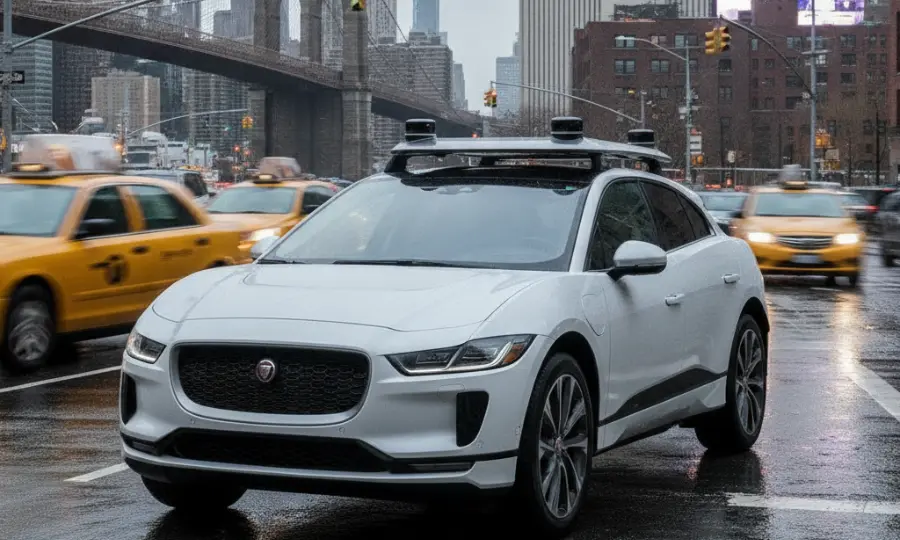
Autonomous vehicle s once felt like distant science fiction on New York streets. Today, test vehicles with sophisticated sensors navigate busy avenues alongside yellow cabs, delivery truck s, and pedestrian s. However, high tech machinery does not erase traffic danger. When an automated test vehicle collides with another car or strikes a pedestrian, complex legal questions immediately arise. As a top NYC personal injury lawyer, our firm helps injured New Yorkers uncover the truth after sudden, devastating collisions. Victims often wonder who bears legal responsibility when an onboard computer shares control with an in-vehicle test operator. Key Takeaways Under NYC DOT rules established in March 2024, autonomous vehicle testing strictly requires an approved human test operator behind the wheel ready to take control at all times. The NYC DOT permitting framework requires AV testing companies to carry substantial automobile and personal injury liability coverage. New York CPLR Article 14-A establishes pure comparative negligence for reducing damages based on a claimant's own culpable conduct, but does not specifically authorize juries to split liability between negligent safety drivers and autonomous software developers. Injured victims should act quickly to formally demand preservation of microsecond sensor logs, cabin video, and telematics data before critical collision evidence is erased. Establishing fault in these incidents requires examining the exact interaction between human oversight and automated decision systems. Under New York law, injured motorists and pedestrians have clear avenues to pursue financial compensation. Consequently, understanding how New York courts, municipal regulations, and corporate insurance policies interact is critical for anyone injured by an autonomous vehicle. The Regulatory Reality of Autonomous Vehicle Testing in NYC New York City does not permit fully driverless robotaxis to roam public roads without supervision. Under New York State law and the NYC Department of Transportation permitting framework launched in March 2024, autonomous vehicle testing requires an approved test-vehicle operator to be present behind the wheel and ready to assume manual control at all times. Therefore, every automated vehicle testing in New York operates with a designated safety specialist seated in the driver seat. Also, the municipal regulatory standard in New York City remains remarkably demanding. Testing applicants in New York City must meet a unique regulatory benchmark requiring operating companies to self-certify that their test vehicles will navigate municipal streets with a high degree of safety. This high standard protects the public across crowded neighborhoods. Because state law continues to require human fallback operators, injured victims retain clear personal injury claims against human drivers alongside the tech corporations operating the fleets. Safety Operator Negligence: Human Responsibility Behind the Wheel When an autonomous test vehicle strikes someone on a city street, the first inquiry focuses on human actions. The safety operator sitting in the vehicle owes a strict legal duty of care to everyone sharing the road. If you suffered harm in a Brooklyn car accident or sustained serious injuries in Manhattan traffic, our legal team investigates whether the safety specialist acted with reasonable care. A safety driver must monitor surroundings constantly and remain ready to take over manual control instantly. Human operators frequently face severe distractions inside testing cabins. For instance, an operator might look down at a diagnostic tablet, daydream, or scroll on a mobile device. That momentary delay in stepping on the brake pedal or steering away from danger constitutes actionable legal negligence. Also, human drivers often experience delayed reaction times due to cognitive automation complacency. When automated systems steer and stop smoothly for hours, safety drivers inevitably experience reduced situational awareness. However, New York personal injury law does not excuse inattention simply because a computer handled steering inputs. If an operator fails to see a cyclist or brakes too late to prevent a rear-end collision, that failure exposes the operator and their employer to full financial liability. Autonomous Software Liability: Defective Algorithms and Hardware Glitches While the human operator holds significant legal duty, autonomous vehicle developers also face parallel product liability claims. Autonomous vehicle technology relies on an intricate web of sensors, high-definition cameras, radar, light detection systems, and machine learning models. When these mechanical or digital components fail, the corporate entity that designed and deployed the system must answer for the harm caused. Autonomous vehicle developers face product liability theories involving design defects, algorithm failures, or inadequate failure-to-warn systems under New York law. A software defect occurs when an autonomous system fails to detect objects accurately under real-world conditions. For example, blinding glare on the Long Island Expressway, sudden heavy rainfall over Queens, or unexpected construction debris on FDR Drive can confuse machine vision models. If an algorithm misclassifies an oncoming motorcycle as background scenery, the software exhibits a fatal design flaw. In addition, system failures often involve improper transition alert mechanisms. An autonomous vehicle developer must design an alert protocol that provides human operators sufficient warning before relinquishing vehicle control. If the onboard software encounters an unmapped detour and immediately disengages without sounding an adequate alarm, the safety driver has zero seconds to react. Under product liability law, an inadequate warning design makes the automotive manufacturer or tech company strictly liable for resulting personal injuries. Pure Comparative Negligence and Apportioning Fault Under New York Law Autonomous vehicle collisions rarely present simple, single-cause scenarios. Instead, they typically involve a combined failure of artificial intelligence and human oversight. Because New York enforces pure comparative negligence under CPLR Article 14-A, juries tasked with AV collision disputes are empowered to apportion proximate cause percentages between a distracted safety driver delayed takeover and software misidentification, potentially leaving multiple co-defendants liable. Consider a realistic collision scenario at a busy intersection in Downtown Brooklyn. An autonomous vehicle approaches a crosswalk where a pedestrian begins crossing with the walk signal. The vehicle onboard perception software misidentifies the pedestrian as a stationary road sign and maintains cruising speed. Meanwhile, the safety driver looks at an onboard telematics screen rather than watching the roadway. By the time the computer sounds an emergency takeover chime, the vehicle stands twenty feet from the crosswalk. The safety driver slams the manual brakes, but the car strikes the pedestrian. In this scenario, both parties contributed directly to the victim’s catastrophic injuries. A New York jury can evaluate the evidence and allocate responsibility between the parties. For instance, a jury might determine that the software developer shares sixty percent of the fault for code defects and poor sensor interpretation, while attributing forty percent of fault to the safety operator for negligent surveillance. Under CPLR Article 14-A, this joint apportionment ensures the injured victim can recover full damages across every responsible corporate defendant. Preserving Digital Evidence and Uncovering Microsecond Black Box Data Winning an autonomous vehicle injury claim requires immediate technical investigation. Unlike traditional car crashes that rely primarily on witness statements and physical skid marks, autonomous vehicle lawsuits depend on digital telematics. Litigating fault between human takeover delays and software malfunctions relies heavily on microsecond event logs such as sensor calibration data, disengagement alerts, and steering and braking telematics, which plaintiffs attorneys target through formal preservation demands. These complex digital logs record the precise microsecond when an onboard system detected a hazard. They show whether the computer issued an acoustic warning, when the safety operator gripped the steering wheel, and how hard the driver pressed the brake pedal. If an injured plaintiff delays hiring legal counsel, vital digital data might be overwritten or deleted during automated fleet maintenance cycles. Experienced personal injury attorneys immediately dispatch formal spoliation letters to preserve: Raw sensor feeds, including exterior high-resolution camera video, LiDAR point clouds, and radar returns. Interior cabin camera footage proving whether the safety operator was texting, distracted, or properly alert. Disengagement logs showing whether the automated system shut down voluntarily or failed unexpectedly. Diagnostic fault codes and recent over-the-air firmware updates applied to vehicle computing units. Our Queens car accident attorneys explain how insurance laws and digital discovery apply to multi-vehicle crashes and complex fleet investigations. By securing this data promptly, your legal team can retain leading automotive engineers and software reconstructionists to pinpoint exactly where human error and software bugs converged. Mandatory Insurance Coverage for New York City Testing Fleets Injured New Yorkers often worry about whether enough insurance money exists to cover catastrophic medical bills, lengthy hospital stays, and permanent lost earning capacity. Fortunately, testing an autonomous vehicle in New York City requires substantial financial security. Operating companies cannot casually bring experimental cars onto municipal streets without backing up their safety claims with millions in liability insurance. The NYC DOT permitting process mandates that applicant companies carry substantial automobile liability coverage and personal injury liability coverage, alongside indemnifying the City of New York against legal liabilities resulting from AV testing operations. Consequently, victims injured in autonomous crashes do not face the meager minimum auto insurance limits typical of standard private passenger vehicles in New York. These multi-million-dollar insurance policies provide crucial financial protection. Catastrophic injuries, including traumatic brain damage, spinal cord trauma, crushed limbs, and multiple fractures, demand extensive lifetime care. Because autonomous vehicle test fleets carry robust multi-million-dollar insurance limits, injured victims can pursue meaningful compensation covering past medical bills, future nursing care, loss of career earnings, and intense physical pain and suffering. Steps to Take if an Autonomous Vehicle Hits You in NYC If you or someone you love suffers injuries in an accident involving an autonomous test car in any New York borough, immediate proactive measures will safeguard your health and your legal rights. Take these essential steps directly after a crash: Call 911 immediately. Ensure NYPD officers respond to the scene and file a formal collision report. Tell the responding officers that the vehicle was operating as an autonomous or test vehicle. Seek emergency medical care. Adrenaline often masks severe injuries after impact. Visit an emergency room immediately to document every injury, from concussions to soft tissue damage. Document the scene visually. Take photographs of the vehicle exterior, paying special attention to roof-mounted sensor pods, corporate logos, and license plates. Photograph interior cabin cameras and onboard laptop screens if visible through the windows. Avoid giving recorded statements to corporate insurers. Representatives from the fleet company will call quickly. Do not sign settlement releases or agree to recorded telephone interviews without legal counsel present. Contact a seasoned NYC personal injury lawyer immediately. Prompt legal action ensures spoliation letters reach corporate headquarters before vital digital telematics logs disappear. Autonomous vehicle technology continues to evolve rapidly across the United States. However, high-tech corporate ambition can never override the basic safety of New York pedestrians, cyclists, and motorists. If an autonomous test car caused you injury, our dedicated legal team will aggressively investigate the safety driver actions, audit the company software telematics, and hold all negligent corporations accountable under New York law. Sources This article was drafted with AI assistance. Please verify all claims and information for accuracy. The content is for informational purposes only and does not constitute professional advice. Free Case Consultation Injured in an accident? Speak directly with an experienced NYC personal injury attorney at Rosenberg, Minc, Falkoff & Wolff. Your consultation is free, confidential, and risk-free. Start Your Free Case Review No obligation - No upfront fees - You don't pay unless we win Follow RMFW Law for legal insights and case results: Facebook Instagram X Pinterest Yelp YouTube Gary Silverstein Gary Silverstein has been a partner of Rosenberg, Minc, Falkoff & Wolff since 2001, and an associate of the firm since 1989. Mr. Silverstein graduated with a Bachelor of Science degree from State University of New York College at Oneonta in 1983. Mr. Silverstein holds a degree of Juris Doctor from the University of Miami School of Law, having graduated in 1988.